Jan-Marie Knights
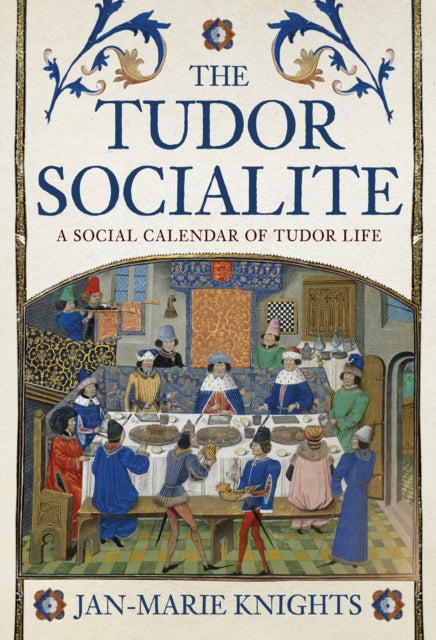
Tudor Socialite: A Social Calendar of Tudor Life
Tudor Socialite: A Social Calendar of Tudor Life
💎 Earn 70 Points (£0.70) on this item.
YOU SAVE £5.84
- Condition: Brand new
- UK Delivery times: Usually arrives within 2 - 3 working days
- UK Shipping: Fee starts at £2.39. Subject to product weight & dimension
Bulk ordering. Want 15 or more copies? Get a personalised quote and bigger discounts. Learn more about bulk orders.
Couldn't load pickup availability
- More about Tudor Socialite: A Social Calendar of Tudor Life
In The Tudor Socialite, Jan-Marie Knights provides a glimpse into the world of Tudor high society, exploring love affairs, tragedy, marriage, and death. The book covers a range of social events, from solemn marriages to funerals and feasts, offering a unique experience for Tudor fans.
Format: Hardback
Length: 288 pages
Publication date: 15 November 2021
Publisher: Amberley Publishing
In her captivating book, "The Tudor Socialite," Jan-Marie Knights transports readers to the vibrant world of Tudor high society. This is a realm where love affairs, tragedy, marriage, and death intertwine, accompanied by flamboyant dress, exquisite jewelry, and raging passions. The Tudor period continues to captivate and enchant the world, offering a glimpse into the social calendar of this intriguing era. From solemn marriages to somber funerals, and decadent feasts to lavish large-scale gatherings, "The Tudor Socialite" serves as an essential guide for Tudor enthusiasts who yearn to immerse themselves in the life of a wallflower within the Tudor court.
The Tudor period, a captivating era of immense historical significance, has left an indelible mark on the world. It was a time of immense change, marked by political upheaval, religious reformations, and cultural transformations. The Tudor dynasty, ruling England from 1485 to 1603, played a pivotal role in shaping the course of English history.
One of the most intriguing aspects of the Tudor period was its social structure. The society was divided into various classes, with the aristocracy at the top, followed by the gentry, merchants, and laborers. The aristocracy, composed of the king, queen, and their immediate family, held immense power and influence over the kingdom. They were the patrons of art, literature, and architecture, and their lavish lifestyles and extravagant parties were the talk of the town.
The gentry, on the other hand, were the landed aristocracy who owned large estates and land. They were often wealthy and influential, and their social status was determined by their landholdings and wealth. The gentry played a significant role in the political and social life of the Tudor period, serving as members of the House of Commons, local government officials, and even as members of the king's court.
The merchants, who were the backbone of the economy, were also a significant social class. They were involved in trade, commerce, and industry, and their wealth and influence were often measured in terms of their ships, warehouses, and trading posts. The merchants were often in close contact with the aristocracy, as they were often the suppliers of goods and services to the court.
The laborers, who made up the majority of the population, were often exploited and marginalized. They worked in various industries, including agriculture, manufacturing, and mining, and their living conditions were often poor and harsh. The laborers were often subject to strict laws and regulations, and their rights were often limited.
Despite the social divisions, the Tudor period was a time of immense cultural and artistic flourishing. The Renaissance, a cultural movement that began in Italy in the 14th century, reached England during the Tudor period. This period saw a renewed interest in art, literature, and science, and the Tudor court was a center of artistic and intellectual activity.
The Tudor dynasty was also known for its religious reformations. The Reformation, a movement that sought to reform the Roman Catholic Church, began in England during the reign period. The Tudor kings, particularly Henry VIII and Elizabeth I, were instrumental in this reform, and they introduced a number of religious reforms that were aimed at consolidating the power of the monarchy and promoting religious tolerance.
One of the most significant religious reforms of the Tudor period was the establishment of the Church of England. This new church was a break from the Roman Catholic Church, and it was led by the king as the Supreme Head of the Church. The Church of England was characterized by its emphasis on the Bible as the source of authority Church authority.
Another significant religious reform of the Tudor period was the introduction of the Book of Common Prayer. This book was a collection of prayers and readings that were used in the Church of England, and it was designed to promote religious unity and uniformity among the worshippers. The Book of Common Prayer was a significant tool in the promotion of religious tolerance and unity, as it was used in all of the churches in England.
The Tudor period was also a time of immense political upheaval. The Wars of the Roses, a series of civil wars that took place in England between 1455 and 1487, were a major political event of the Tudor period. The Wars of the Roses were fought between the Houses of Lancaster and York, two rival noble families who were vying for the throne. The Wars of the Roses were marked by intense fighting, political intrigue, and religious tensions, and they ultimately resulted in the victory of the House of Lancaster, led by Henry VII.
The Tudor period was also a time of immense cultural and artistic flourishing. The Renaissance, a cultural movement that began in Italy in the 14th century, reached England during the Tudor period. This period saw a renewed interest in art, literature, and science, and the Tudor court was a center of artistic and intellectual activity.
The Tudor dynasty was also known for its religious reformations. The Reformation, a movement that sought to reform the Roman Catholic Church, began in England during the Tudor period. The Tudor kings, particularly Henry VIII and Elizabeth I, were instrumental in this reform, and they introduced a number of religious reforms that were aimed at consolidating the power of the monarchy and promoting religious tolerance.
One of the most significant religious reforms of the Tudor period was the establishment of the Church of England. This new church was a break from the Roman Catholic Church, and it was led by the king as the Supreme Head of the Church. The Church of England was characterized by its emphasis on the Bible as the source of Church.
Another significant religious reform of the Tudor period was the introduction of the Book of Common Prayer. This book was a collection of prayers and readings that were used in the Church of England, and it was designed to promote religious unity and uniformity among the worshippers. The Book of Common Prayer was a significant tool in the promotion of religious tolerance and unity, as it was used in all of the churches in England.
The Tudor period was also a time of immense political upheaval. The Wars of the Roses, a series of civil wars that took in England between 1455 and 1487, were a major political event of the Tudor period. The Wars of the Roses were fought between the Houses of Lancaster and York, two rival noble families who were vying for the throne. The Wars of the Roses were marked by intense fighting, political intrigue, and religious tensions, and they ultimately resulted in the victory of the House of Lancaster, led by Henry VII.
In conclusion, the Tudor period was a time of immense historical significance, marked by political upheaval, religious reformations, and cultural transformations. The Tudor dynasty, ruling England from 1485 to 1603, played a pivotal role in shaping the course of English history. The social structure of the Tudor period was divided into various classes, with the aristocracy at the top, followed by the gentry, merchants, and laborers. The aristocracy held immense power and influence over the kingdom, while the gentry played a significant role in the political and social life of the period. The merchants were the backbone of the economy, and the laborers were often exploited and marginalized. Despite the social divisions, the Tudor period was a time of immense cultural and artistic flourishing, with the Renaissance reaching England and the Tudor court being a center of artistic and intellectual activity. The Tudor kings were instrumental in religious reformations, including the establishment of the Church of England and the introduction of the Book of Common Prayer. The Wars of the Roses were a major political event of the Tudor period, marked by intense fighting, political intrigue, and religious tensions, and they ultimately resulted in the victory of the House of Lancaster, led by Henry VII.
Weight: 628g
Dimension: 257 x 244 x 35 (mm)
ISBN-13: 9781398101296
This item can be found in:
UK and International shipping information
UK and International shipping information
UK Delivery and returns information:
- Delivery within 2 - 3 days when ordering in the UK.
- Shipping fee for UK customers from £2.39. Fully tracked shipping service available.
- Returns policy: Return within 30 days of receipt for full refund.
International deliveries:
Shulph Ink now ships to Australia, Belgium, Canada, France, Germany, Ireland, Italy, India, Luxembourg Saudi Arabia, Singapore, Spain, Netherlands, New Zealand, United Arab Emirates, United States of America.
- Delivery times: within 5 - 10 days for international orders.
- Shipping fee: charges vary for overseas orders. Only tracked services are available for most international orders. Some countries have untracked shipping options.
- Customs charges: If ordering to addresses outside the United Kingdom, you may or may not incur additional customs and duties fees during local delivery.