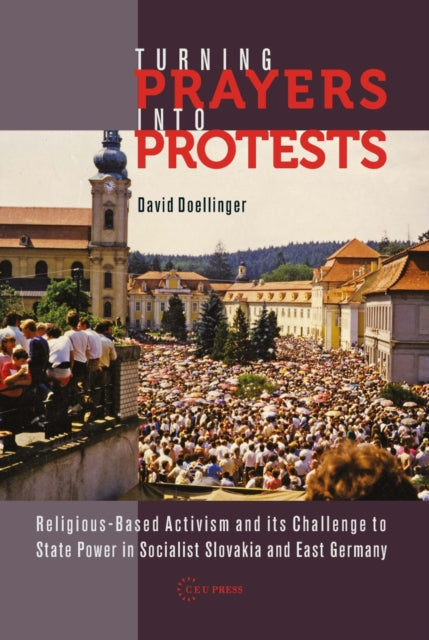
DavidDoellinger
Turning Prayers into Protests: Religious-Based Activism and its Challenge to State Power in Socialist Slovakia and East Germany
Turning Prayers into Protests: Religious-Based Activism and its Challenge to State Power in Socialist Slovakia and East Germany
💎 Earn 344 Points (£3.44) on this item.
We can order this item for you. Delivery usually takes about 4 to 6 weeks.
This item is not held in our immediate stock. We will order it for you after checkout.
Estimated delivery: About 4 to 6 weeks
YOU SAVE £4.09
- Condition: Brand new
- UK Delivery times: Usually arrives within 2 - 3 working days
- UK Shipping: Fee starts at £2.39. Subject to product weight & dimension
Bulk ordering. Want 15 or more copies? Get a personalised quote and bigger discounts. Learn more about bulk orders.
Couldn't load pickup availability
- More about Turning Prayers into Protests: Religious-Based Activism and its Challenge to State Power in Socialist Slovakia and East Germany
Turning Prayers into Protests examines religious-based opposition in Slovakia and East Germany before 1989.
Format: Hardback
Length: 302 pages
Publication date: 17 January 2025
Publisher: Central European University Press
Turning Prayers into Protests: A Comparative Study of Religious-Based Oppositional Activity in Slovakia and East Germany Prior to 1989
Slovakia and East Germany, two countries with a rich history of religious diversity and political oppression, underwent significant changes in the late 20th century. While Slovakia experienced a peaceful transition to democracy, East Germany remained under the control of the Soviet Union until its collapse in 1989. This study aims to examine the role of religious-based oppositional activity in these two countries during this period.
Religious-based oppositional activity in Slovakia and East Germany took various forms, including protests, demonstrations, and strikes. In Slovakia, the Catholic Church played a significant role in organizing these activities, while in East Germany, the Protestant Church was also involved. The protests were often directed against the government's policies, particularly those related to religious freedom and human rights.
One of the key factors that contributed to the success of religious-based oppositional activity in Slovakia and East Germany was the presence of a strong civil society. In Slovakia, the Catholic Church had a long history of social activism, and many of its members were involved in the protests. In East Germany, the Protestant Church also had a strong tradition of social activism, and its members were involved in the protests as well.
Another factor that contributed to the success of religious-based oppositional activity in Slovakia and East Germany was the use of nonviolent resistance. The protesters in both countries used nonviolent methods such as sit-ins, marches, and hunger strikes to draw attention to their cause. This approach was effective in gaining media attention and public support, and it also helped to avoid violence and bloodshed.
However, religious-based oppositional activity in Slovakia and East Germany also faced several challenges. One of the main challenges was the government's response to these activities. The government in Slovakia was generally more tolerant of religious-based oppositional activity than the government in East Germany. However, the government in Slovakia still used force to suppress some of the protests, and many protesters were arrested and imprisoned.
In East Germany, the government's response to religious-based oppositional activity was much more severe. The government used force to suppress the protests, and many protesters were killed or injured. The government also used propaganda to discredit the protesters and to justify its actions.
Despite these challenges, religious-based oppositional activity in Slovakia and East Germany played a significant role in bringing about change. The protests and demonstrations helped to raise awareness about the government's policies and to mobilize public support for change. The protests also helped to weaken the government's control over the country and to promote democracy and human rights.
In conclusion, Turning Prayers into Protests is a comparative study of religious-based oppositional activity in Slovakia and East Germany prior to 1989. The study examines the role of religious-based oppositional activity in these two countries during this period, and it highlights the factors that contributed to the success of these activities. The study also identifies the challenges that these activities faced and the impact that they had on the country.
Weight: 548g
Dimension: 237 x 161 x 21 (mm)
ISBN-13: 9786155225789
UK and International shipping information
UK and International shipping information
UK Delivery and returns information:
- Delivery within 2 - 3 days when ordering in the UK.
- Shipping fee for UK customers from £2.39. Fully tracked shipping service available.
- Returns policy: Return within 30 days of receipt for full refund.
International deliveries:
Shulph Ink now ships to Australia, Belgium, Canada, France, Germany, Ireland, Italy, India, Luxembourg Saudi Arabia, Singapore, Spain, Netherlands, New Zealand, United Arab Emirates, United States of America.
- Delivery times: within 5 - 10 days for international orders.
- Shipping fee: charges vary for overseas orders. Only tracked services are available for most international orders. Some countries have untracked shipping options.
- Customs charges: If ordering to addresses outside the United Kingdom, you may or may not incur additional customs and duties fees during local delivery.