R. EugeneParta
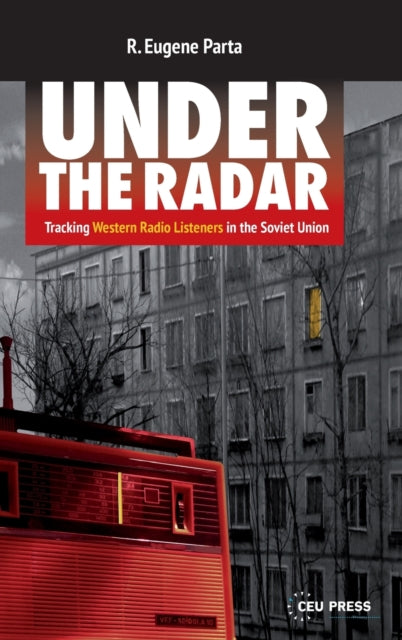
Under the Radar: Tracking Western Radio Listeners in the Soviet Union
Under the Radar: Tracking Western Radio Listeners in the Soviet Union
💎 Earn 363 Points (£3.63) on this item.
YOU SAVE £4.31
- Condition: Brand new
- UK Delivery times: Usually arrives within 2 - 3 working days
- UK Shipping: Fee starts at £3.89. Subject to product weight & dimension
Bulk ordering. Want 15 or more copies? Get a personalised quote and bigger discounts. Learn more about bulk orders.
Couldn't load pickup availability
- More about Under the Radar: Tracking Western Radio Listeners in the Soviet Union
Weaponizing new technologies and social media, Russia is attacking Western democracy. To respond, we can use the lessons of the past by using audacious interview methods to gain insights into the media habits and mindset of the Soviet public, as done in the Cold War operation Radio Free Europe/Radio Liberty.
Format: Hardback
Length: 426 pages
Publication date: 15 October 2022
Publisher: Central European University Press
Western democracy faces a formidable challenge from a resurgent Russia, leveraging cutting-edge technologies and social media to mount an assault. In the context of the Cold War, the West successfully countered Soviet propaganda with shortwave radio broadcasts. Established in 1949, the US-funded Radio Free Europe/Radio Liberty transmitted uncensored information to Soviet republics in their native languages, reaching a significant portion of Soviet urban adults. These broadcasts played a pivotal role in bringing an end to the Cold War and eroding the communist empire.
R. Eugene Parta, a former director of Soviet Area Audience Research at RFE/RL, played a crucial role in conducting groundbreaking research to assess the impact of Western radio broadcasts on Soviet listeners. Given the limitations of interviewing Soviet citizens within their country, Parta pioneered innovative methods to conduct interviews with Soviets traveling abroad. This resulted in the creation of a comprehensive database of 51,000 interviews, providing unparalleled insights into the media habits and mindset of the Soviet public.
In his book, "Under the Radar: Assessing the Impact of Western Radio Broadcasts on Soviet Listeners," Parta recounts the audacious mission that led to the collection of these invaluable interviews. He showcases the creative strategies employed to evade detection and secure conversations with Soviets, highlighting the importance of understanding the adversary's tactics. Moreover, the book delves into the lessons learned from the Cold War era and how they can be applied to counter the threat posed by a former and current adversary.
The resurgence of Russia's aggressive tactics highlights the ongoing need for robust responses to counter propaganda and misinformation campaigns. The use of new technologies and social media platforms provides Russia with an opportunity to spread its message globally, undermining democratic institutions and values. To address this challenge, it is essential to adopt a multifaceted approach.
One effective strategy is to increase the distribution of independent media outlets and provide access to accurate information. This can be achieved through initiatives such as digital literacy programs, funding for media organizations, and promoting media freedom and independence. Additionally, governments can work to regulate social media platforms and prevent the spread of false information and hate speech.
Another important aspect is to engage in public diplomacy and cultural exchange programs. By fostering dialogue and understanding between different cultures, societies can build resilience against the influence of propaganda and misinformation. This can include educational initiatives, cultural events, and people-to-people exchanges that promote mutual respect and appreciation.
Furthermore, governments should invest in cybersecurity measures to protect against cyberattacks and data breaches. The use of advanced technologies by Russia to manipulate public opinion and influence elections highlights the vulnerability of democratic systems to cyber threats. By strengthening cybersecurity infrastructure and promoting digital literacy, governments can mitigate the risk of cyberattacks and protect the integrity of democratic processes.
In conclusion, the threat posed by Russia's resurgent aggression requires a comprehensive and proactive response. Western democracy must strengthen its resilience against propaganda and misinformation campaigns by promoting independent media, engaging in public diplomacy, investing in cybersecurity measures, and fostering dialogue and understanding between different cultures. By taking these steps, we can mitigate the risk of a democratic decline and preserve the values and institutions that underpin our societies.
Weight: 672g
Dimension: 158 x 237 x 30 (mm)
ISBN-13: 9789633864555
UK and International shipping information
UK and International shipping information
We deliver throughout the United Kingdom and to 128 countries and territories worldwide, including the United States, Australia, Canada, Germany, Spain and France.