Jennifer J.Mueller,NancyFile,Andrew J.Stremmel,Iheoma U.Iruka,Kristin L.Whyte
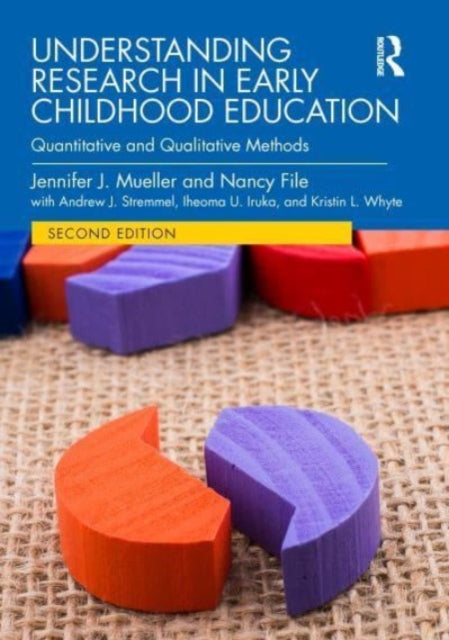
Understanding Research in Early Childhood Education: Quantitative and Qualitative Methods
Understanding Research in Early Childhood Education: Quantitative and Qualitative Methods
💎 Earn 212 Points (£2.12) on this item.
YOU SAVE £2.52
- Condition: Brand new
- UK Delivery times: Usually arrives within 2 - 3 working days
- UK Shipping: Fee starts at £2.39. Subject to product weight & dimension
Bulk ordering. Want 15 or more copies? Get a personalised quote and bigger discounts. Learn more about bulk orders.
Couldn't load pickup availability
- More about Understanding Research in Early Childhood Education: Quantitative and Qualitative Methods
The second edition of this book provides readers with a comprehensive comparison of quantitative and qualitative methods in early childhood research, including updated examples and references and a new chapter on equity issues. It aims to help students become informed consumers of empirical literature and use it knowledgeably in their practice.
Format: Paperback / softback
Length: 204 pages
Publication date: 26 February 2024
Publisher: Taylor & Francis Ltd
This second edition invites readers to become informed consumers of both quantitative and qualitative methods in early childhood research. It provides side-by-side coverage and comparison of the assumptions, questions, purposes, and methods for each, presenting unique perspectives for understanding young children and early care and education programs. The new edition includes updated examples and references, as well as a new chapter on equity issues in research. By utilizing this book, students will be able to read, evaluate, and use empirical literature more knowledgeably. These skills are becoming increasingly important as early childhood educators are expected to use evidence-based research in practice and to participate in collecting and analyzing data to inform their teaching.
Early childhood research employs a variety of methods to study and understand the development and learning of young children. These methods can be classified into two main categories: quantitative and qualitative. Quantitative methods involve the use of numerical data and statistical analysis to measure and analyze variables such as age, gender, socioeconomic status, and test scores. Qualitative methods, on the other hand, focus on non-numerical data such as interviews, observations, and case studies to gain a deeper understanding of the experiences and perspectives of young children and their caregivers.
Both quantitative and qualitative methods have their strengths and weaknesses, and their use depends on the research question, the available data, and the researcher's goals. Quantitative methods are often more objective and can provide a broader understanding of trends and patterns in a large sample of children. They can also be used to test hypotheses and draw conclusions based on statistical evidence. However, quantitative methods can be limited by the assumptions and biases that are inherent in the data collection and analysis process, and they may not capture the complexity and richness of the experiences of individual children.
Qualitative methods, on the other hand, are often more subjective and can provide a deeper understanding of the individual experiences and perspectives of young children and their caregivers. They can also be used to explore complex and nuanced issues that may not be captured by quantitative methods. However, qualitative methods can be time-consuming and expensive, and they may require specialized training and expertise to analyze and interpret the data.
In this second edition of Early Childhood Research Methods, readers will be introduced to both quantitative and qualitative methods in early childhood research. The book provides side-by-side coverage and comparison of the assumptions, questions, purposes, and methods for each, presenting unique perspectives for understanding young children and early care and education programs. The new edition includes updated examples and references, as well as a new chapter on equity issues in research.
One of the key strengths of this book is its comprehensive coverage of both quantitative and qualitative methods. The authors have carefully selected examples and case studies to illustrate the strengths and limitations of each method, and they have provided clear and concise explanations of the underlying principles and techniques. The book also includes a range of exercises and activities to help readers apply the methods to their own research projects.
Another strength of this book is its focus on the practical application of research methods. The authors recognize that early childhood educators are increasingly expected to use evidence-based research in practice, and they provide guidance on how to read, evaluate, and use empirical literature more knowledgeably. The book includes a range of resources and references to help readers access and interpret empirical literature, and it also includes a discussion of the ethical considerations that are involved in conducting research with young children and their families.
In addition to its coverage of quantitative and qualitative methods, this book also includes a new chapter on equity issues in research. The authors recognize that research can have unintended consequences for marginalized communities, and they provide guidance on how to conduct research that is sensitive to the needs and perspectives of diverse populations. The book includes a range of examples and case studies that illustrate the importance of equity in research, and it also includes a discussion of the challenges that researchers face when conducting research with marginalized communities.
Overall, this second edition of Early Childhood Research Methods is an excellent resource for students and researchers interested in studying and understanding the development and learning of young children. The book provides a comprehensive and accessible introduction to both quantitative and qualitative methods, and it includes a range of practical resources and references to help readers apply the methods to their own research projects. The book's focus on the practical application of research methods and its consideration of equity issues in research make it an essential resource for anyone working in the field of early childhood education and research.
Weight: 402g
Dimension: 178 x 254 x 17 (mm)
ISBN-13: 9781032394909
Edition number: 2 ed
UK and International shipping information
UK and International shipping information
UK Delivery and returns information:
- Delivery within 2 - 3 days when ordering in the UK.
- Shipping fee for UK customers from £2.39. Fully tracked shipping service available.
- Returns policy: Return within 30 days of receipt for full refund.
International deliveries:
Shulph Ink now ships to Australia, Belgium, Canada, France, Germany, Ireland, Italy, India, Luxembourg Saudi Arabia, Singapore, Spain, Netherlands, New Zealand, United Arab Emirates, United States of America.
- Delivery times: within 5 - 10 days for international orders.
- Shipping fee: charges vary for overseas orders. Only tracked services are available for most international orders. Some countries have untracked shipping options.
- Customs charges: If ordering to addresses outside the United Kingdom, you may or may not incur additional customs and duties fees during local delivery.