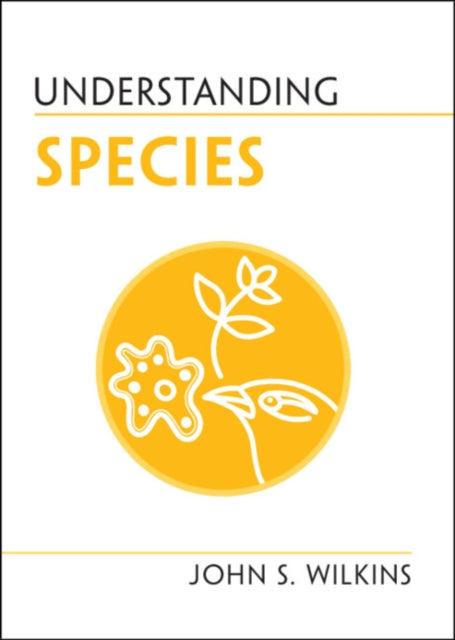
John S.Wilkins
Understanding Species
Understanding Species
💎 Earn 75 Points (£0.75) on this item.
YOU SAVE £1.95
- Condition: Brand new
- UK Delivery times: Usually arrives within 2 - 3 working days
- UK Shipping: Fee starts at £2.39. Subject to product weight & dimension
Bulk ordering. Want 15 or more copies? Get a personalised quote and bigger discounts. Learn more about bulk orders.
Couldn't load pickup availability
- More about Understanding Species
The book "Species: An Introduction to Biology, Philosophy, Ethics, Policymaking, and Conservation" by John S. Wilkins provides an accessible introduction to the concept of species in biology, philosophy, ethics, policymaking, and conservation. It explores the history of species, their uses in biomedicine, and the complexities of the concept, encouraging readers to appreciate its philosophical depth and its connections to logic and science.
Format: Paperback / softback
Length: 150 pages
Publication date: 20 April 2023
Publisher: Cambridge University Press
Are species worth saving? Can they be resurrected by technology? What is the use of species in biomedicine?
These questions all depend on a clear definition of the concept of species, yet biologists have long struggled to define this term. In this accessible book, John S. Wilkins provides an introduction to the concept of species in biology, philosophy, ethics, policymaking, and conservation. Using clear language and easy-to-understand examples throughout, the book provides a history of species and why we use them. It encourages readers to appreciate the philosophical depth of the concept as well as its connections to logic and science. For any interested reader, this short text highlights the complexities of a single idea in biology, the problems with the concept of species, and the benefits of it in helping us to answer the bigger questions and understand our living world.
Species are the fundamental units of biological diversity, and their worth is a topic of ongoing debate. While some argue that species are valuable in and of themselves, others argue that their value is primarily derived from their role in ecosystems or their potential for use in biomedicine.
One of the main challenges in defining species is that there is no universally accepted definition. Different scientists may use different criteria to determine whether two organisms are members of the same species, such as genetic similarity, reproductive compatibility, or geographic distribution. This can lead to confusion and uncertainty when trying to assess the conservation status of a particular species.
Despite these challenges, there are several reasons why species are worth saving. First and foremost, species play a critical role in maintaining the balance of ecosystems. Each species has a specific role to play in the ecosystem, and when a species is lost, it can have a ripple effect on the entire ecosystem. For example, if a key predator species is lost, it can lead to an increase in the population of prey species that it prey, which can in turn lead to habitat destruction and degradation.
In addition to their ecological importance, species are also valuable for their economic and cultural significance. Many species are used in agriculture, forestry, and fisheries, and their loss can have significant economic consequences for communities that rely on these industries. For example, if a species of fish is lost, it can have a negative impact on the local fishing industry, which can in turn lead to job losses and economic hardship.
Species are also valuable for their scientific and educational significance. Many species are unique and have unique characteristics that make them valuable for research and discovery. For example, the giant panda is a species that is unique in its diet and habitat, and its loss would have significant consequences for our understanding of how species adapt to changing environments.
Finally, species are also valuable for their ethical and philosophical significance. Many people believe that species have intrinsic value, meaning that they have value in and of themselves, regardless of their usefulness to humans. This view is supported by the fact environment, which argues that all living things have the right.
Despite these arguments, there are also several challenges to resurrecting extinct species that have been extinct. One of the main challenges is the lack of genetic material. Many species that have been extinct for millions of years have lost their genetic material, making it difficult to recreate them using modern technology. In addition, the loss of genetic material can lead to the loss of unique characteristics that make a species valuable for research and discovery.
Another challenge is the loss of habitat. Many species that have been extinct for millions of years have lost their habitat, making it difficult to recreate them in a natural environment. This is particularly true for species that require specific environmental conditions to survive, such as the Tasmanian tiger, which required a specific climate and habitat to survive.
Finally, there is the issue of ethical and philosophical considerations. Some people argue that it is unethical to resurrect extinct species because it would interfere with the natural order of things and could have unintended consequences. For example, if a species that was extinct for millions of years were to be resurrected, it could potentially disrupt the balance of ecosystems and lead to the extinction of other species.
In conclusion, species are worth saving for several reasons. They are critical to maintaining the balance of ecosystems, valuable for their economic and cultural significance, valuable for their scientific and educational significance, and valuable for their ethical and philosophical significance. However, there are also several challenges to resurrecting extinct species, including the lack of genetic material, the loss of habitat, and the issue of ethical and philosophical considerations. It is important to approach the issue of species conservation with a balanced and informed perspective, taking into account
account the potential benefits and risks of resurrecting extinct species.
Weight: 175g
ISBN-13: 9781108987196
This item can be found in:
UK and International shipping information
UK and International shipping information
UK Delivery and returns information:
- Delivery within 2 - 3 days when ordering in the UK.
- Shipping fee for UK customers from £2.39. Fully tracked shipping service available.
- Returns policy: Return within 30 days of receipt for full refund.
International deliveries:
Shulph Ink now ships to Australia, Belgium, Canada, France, Germany, Ireland, Italy, India, Luxembourg Saudi Arabia, Singapore, Spain, Netherlands, New Zealand, United Arab Emirates, United States of America.
- Delivery times: within 5 - 10 days for international orders.
- Shipping fee: charges vary for overseas orders. Only tracked services are available for most international orders. Some countries have untracked shipping options.
- Customs charges: If ordering to addresses outside the United Kingdom, you may or may not incur additional customs and duties fees during local delivery.