Shulph Ink
Unmanned Aerial Systems for Monitoring Soil, Vegetation, and Riverine Environments
Unmanned Aerial Systems for Monitoring Soil, Vegetation, and Riverine Environments
💎 Earn 562 Points (£5.62) on this item.
YOU SAVE £14.60
- Condition: Brand new
- UK Delivery times: Usually arrives within 2 - 3 working days
- UK Shipping: Fee starts at £2.39. Subject to product weight & dimension
Bulk ordering. Want 15 or more copies? Get a personalised quote and bigger discounts. Learn more about bulk orders.
Couldn't load pickup availability
- More about Unmanned Aerial Systems for Monitoring Soil, Vegetation, and Riverine Environments
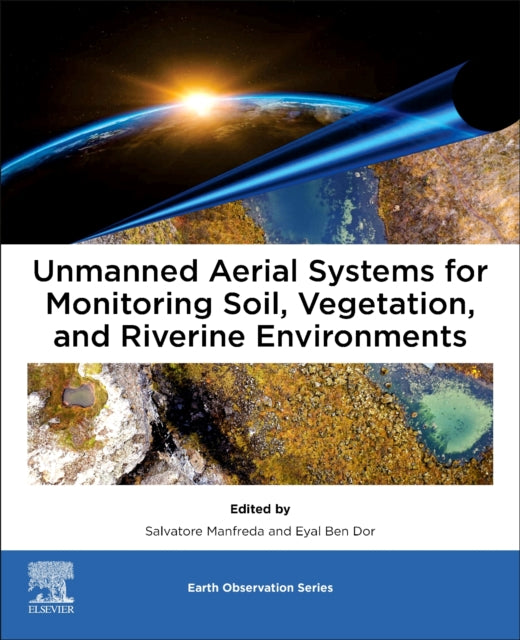
Unmanned Aerial Systems for Monitoring Soil, Vegetation, and Riverine Environments provides an overview of how UAS have revolutionized our ability to monitor river systems, soil characteristics, and related processes at unparalleled spatio-temporal resolutions, enabling enhancements in our capacity to describe water cycle and hydrological processes.
Format: Paperback / softback
Length: 346 pages
Publication date: 01 January 2023
Publisher: Elsevier - Health Sciences Division
Unmanned Aerial Systems (UAS) have revolutionized our ability to monitor soil, vegetation, and riverine environments with unparalleled spatio-temporal resolutions. This has enabled significant enhancements in our understanding of water cycle and hydrological processes. The book provides comprehensive guidelines, technical advice, and practical experience to support practitioners and scientists in improving the efficiency of monitoring using UAS. It includes field survey datasets that can be used as practical exercises, allowing proposed techniques and methods to be applied to real-world case studies.
UAS have opened up new possibilities for monitoring soil, vegetation, and riverine environments. They offer a cost-effective and efficient means of collecting data, allowing for detailed analysis and interpretation of environmental conditions. With their high-resolution cameras and sensors, UAS can capture precise images and measurements of soil properties, vegetation cover, and river flow patterns, providing valuable insights into the health and productivity of these ecosystems.
One of the key advantages of UAS is their ability to cover large areas quickly and efficiently. They can be deployed in remote or inaccessible locations, reducing the need for costly ground-based surveys and enabling researchers to collect data from a variety of perspectives. This flexibility allows for more comprehensive monitoring of environmental changes over time and across different spatial scales.
UAS also provide a high level of precision and accuracy in monitoring soil, vegetation, and riverine environments. They can collect data at a finer scale than traditional ground-based methods, allowing for more detailed analysis of soil composition, vegetation structure, and water quality. This information can be used to identify areas of concern, develop targeted management strategies, and assess the effectiveness of conservation efforts.
In addition to their technical capabilities, UAS also offer a range of practical benefits for monitoring soil, vegetation, and riverine environments. They can be used to monitor crop health, track land use changes, and assess the impact of natural disasters on ecosystems. They can also be used to collect data for environmental impact assessments, planning and development, and environmental monitoring programs.
However, the use of UAS also presents some challenges and limitations. One of the main challenges is the regulation and safety of UAS operations. There are concerns about the potential impact of UAS on air traffic, privacy, and the safety of bystanders. There are also legal and regulatory issues that need to be addressed to ensure the safe and responsible use of UAS.
Another challenge is the training and expertise required to operate UAS effectively. UAS require specialized skills and knowledge to operate and maintain, and there is a need for training programs and certification to ensure that operators are competent and knowledgeable.
Despite these challenges, the use of UAS is growing rapidly in the field of environmental monitoring. They offer a powerful tool for researchers, practitioners, and policymakers to improve our understanding of soil, vegetation, and riverine environments and develop effective management strategies. As the technology continues to evolve and improve, UAS will play an increasingly important role in monitoring and protecting our natural resources.
In conclusion, Unmanned Aerial Systems (UAS) have revolutionized our ability to monitor soil, vegetation, and riverine environments with unparalleled spatio-temporal resolutions. They offer a cost-effective and efficient means of collecting data, allowing for detailed analysis and interpretation of environmental conditions. With their high-resolution cameras and sensors, UAS can capture precise images and measurements of soil properties, vegetation cover, and river flow patterns, providing valuable insights into the health and productivity of these ecosystems. UAS also provide a high level of precision and accuracy in monitoring soil, vegetation, and riverine environments, allowing for more detailed analysis of soil composition, vegetation structure, and water quality. In addition to their technical capabilities, UAS also offer a range of practical benefits for monitoring soil, vegetation, and riverine environments. They can be used to monitor crop health, track land use changes, and assess the impact of natural disasters on ecosystems. They can also be used to collect data for environmental impact assessments, planning and development, and environmental monitoring programs. However, the use of UAS also presents some challenges and limitations. One of the main challenges is the regulation and safety of UAS operations. There are concerns about the potential impact of UAS on air traffic, privacy, and the safety of bystanders. There are also legal and regulatory issues that need to be addressed to ensure the safe and responsible use of UAS. Despite these challenges, the use of UAS is growing rapidly in the field of environmental monitoring. They offer a powerful tool for researchers, practitioners, and policymakers to improve our understanding of soil, vegetation, and riverine environments and develop effective management strategies. As the technology continues to evolve and improve, UAS will play an increasingly important role in monitoring and protecting our natural resources.
Weight: 1000g
Dimension: 235 x 191 (mm)
ISBN-13: 9780323852838
This item can be found in:
UK and International shipping information
UK and International shipping information
UK Delivery and returns information:
- Delivery within 2 - 3 days when ordering in the UK.
- Shipping fee for UK customers from £2.39. Fully tracked shipping service available.
- Returns policy: Return within 30 days of receipt for full refund.
International deliveries:
Shulph Ink now ships to Australia, Belgium, Canada, France, Germany, Ireland, Italy, India, Luxembourg Saudi Arabia, Singapore, Spain, Netherlands, New Zealand, United Arab Emirates, United States of America.
- Delivery times: within 5 - 10 days for international orders.
- Shipping fee: charges vary for overseas orders. Only tracked services are available for most international orders. Some countries have untracked shipping options.
- Customs charges: If ordering to addresses outside the United Kingdom, you may or may not incur additional customs and duties fees during local delivery.