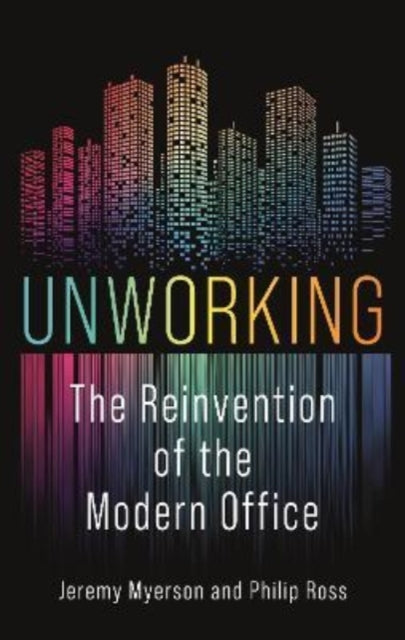
Jeremy Myerson,Philip Ross
Unworking: The Reinvention of the Modern Office
Unworking: The Reinvention of the Modern Office
💎 Earn 67 Points (£0.67) on this item.
YOU SAVE £5.55
- Condition: Brand new
- UK Delivery times: Usually arrives within 2 - 3 working days
- UK Shipping: Fee starts at £2.39. Subject to product weight & dimension
Bulk ordering. Want 15 or more copies? Get a personalised quote and bigger discounts. Learn more about bulk orders.
Couldn't load pickup availability
- More about Unworking: The Reinvention of the Modern Office
The office has been integral to modern society, but the global pandemic has brought attendance to an abrupt halt, triggering a re-evaluation of its purpose. This book offers a panoramic view of the office and explores what happens next, advocating for 'unworking' to create new habits and rituals fit for an age of digital technology, design innovation, and diverse workforces.
Format: Hardback
Length: 240 pages
Publication date: 11 July 2022
Publisher: Reaktion Books
The office has played a crucial role in shaping modern society over the past century, influencing the architecture of our cities, the behavior of organizations, and the daily movements of millions of people. However, the global pandemic in 2020 brought our attendance in the office to a sudden halt, forcing us to re-evaluate the purpose of the workplace. This book offers a comprehensive view of the office and explores what lies ahead. The authors present a manifesto for "unworking" - abandoning outdated habits and rituals associated with the traditional office and creating new ones that are better suited for the digital age, design innovation, and diverse workforces.
The office has been a central hub for work, collaboration, and innovation for many years. It has provided a physical space for employees to come together, exchange ideas, and work on projects. However, the pandemic has forced many organizations to adopt remote work, which has led to a significant shift in the way we work.
One of the main challenges of remote work is maintaining productivity. Without the structure and routine of the office, it can be difficult for employees to stay focused and motivated. This has led to a rise in the use of productivity tools and techniques, such as time management, task management, and communication tools.
Another challenge of remote work is maintaining social connections. While remote work can be beneficial for employees who value flexibility and work-life balance, it can also be isolating. This has led to a rise in the use of virtual communication tools, such as video conferencing, social media, and email, to stay connected with colleagues and clients.
Despite these challenges, remote work has also brought about some positive changes. For example, it has allowed employees to work from anywhere in the world, which has opened up new opportunities for career growth and development. It has also reduced the carbon footprint of organizations, as employees are not required to commute to the office.
However, remote work is not without its drawbacks. For example, it can be difficult for employees to maintain a work-life balance, as they may be working longer hours or taking on more responsibilities. It can also be difficult for organizations to manage remote teams, as they may not have the same level of control over their employees as they do in the office.
To address these challenges, organizations are increasingly adopting hybrid work models. Hybrid work models combine remote work with in-person work, allowing employees to have the best of both worlds. This can include working from the office for a few days a week, or working from home for the rest of the week.
Hybrid work models can also help to maintain social connections. Employees can still meet with colleagues and clients in person, and can also participate in virtual social events and activities.
However, hybrid work models can also be challenging to implement. Organizations must ensure that their employees have the necessary equipment and technology to work remotely, and must also provide support and training to help employees adjust to the new work environment.
In addition to hybrid work models, organizations are also investing in technology to improve the productivity of remote workers. This can include tools for video conferencing, task management, and communication, as well as tools for virtual collaboration and teamwork.
For example, video conferencing tools allow employees to see and hear each other in real-time, which can help to maintain a sense of connection and collaboration. Task management tools allow employees to track their progress and deadlines, and can help to reduce the risk of missed deadlines. Communication tools allow employees to communicate with each other quickly and easily, regardless of their location.
Virtual collaboration and teamwork tools allow employees to work together on projects and tasks, even if they are located in different parts of the world. This can help to improve efficiency and productivity, and can also help to build stronger relationships between employees.
However, it is important to note that technology can also be a source of stress for remote workers. Employees may feel pressure to be available 24/7, and may be overwhelmed by the amount of information and communication that they receive. This can lead to burnout and other mental health issues.
To address this issue, organizations must provide support and training to help employees manage their workload and stress. This can include providing flexible work hours, offering mental health resources, and encouraging employees to take breaks and engage in self-care activities.
In conclusion, the office has played a crucial role in shaping modern society over the past century, but the global pandemic has forced us to re-evaluate the purpose of the workplace. Remote work has brought about some positive changes, but it has also brought about some challenges. To address these challenges, organizations are increasingly adopting hybrid work models, investing in technology to improve the productivity of remote workers, and providing support and training to help employees manage their workload and stress. By doing so, we can create a more productive and sustainable workplace for the future.
Dimension: 216 x 138 (mm)
ISBN-13: 9781789146684
UK and International shipping information
UK and International shipping information
UK Delivery and returns information:
- Delivery within 2 - 3 days when ordering in the UK.
- Shipping fee for UK customers from £2.39. Fully tracked shipping service available.
- Returns policy: Return within 30 days of receipt for full refund.
International deliveries:
Shulph Ink now ships to Australia, Belgium, Canada, France, Germany, Ireland, Italy, India, Luxembourg Saudi Arabia, Singapore, Spain, Netherlands, New Zealand, United Arab Emirates, United States of America.
- Delivery times: within 5 - 10 days for international orders.
- Shipping fee: charges vary for overseas orders. Only tracked services are available for most international orders. Some countries have untracked shipping options.
- Customs charges: If ordering to addresses outside the United Kingdom, you may or may not incur additional customs and duties fees during local delivery.