Shulph Ink
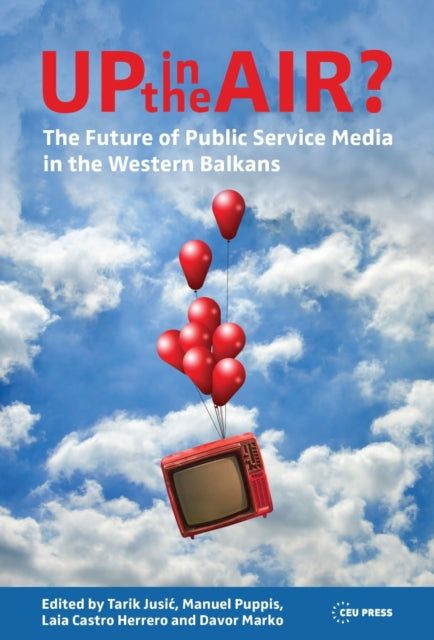
Up in the Air?: The Future of Public Service Media in the Western Balkans
Up in the Air?: The Future of Public Service Media in the Western Balkans
💎 Earn 325 Points (£3.25) on this item.
We can order this item for you. Delivery usually takes about 4 to 6 weeks.
This item is not held in our immediate stock. We will order it for you after checkout.
Estimated delivery: About 4 to 6 weeks
YOU SAVE £3.86
- Condition: Brand new
- UK Delivery times: Usually arrives within 2 - 3 working days
- UK Shipping: Fee starts at £3.89. Subject to product weight & dimension
Bulk ordering. Want 15 or more copies? Get a personalised quote and bigger discounts. Learn more about bulk orders.
Couldn't load pickup availability
- More about Up in the Air?: The Future of Public Service Media in the Western Balkans
The agenda for transition after the demise of communism in the Western Balkans made the conversion of state radio and television into public service broadcasters a priority. However, the ruling political elites retained their control over the public media, leading to a lack of democratization. This trend can be reversed, and public service media can become vehicles of genuine democratization.
\n Format: Hardback
\n Length: 312 pages
\n Publication date: 15 June 2021
\n Publisher: Central European University Press
\n
The agenda for transition after the demise of communism in the Western Balkans prioritized the conversion of state radio and television into public service broadcasters, aiming to transform them from regime mouthpieces into platforms for diverse interests and perspectives. While this initiative was widely acknowledged, it has been deemed unsuccessful.
Formally, the countries in the region adopted the legal and institutional frameworks required for public service media according to European standards. However, the ruling political elites retained significant control over the public media through various means.
This trend raises crucial questions about the potential for public service media to reverse their marginalization or become tools for genuine democratization. To address these questions, a comparison of public service media in seven countries within the Western Balkans is presented.
In Albania, the public service broadcaster, RTSH, has faced challenges in maintaining independence and impartiality due to political interference and pressure. Despite efforts to introduce reforms, including the adoption of a new broadcasting law in 2017, there are concerns about the continued dominance of the ruling party over the media.
In Bosnia & Herzegovina, the public service broadcaster, BHRT, has been criticized for its lack of transparency and accountability, as well as its perceived bias towards the ruling party. Despite efforts to introduce reforms, including the establishment of an independent regulatory body, there are ongoing concerns about the influence of political actors on the media.
In Croatia, the public service broadcaster, HRT, has faced challenges in maintaining its independence and impartiality due to political pressure and interference. Despite efforts to introduce reforms, including the adoption of a new broadcasting law in 2013, there are concerns about the continued dominance of the ruling party over the media.
In Kosovo, the public service broadcaster, RTSH, has been criticized for its lack of independence and impartiality due to political interference and pressure. Despite efforts to introduce reforms, including the establishment of an independent regulatory body, there are ongoing concerns about the influence of political actors on the media.
In Montenegro, the public service broadcaster, RTCG, has faced challenges in maintaining its independence and impartiality due to political pressure and interference. Despite efforts to introduce reforms, including the adoption of a new broadcasting law in 2013, there are concerns about the continued dominance of the ruling party over the media.
In North Macedonia, the public service broadcaster, MRT, has faced challenges in establishing its credibility and impartiality due to its history as a state-owned broadcaster under the previous regime. Despite efforts to introduce reforms, including the establishment of an independent regulatory body, there are ongoing concerns about the influence of political actors on the media.
In Serbia, the public service broadcaster, RTS, has faced challenges in maintaining its independence and impartiality due to political pressure and interference. Despite efforts to introduce reforms, including the adoption of a new broadcasting law in 2013, there are concerns about the continued dominance of the ruling party over the media.
The comparison of public service media in these seven countries highlights the diverse challenges and opportunities faced by these institutions. While some progress has been made in introducing reforms and establishing independent regulatory bodies, there is still a significant need for further efforts to ensure that public service media can operate in a truly independent and impartial manner.
To reverse the trend of marginalization and manipulation of public service media, it is essential to promote transparency, accountability, and diversity in these institutions. This includes ensuring that the management and staff of public service media are selected based on their professional qualifications and expertise, rather than political affiliations. It also involves promoting a culture of media literacy and critical thinking among the public, to enable them to engage with the media in a more informed and responsible manner.
Furthermore, it is important to strengthen the legal and institutional frameworks for public service media, to ensure that they are protected from political interference and that their independence is safeguarded. This includes establishing clear regulations and guidelines for the operation of public service media, as well as mechanisms for monitoring and enforcing these regulations.
In addition, it is crucial to promote the participation of diverse voices and perspectives in public service media, to ensure that they reflect the diverse communities they serve. This can be achieved through the inclusion of a wide range of stakeholders in the decision-making processes of public service media, as well as through the programming of a diverse range of content that reflects the interests and needs of different audiences.
Finally, it is important to foster a culture of media accountability and transparency, to ensure that public service media are held responsible for their actions and decisions. This includes establishing mechanisms for public feedback and complaint handling, as well as mechanisms for investigating and reporting any instances of media misconduct or corruption.
In conclusion, the transformation of state radio and television into public service broadcasters in the Western Balkans was a significant step towards promoting democracy and media freedom. However, the ruling political elites have retained significant control over these institutions, leading to their marginalization and manipulation. To reverse this trend, it is essential to promote transparency, accountability, diversity, and media literacy in public service media. Strengthening the legal and institutional frameworks for these institutions, as well as promoting the participation of diverse voices and perspectives, is crucial to ensure that they can operate in a truly independent and impartial manner. By fostering a culture of media accountability and transparency, public service media can become vehicles of genuine democratization and contribute to the development of a more informed and engaged public.
\n Weight: 596g\n
Dimension: 160 x 236 x 26 (mm)\n
ISBN-13: 9789633864012\n \n
UK and International shipping information
UK and International shipping information
We deliver throughout the United Kingdom and to 128 countries and territories worldwide, including the United States, Australia, Canada, Germany, Spain and France.