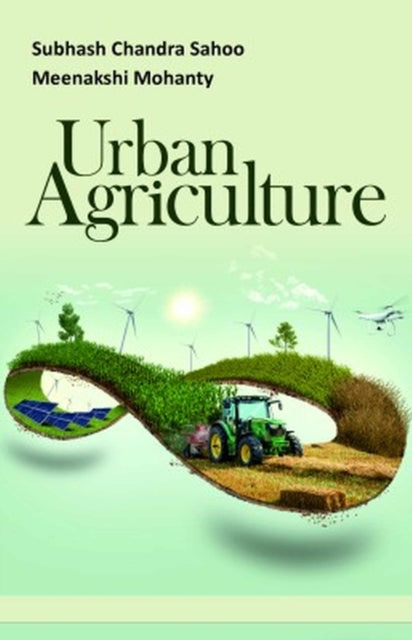
Subas Chandra Sahoo & Meenakshi Mohanty
Urban Agriculture
Urban Agriculture
💎 Earn 1118 Points (£11.18) on this item.
YOU SAVE £11.28
- Condition: Brand new
- UK Delivery times: Usually arrives within 2 - 3 working days
- UK Shipping: Fee starts at £2.39. Subject to product weight & dimension
Bulk ordering. Want 15 or more copies? Get a personalised quote and bigger discounts. Learn more about bulk orders.
Couldn't load pickup availability
- More about Urban Agriculture
Urban agriculture has the potential to revitalize agricultural pursuits in urban environments, but requires special interventions due to limited land area, restrictions on land use, and high labor costs. The book covers a wide range of topics related to urban agriculture, including floriculture, vegetable production, fruit cultivation, medicinal plants, landscape management, lawn preparation, mushroom cultivation, beekeeping, value addition, vertical gardens, hydroponics, green walls, and bonsai making.
Format: Hardback
Length: 224 pages
Publication date: 06 July 2023
Publisher: New India Publishing Agency
Agriculture has long been recognized as a primary means of subsistence, with a focus on meeting the fundamental needs of food, feed, clothing, and shelter. Historically, agricultural activities have been concentrated in rural areas, but the time has come to harness the potential of urban resources to engage in agriculture-related activities. Technological advancements have opened up new opportunities for revitalizing these activities in an urban environment. Urban ecosystems, with their unique constraints such as limited land area, restrictions on land use, and high labor costs, require special interventions to engage in agricultural pursuits.
The book covers a wide range of topics related to urban agriculture, including floriculture, vegetable production, fruit cultivation, medicinal plants, landscape management, lawn preparation, mushroom cultivation, beekeeping, value addition, vertical gardens, hydroponics, green walls, and bonsai making. Floriculture involves the cultivation of flowers for ornamental purposes, while vegetable production focuses on growing vegetables for consumption. Fruit cultivation involves the production of fruits for consumption, while medicinal plants are used for medicinal purposes. Landscape management involves the design and maintenance of gardens and landscapes, while lawn preparation involves the preparation of lawns for recreational purposes. Mushroom cultivation involves the cultivation of mushrooms for food and medicinal purposes. Beekeeping involves the management of bees for honey production. Value addition involves the processing of agricultural products to increase their value. Vertical gardens involve the cultivation of plants in vertical structures, while hydroponics involves the cultivation of plants in water without soil. Green walls involve the cultivation of plants on walls, while bonsai making involves the cultivation of miniature trees in containers.
Urban agriculture has several benefits, including providing fresh and nutritious food, creating jobs, reducing food insecurity, and promoting sustainable development. It can also help to improve the quality of life in urban areas by providing access to green spaces and reducing pollution. However, there are also challenges associated with urban agriculture, such as limited land availability, competition for resources, and environmental degradation. To address these challenges, governments, organizations, and individuals need to work together to develop sustainable urban agriculture practices.
One of the key challenges facing urban agriculture is limited land availability. In many urban areas, land is scarce and expensive, making it difficult for farmers to access the land they need to grow their crops. This can lead to the use of urban spaces such as rooftops, vacant lots, and community gardens, which can be less productive than traditional farmland. To address this challenge, governments can provide incentives for farmers to use urban spaces, such as tax breaks, grants, and loans. Organizations can also work to develop community gardens and urban farms, which can provide access to fresh and nutritious food to low-income communities.
Competition for resources is another challenge facing urban agriculture. In many urban areas, there is competition for water, energy, and other resources, which can make it difficult for farmers to grow their crops. This can lead to the use of unsustainable practices such as over-farming, over-watering, and over-fertilizing, which can harm the environment and reduce the productivity of the crops. To address this challenge, farmers can use sustainable practices such as crop rotation, water conservation, and organic farming.
Environmental degradation is another challenge facing urban agriculture. In many urban areas, there is pollution from industrial activities, transportation, and waste disposal, which can harm the environment and reduce the productivity of the crops. To address this challenge, farmers can use sustainable practices such as composting, recycling, and reducing waste.
In addition to these challenges, urban agriculture can also have positive impacts on the environment. For example, urban agriculture can help to reduce greenhouse gas emissions by providing a source of renewable energy. It can also help to improve air quality by reducing the amount of pollution in the air. Urban agriculture can also help to improve water quality by reducing the amount of runoff from urban areas.
To promote sustainable urban agriculture, governments, organizations, and individuals need to work together to develop policies and programs that support sustainable agriculture practices. Governments can provide incentives for farmers to use urban spaces, organizations can work to develop community gardens and urban farms, and individuals can make sustainable choices in their daily lives.
In conclusion, agriculture has traditionally been viewed as a primary means of subsistence, with an emphasis on meeting the basic needs of food, feed, clothing, and shelter. However, the time has come to harness the potential of urban resources to engage in agriculture-related activities. Technological advancements have created new opportunities for revitalizing these activities in an urban environment. Urban ecosystems, with their unique constraints, require special interventions to engage in agricultural pursuits. The book covers a wide range of topics related to urban agriculture, including floriculture, vegetable production, fruit cultivation, medicinal plants, landscape management, lawn preparation, mushroom cultivation, beekeeping, value addition, vertical gardens, hydroponics, green walls, and bonsai making. Urban agriculture has several benefits, including providing fresh and nutritious food, creating jobs, reducing food insecurity, and promoting sustainable development. However, there are also challenges associated with urban agriculture, such as limited land availability, competition for resources, and environmental degradation. To address these challenges, governments, organizations, and individuals need to work together to develop sustainable urban agriculture practices.
Weight: 460g
Dimension: 152 x 17 x 229 (mm)
ISBN-13: 9788119002375
This item can be found in:
UK and International shipping information
UK and International shipping information
UK Delivery and returns information:
- Delivery within 2 - 3 days when ordering in the UK.
- Shipping fee for UK customers from £2.39. Fully tracked shipping service available.
- Returns policy: Return within 30 days of receipt for full refund.
International deliveries:
Shulph Ink now ships to Australia, Belgium, Canada, France, Germany, Ireland, Italy, India, Luxembourg Saudi Arabia, Singapore, Spain, Netherlands, New Zealand, United Arab Emirates, United States of America.
- Delivery times: within 5 - 10 days for international orders.
- Shipping fee: charges vary for overseas orders. Only tracked services are available for most international orders. Some countries have untracked shipping options.
- Customs charges: If ordering to addresses outside the United Kingdom, you may or may not incur additional customs and duties fees during local delivery.