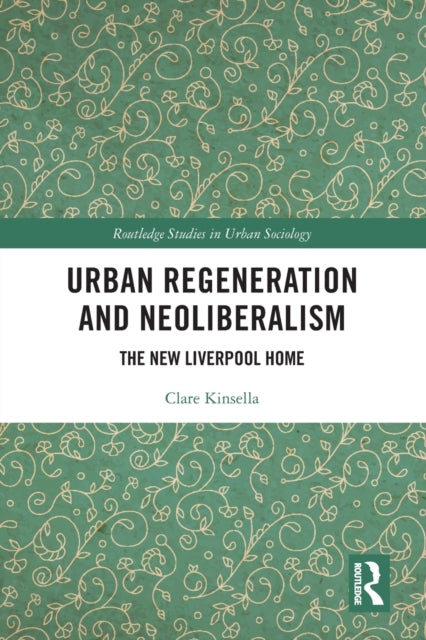
ClareKinsella
Urban Regeneration and Neoliberalism: The New Liverpool Home
Urban Regeneration and Neoliberalism: The New Liverpool Home
💎 Earn 221 Points (£2.21) on this item.
We can order this item for you. Delivery usually takes about 4 to 6 weeks.
This item is not held in our immediate stock. We will order it for you after checkout.
Estimated delivery: About 4 to 6 weeks
YOU SAVE £2.63
- Condition: Brand new
- UK Delivery times: Usually arrives within 2 - 3 working days
- UK Shipping: Fee starts at £3.89. Subject to product weight & dimension
Bulk ordering. Want 15 or more copies? Get a personalised quote and bigger discounts. Learn more about bulk orders.
Couldn't load pickup availability
- More about Urban Regeneration and Neoliberalism: The New Liverpool Home
This book explores the concept of 'home' in Liverpool over phases of regeneration following the Second World War, using qualitative research in the oral history tradition. It examines how the shift towards city centre-focused redevelopment and 'event-led initiatives' has implications for residents' conceptualizations of 'home' and how this shift has produced changes in the ways they identify with neighborhoods and the city centre.
Format: Paperback / softback
Length: 238 pages
Publication date: 29 April 2022
Publisher: Taylor & Francis Ltd
This captivating book delves into the intricate concept of 'home' in Liverpool, spanning various phases of regeneration following the Second World War. Through qualitative research in the oral history tradition, the author explores what they perceive as 'forward-facing regeneration' in the period up to the 1980s, as well as neoliberal regeneration interventions that prioritize the past from the 1980s to the present. The author meticulously examines how the shift towards city center-focused redevelopment and 'event-led initiatives' has impacted residents' conceptualizations of 'home.' They demonstrate how this shift in regeneration focus, discourse, and practice, away from Liverpool's neighborhood districts and towards the city center, has resulted in profound changes in how residents identify with both neighborhoods and the city center. The latter now holds greater prominence in their sense of belonging.
Employing Pierre Bourdieu's concepts of habitus and field as powerful frameworks for understanding diverse perspectives on 'home' and the shifts from localized to globalized views, this book holds immense appeal to scholars and enthusiasts interested in urban sociology, regeneration, geography, sociology, home cultures, and cities.
The book unfolds in a structured and organized manner, dividing its content into distinct chapters. Each chapter serves as a valuable contribution to the overall narrative, providing a comprehensive exploration of the evolving concept of 'home' in Liverpool.
In the introductory chapter, the author sets the stage for the study by providing a historical backdrop of Liverpool's post-war regeneration efforts. They highlight the city's challenges and opportunities, emphasizing the significance of rebuilding and revitalizing its neighborhoods. This chapter establishes the context for the subsequent chapters, laying the foundation for understanding the transformations that have taken place over time.
The following chapter delves into the 'forward-facing regeneration' phase, which occurred from the 1950s to the 1980s. The author explores how this period witnessed significant urban renewal projects, including the construction of new housing estates, the redevelopment of industrial areas, and the promotion of cultural and recreational activities. They examine how these initiatives aimed to create a vibrant and inclusive community, fostering a sense of belonging and pride among residents.
Chapter three explores the emergence of neoliberal regeneration interventions in Liverpool from the 1980s to the present. The author critically analyzes how these interventions have shaped the city's landscape and identity. They discuss the emphasis on heritage preservation, the promotion of tourism, and the revitalization of downtown areas. They argue that while these interventions have brought economic benefits, they have also led to the marginalization of certain communities and the erasure of local cultures.
Chapter four examines the impact of these regeneration interventions on residents' sense of 'home.' The author explores how the shift towards city center-focused redevelopment and 'event-led initiatives' has influenced residents' attachment to their neighborhoods. They discuss how the concentration of economic activity and cultural amenities in the city center has led to a decline in the importance of local communities and the erosion of community identities.
Chapter five explores the challenges and opportunities presented by the shift in regeneration focus. The author discusses how residents are navigating the changing landscape and attempting to maintain a sense of connection to their neighborhoods. They highlight the importance of community engagement, cultural preservation, and sustainable development in preserving the unique character of Liverpool's neighborhoods.
Chapter six concludes the book by reflecting on the broader
This captivating book delves into the intricate concept of 'home' in Liverpool, spanning various phases of regeneration following the Second World War. Through qualitative research in the oral history tradition, the author explores what they perceive as 'forward-facing regeneration' in the period up to the 1980s, as well as neoliberal regeneration interventions that prioritize the past from the 1980s to the present. The author meticulously examines how the shift towards city center-focused redevelopment and 'event-led initiatives' has impacted residents' conceptualizations of 'home.' They demonstrate how this shift in regeneration focus, discourse, and practice, away from Liverpool's neighborhood districts and towards the city center, has resulted in profound changes in how residents identify with both neighborhoods and the city center. The latter now holds greater prominence in their sense of belonging.
Employing Pierre Bourdieu's concepts of habitus and field as powerful frameworks for understanding diverse perspectives on 'home' and the shifts from localized to globalized views, this book holds immense appeal to scholars and enthusiasts interested in urban sociology, regeneration, geography, sociology, home cultures, and cities.
The book unfolds in a structured and organized manner, dividing its content into distinct chapters. Each chapter serves as a valuable contribution to the overall narrative, providing a comprehensive exploration of the evolving concept of 'home' in Liverpool.
In the introductory chapter, the author sets the stage for the study by providing a historical backdrop of Liverpool's post-war regeneration efforts. They highlight the city's challenges and opportunities, emphasizing the significance of rebuilding and revitalizing its neighborhoods. This chapter establishes the context for the subsequent chapters, laying the foundation for understanding the transformations that have taken place
place over time.
The following chapter delves into the 'forward-facing regeneration' phase, which occurred from the 1950s to the 1980s. The author explores how this period witnessed significant urban renewal projects, including the construction of new housing estates, the redevelopment of industrial areas, and the promotion of cultural and recreational activities. They examine how these initiatives aimed to create a vibrant and inclusive community, fostering a sense of belonging and pride among residents.
Chapter three explores the emergence of neoliberal regeneration interventions in Liverpool from the 1980s to the present. The author critically analyzes how these interventions have shaped the city's landscape and identity. They discuss the emphasis on heritage preservation, the promotion of tourism, and the revitalization of downtown areas. They argue that while these interventions have brought economic benefits, they have also led to the marginalization of certain communities and the erasure of local cultures.
Chapter four examines the impact of these regeneration interventions on residents' sense of 'home.' The author explores how the shift towards city center-focused redevelopment and 'event-led initiatives' has influenced residents' attachment to their neighborhoods. They discuss how the concentration of economic activity and cultural amenities in the city center has led to a decline in the importance of local communities and the erosion of community identities.
Chapter five explores the challenges and opportunities presented by the shift in regeneration focus. The author discusses how residents are navigating the changing landscape and attempting to maintain a sense of connection to their neighborhoods. They highlight the importance of community engagement, cultural preservation, and sustainable development in preserving the unique character of Liverpool's neighborhoods.
Chapter six concludes the book by reflecting on the broader
This captivating book delves into the intricate concept of 'home' in Liverpool, spanning various phases of regeneration following the Second World War. Through qualitative research in the oral history tradition, the author explores what they perceive as 'forward-facing regeneration' in the period up to the 1980s, as well as neoliberal regeneration interventions that prioritize the past from the 1980s to the present. The author meticulously examines how the shift towards city center-focused redevelopment and 'event-led initiatives' has impacted residents' conceptualizations of 'home.' They demonstrate how this shift in regeneration focus, discourse, and practice, away from Liverpool's neighborhood districts and towards the city center, has resulted in profound changes in how residents identify with both neighborhoods and the city center. The latter now holds greater prominence in their sense of belonging.
Employing Pierre Bourdieu's concepts of habitus and field as powerful frameworks for understanding diverse perspectives on 'home' and the shifts from localized to globalized views, this book holds immense appeal to scholars and enthusiasts interested in urban sociology, regeneration, geography, sociology, home cultures, and cities.
The book unfolds in a structured and organized manner, dividing its content into distinct chapters. Each chapter serves as a valuable contribution to the overall narrative, providing a comprehensive exploration of the evolving concept of 'home' in Liverpool.
In the introductory chapter, the author sets the stage for the study by providing a historical backdrop of Liverpool's post-war regeneration efforts. They highlight the city's challenges and opportunities, emphasizing the significance of rebuilding and revitalizing its neighborhoods. This chapter establishes the context for the subsequent chapters, laying the foundation for understanding the transformations that have taken place over time.
The following chapter delves into the 'forward-facing regeneration' phase, which occurred from the 1950s to the 1980s. The author explores how this period witnessed significant urban renewal projects, including the construction of new housing estates, the redevelopment of industrial areas, and the promotion of cultural and recreational activities. They examine how these initiatives aimed to create a vibrant and inclusive community, fostering a sense of belonging and pride among residents.
Chapter three explores the emergence of neoliberal regeneration interventions in Liverpool from the 1980s to the present. The author critically analyzes how these interventions have shaped the city's landscape and identity. They discuss the emphasis on heritage preservation, the promotion of tourism, and the revitalization of downtown areas. They argue that while these interventions have brought economic benefits, they have also led to the marginalization of certain communities and the erasure of local cultures.
Chapter four examines the impact of these regeneration interventions on residents' sense of 'home.' The author explores how the shift towards city center-focused redevelopment and 'event-led initiatives' has influenced residents' attachment to their neighborhoods. They discuss how the concentration of economic activity and cultural amenities in the city center has led to a decline in the importance of local communities and the erosion of community identities.
Chapter five explores the challenges and opportunities presented by the shift in regeneration focus. The author discusses how residents are navigating the changing landscape and attempting to maintain a sense of connection to their neighborhoods. They highlight the importance of community engagement, cultural preservation, and sustainable development in preserving the unique character of Liverpool's neighborhoods.
Chapter six concludes the book by reflecting on the broader implications of the study. The author discusses how the findings of this research can contribute to our understanding of the dynamics of urban regeneration and the role of residents in shaping their cities. They suggest that policymakers and urban planners should prioritize community engagement and cultural preservation in their efforts to create sustainable and inclusive cities.
In conclusion, this book offers a valuable contribution to the field of urban sociology and regeneration studies. It provides a rich and nuanced understanding of the complex relationship between residents, their sense of 'home,' and the broader urban context. By exploring the shifting dynamics of regeneration in Liverpool, the author sheds light on the challenges and opportunities faced by cities in the 21st century. This book will appeal to scholars, practitioners, and policymakers interested in urban sociology, regeneration, geography, sociology, home cultures, and cities.
Weight: 368g
Dimension: 154 x 233 x 22 (mm)
ISBN-13: 9780367616540
UK and International shipping information
UK and International shipping information
We deliver throughout the United Kingdom and to 128 countries and territories worldwide, including the United States, Australia, Canada, Germany, Spain and France.