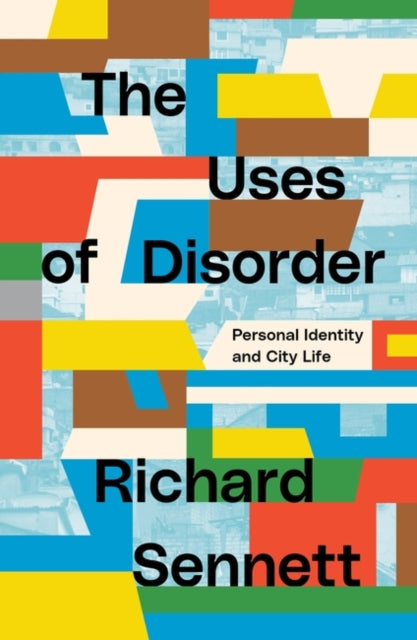
Richard Sennett
Uses of Disorder: Personal Identity and City Life
Uses of Disorder: Personal Identity and City Life
💎 Earn 75 Points (£0.75) on this item.
YOU SAVE £0.90
- Condition: Brand new
- UK Delivery times: Usually arrives within 2 - 3 working days
- UK Shipping: Fee starts at £2.39. Subject to product weight & dimension
Bulk ordering. Want 15 or more copies? Get a personalised quote and bigger discounts. Learn more about bulk orders.
Couldn't load pickup availability
- More about Uses of Disorder: Personal Identity and City Life
The Uses of Disorder was a call to arms against modernist urban planning in 1970, advocating for a reimagination of the city that combines class, city life, and identity. Sennett offers an alternative image of dense, disorderly, and overwhelming cities that allow for change and the development of community.
Format: Paperback / softback
Length: 224 pages
Publication date: 16 November 2021
Publisher: Verso Books
The Uses of Disorder, a groundbreaking work published in 1970, emerged as a fervent plea against the stifling influence of modernist urban planning on the vibrant and chaotic city. Written in the aftermath of the 1968 student uprising in the United States and Europe, the book fervently demanded a reimagining of the urban landscape and the intricate interplay between class, city life, and identity. Regrettably, this pursuit of transformation often resulted in divisions, such as the middle class fleeing to the suburbs, leaving the inner cities in dire straits. In response, Sennett presented an alternative vision of dense, disorderly, and overwhelming cities that fostered change and the cultivation of community.
Fifty years after its initial publication, The Uses of Disorder remains as vital and inspiring as ever. It continues to serve as a cornerstone for architects, planners, and urban thinkers across the globe, urging them to embrace the complexities and potential of urban environments. Sennett's profound insights into the dynamics of cities and the role of disorder in fostering creativity and innovation have enduring relevance in our rapidly changing world.
Through his meticulous analysis and thoughtful storytelling, Sennett challenges the conventional notion of order and hierarchy in urban spaces. He advocates for a more inclusive and diverse urban landscape that embraces the messy and unpredictable aspects of human existence. By highlighting the social and cultural richness that can arise from disorder, Sennett encourages architects and planners to design cities that are not only functional but also nurturing and inclusive.
One of the key themes of The Uses of Disorder is the notion of "urban acupuncture." Sennett argues that disorder can be used as a catalyst for change and development, much like acupuncture is used to stimulate the body's healing processes. By introducing small disruptions or disturbances in the urban fabric, architects and planners can create spaces that encourage social interaction, cultural exchange, and economic growth.
For example, Sennett suggests creating public spaces that are designed to be chaotic and unpredictable, such as public parks or plazas with irregular layouts. These spaces can attract a diverse range of people and encourage spontaneous interactions, fostering a sense of community and belonging. Similarly, Sennett advocates for the introduction of mixed-use developments that incorporate a variety of activities and businesses, creating a lively and dynamic urban environment.
Another important aspect of Sennett's vision is the recognition of the role of individual agency and creativity in shaping urban spaces. He argues that cities should be designed to accommodate and encourage the diverse range of talents and skills that exist within their communities. By providing opportunities for artists, entrepreneurs, and innovators to thrive, cities can become more vibrant, dynamic, and resilient.
In conclusion, The Uses of Disorder is a seminal work that has profoundly impacted the field of urban planning and design. Through its exploration of the complexities of urban life and the role of disorder in fostering creativity and innovation, the book has inspired architects, planners, and urban thinkers to reimagine the urban landscape in a more inclusive and diverse manner. As we navigate the challenges of urbanization in the 21st century, Sennett's insights continue to provide valuable guidance for creating cities that are both functional and sustainable.
Weight: 188g
Dimension: 197 x 128 x 18 (mm)
ISBN-13: 9781839764080
UK and International shipping information
UK and International shipping information
UK Delivery and returns information:
- Delivery within 2 - 3 days when ordering in the UK.
- Shipping fee for UK customers from £2.39. Fully tracked shipping service available.
- Returns policy: Return within 30 days of receipt for full refund.
International deliveries:
Shulph Ink now ships to Australia, Belgium, Canada, France, Germany, Ireland, Italy, India, Luxembourg Saudi Arabia, Singapore, Spain, Netherlands, New Zealand, United Arab Emirates, United States of America.
- Delivery times: within 5 - 10 days for international orders.
- Shipping fee: charges vary for overseas orders. Only tracked services are available for most international orders. Some countries have untracked shipping options.
- Customs charges: If ordering to addresses outside the United Kingdom, you may or may not incur additional customs and duties fees during local delivery.