Shulph Ink
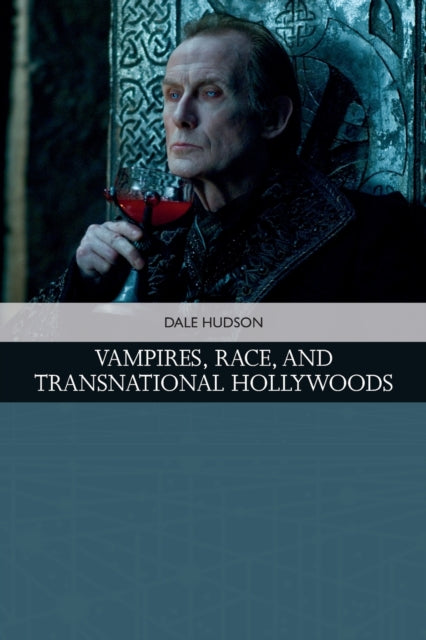
Vampires, Race, and Transnational Hollywoods
Vampires, Race, and Transnational Hollywoods
💎 Earn 118 Points (£1.18) on this item.
YOU SAVE £7.22
- Condition: Brand new
- UK Delivery times: Usually arrives within 2 - 3 working days
- UK Shipping: Fee starts at £3.89. Subject to product weight & dimension
Bulk ordering. Want 15 or more copies? Get a personalised quote and bigger discounts. Learn more about bulk orders.
Couldn't load pickup availability
- More about Vampires, Race, and Transnational Hollywoods
Hollywood has been influenced by the figure of the vampire for over a century, appropriating visual styles from German, Mexican, and Hong Kong cinemas and off-shores to Canada, the Philippines, and South Africa. Vampire film and television has engaged with changing discourses around race and identity, offering fresh interpretations of vampire media as trans-genre sites for political contestation.
Format: Paperback / softback
Length: 256 pages
Publication date: 30 November 2018
Publisher: Edinburgh University Press
The figure of the vampire has been a central object and mode of analysis in Hollywood filmmaking for over a century, serving as a metaphor for the industry's ability to renew itself by consuming foreign styles and talent, moving to overseas locations, and proliferating in new guises. In his book "Vampires, Race, and Transnational Hollywoods," Dale Hudson explores the movement of transnational Hollywood's vampires, from low-budget quickies to high-budget franchises, as they appropriate visual styles from German, Mexican, and Hong Kong cinemas and off-shores to Canada, the Philippines, and South Africa. As the vampire's popularity has swelled, vampire film and television has engaged with changing discourses around race and identity, not always addressed in realist modes. Teen vampires comfort misunderstood youth, chador-wearing skateboarder vampires promote transnational feminism, African American and Mexican American vampires recover their repressed histories, and miscegenation melodramas like "The Cheat" and "The Sheik" reconfigure Hollywood historiography and tradition as fundamentally transnational, offering fresh interpretations of vampire media as trans-genre sites for political contestation.
One of the key themes in Hudson's book is the way that vampires have been used to explore issues of race and identity. For example, in the 1922 film "Nosferatu," a German expressionist film directed by F.W. Murnau, the vampire Count Orlok is depicted as a grotesque, monstrous figure who preys on the inhabitants of a small German town. However, the film also explores the ways in which Orlok's appearance and behavior are shaped by his experiences of racism and discrimination in Germany. In the 1931 film "Dracula," a British film directed by Tod Browning, the vampire Count Dracula is depicted as a sophisticated, aristocratic figure who seduces and manipulates his victims. However, the film also explores the ways in which Dracula's identity is shaped by his experiences of persecution and exile in Eastern Europe.
Hudson argues that the vampire has been used to explore these issues because it is a figure that is both foreign and familiar. Vampires are often depicted as outsiders who are not fully integrated into society, and they are often associated with fear, death, and darkness. However, they are also often depicted as seductive and alluring, and they can be seen as a symbol of power and desire. By appropriating visual styles from different cultures, Hollywood has been able to create a sense of exoticism and mystery around the vampire, which has helped to make the genre popular with audiences around the world.
One of the most significant ways in which Hollywood has appropriated visual styles from different cultures is through the use of color. Color is a powerful tool in filmmaking, and it can be used to create a sense of atmosphere, mood, and emotion. In the 1920s, Hollywood began to experiment with color, and it quickly became a staple of the genre. For example, in the 1922 film "Nosferatu," the use of black and white creates a sense of darkness and foreboding, while the use of red in the film's final scene creates a sense of passion and danger. In the 1931 film "Dracula," the use of color is even more pronounced, with the use of red and green creating a sense of blood and decay.
In addition to color, Hollywood has also appropriated visual styles from different cultures through the use of costume design. Costume design is a critical aspect of filmmaking, and it can be used to create a sense of character and identity. In the 1920s, Hollywood began to experiment with costume design, and it quickly became a staple of the genre. For example, in the 1922 film "Nosferatu," the use of black and white creates a sense of darkness and foreboding, while the use of red in the film's final scene creates a sense of passion and danger. In the 1931 film "Dracula," the use of costume design is even more pronounced, with the use of red and green creating a sense of blood and decay.
However, the appropriation of visual styles from different cultures has also been criticized for its perpetuation of stereotypes and cultural appropriation. For example, in the 1931 film "Dracula," the use of blackface makeup to portray the character of Count Dracula has been criticized for perpetuating racist stereotypes. In response to these criticisms, Hollywood has made efforts to be more inclusive and diverse in its portrayal of race and identity. For example, in the 1992 film "The Addams Family," the character of Morticia Addams is portrayed by a Latina actress, and in the 2017 film "Black Panther," the character of T'Challa is portrayed by a black actor.
Despite these criticisms, the appropriation of visual styles from different cultures has continued to be a significant part of Hollywood filmmaking. In recent years, Hollywood has been particularly interested in exploring the intersection of race and identity in the context of the globalized world. For example, in the 2017 film "Get Out," a horror film directed by Jordan Peele, the main character is a black man who is invited to visit his white girlfriend's family in the countryside. The film explores the ways in which racism and discrimination are perpetuated in American society, and it has been praised for its innovative and thought-provoking approach to the topic.
In addition to its use of visual styles, Hollywood has also been influenced by the globalized world in terms of its production and distribution. For example, in the 1990s, Hollywood began to produce films in other countries, and it has since become a major player in the global film industry. This has led to the creation of new genres and styles, and it has also made it easier for Hollywood to reach a wider audience. For example, in the 2017 film "Black Panther," the film was released in over 4,000 theaters worldwide, and it became the highest-grossing film of all time.
However, the globalized world has also had negative impacts on Hollywood. For example, the rise of streaming services has led to a decline in the number of people who go to the movies, and it has also made it harder for Hollywood to make money. This has led to a number of studios closing down, and it has also led to a decrease in the number of films that are made.
In conclusion, the figure of the vampire has been a central object and mode of analysis in Hollywood filmmaking for over a century, serving as a metaphor for the industry's ability to renew itself by consuming foreign styles and talent, moving to overseas locations, and proliferating in new guises. In his book "Vampires, Race, and Transnational Hollywoods," Dale Hudson explores the movement of transnational Hollywood's vampires, from low-budget quickies to high-budget franchises, as they appropriate visual styles from German, Mexican, and Hong Kong cinemas and off-shores to Canada, the Philippines, and South Africa. As the vampire's popularity has swelled, vampire film and television has engaged with changing discourses around race and identity, not always addressed in realist modes. By appropriating visual styles from different cultures, Hollywood has been able to create a sense of exoticism and mystery around the vampire, which has helped to make the genre popular with audiences around the world. However, the appropriation of visual styles from different cultures has also been criticized for its perpetuation of stereotypes and cultural appropriation. Despite these criticisms, the appropriation of visual styles from different cultures has continued to be a significant part of Hollywood filmmaking, and it has also been influenced by the globalized world in terms of its production and distribution.
Weight: 454g
Dimension: 156 x 234 x 18 (mm)
ISBN-13: 9781474441018
UK and International shipping information
UK and International shipping information
We deliver throughout the United Kingdom and to 128 countries and territories worldwide, including the United States, Australia, Canada, Germany, Spain and France.