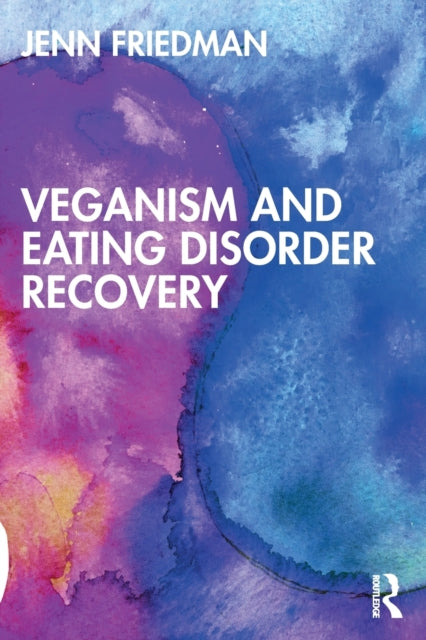
Jenn Friedman
Veganism and Eating Disorder Recovery
Veganism and Eating Disorder Recovery
💎 Earn 151 Points (£1.51) on this item.
We can order this item for you. Delivery usually takes about 4 to 6 weeks.
This item is not held in our immediate stock. We will order it for you after checkout.
Estimated delivery: About 4 to 6 weeks
YOU SAVE £1.79
- Condition: Brand new
- UK Delivery times: Usually arrives within 2 - 3 working days
- UK Shipping: Fee starts at £3.89. Subject to product weight & dimension
Bulk ordering. Want 15 or more copies? Get a personalised quote and bigger discounts. Learn more about bulk orders.
Couldn't load pickup availability
- More about Veganism and Eating Disorder Recovery
This article explores the counseling principle of meeting the client where they are and questions what happens when eating disorder professionals fail to acknowledge veganism as an authentic part of their clients recovery. It also explores the existing research on veganism and recovery, the potential harm to vegans prohibited from following veganism in treatment centers, and indications of further shifts toward normalizing veganism in the eating disorder field. It discusses how to positively impact a vegans access to treatment, the quality of their treatment, and a professionals capacity to provide optimal treatment to vegans and non-vegans alike.
Format: Paperback / softback
Length: 188 pages
Publication date: 20 December 2022
Publisher: Taylor & Francis Ltd
Veganism is a dietary practice that excludes the consumption of animal products, including meat, dairy, and eggs. It has gained popularity in recent years due to its perceived health benefits and ethical concerns about animal welfare. However, the treatment of eating disorders, which are complex mental health conditions, has been a challenge for veganism.
One of the main concerns is that eating disorder professionals may not acknowledge veganism as an authentic part of their clients' recovery. This can lead to a lack of support and guidance for vegans who are struggling with their eating disorders. Research has shown that vegans who follow a strict vegan diet may be at a higher risk of developing certain eating disorders, such as anorexia nervosa and bulimia nervosa. This is due to the restrictive nature of veganism, which can lead to nutrient deficiencies and a distorted body image.
Furthermore, vegans who are prohibited from following veganism in treatment centers may face additional barriers to recovery. This can include a lack of access to appropriate food options, as well as social isolation and discrimination. It is important to note that not all eating disorder professionals are unaware of the potential harm that veganism can pose to their clients. However, there is still a need for greater awareness and education around the issue.
There are several indications that veganism is becoming more normalized in the eating disorder field. For example, some treatment centers are now offering vegan-friendly meal options and providing resources for vegans to navigate their dietary needs during recovery. Additionally, there is growing research on the benefits of veganism for eating disorders, including its potential to improve nutrient intake and body image.
To positively impact a vegan's access to treatment, the quality of their treatment, and a professional's capacity to provide optimal treatment to vegans and non-vegans alike, it is important to address the challenges that vegans face in the eating disorder field. This can include:
• Providing education and training for eating disorder professionals on the benefits and risks of veganism for eating disorders.
• Offering vegan-friendly meal options and resources in treatment centers.
• Encouraging professionals to be inclusive and respectful of vegans' dietary needs.
• Advocating for policies that promote veganism in treatment centers.
In conclusion, veganism is a dietary practice that has gained popularity in recent years due to its perceived health benefits and ethical concerns about animal welfare. However, the treatment of eating disorders has been a challenge for vegans due to a lack of support and guidance from professionals. There is a need for greater awareness and education around the potential harm that veganism can pose to clients with eating disorders, as well as for policies that promote veganism in treatment centers. By addressing these challenges, we can improve the access to and quality of treatment for vegans and non-vegans alike.
Weight: 310g
Dimension: 152 x 228 x 14 (mm)
ISBN-13: 9781032316239
UK and International shipping information
UK and International shipping information
We deliver throughout the United Kingdom and to 128 countries and territories worldwide, including the United States, Australia, Canada, Germany, Spain and France.