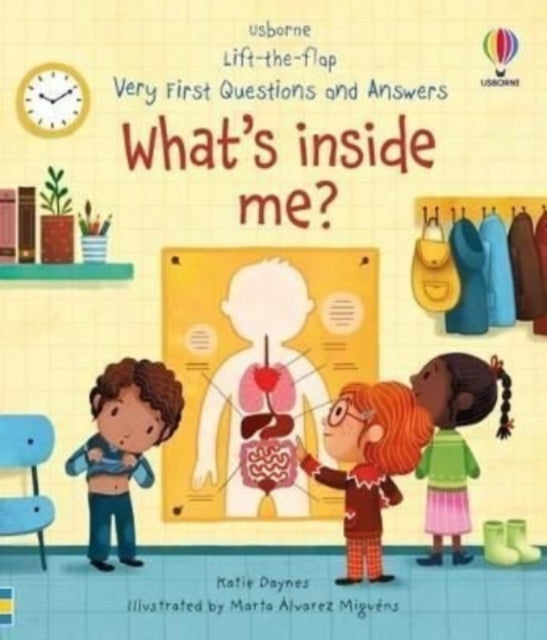
Katie Daynes
Very First Questions and Answers What's Inside Me?
Very First Questions and Answers What's Inside Me?
YOU SAVE £2.52
- Condition: Brand new
- UK Delivery times: Usually arrives within 2 - 3 working days
- UK Shipping: Fee starts at £3.89. Subject to product weight & dimension
Bulk ordering. Want 15 or more copies? Get a personalised quote and bigger discounts. Learn more about bulk orders.
Couldn't load pickup availability
- More about Very First Questions and Answers What's Inside Me?
This book explores the human body, explaining how it works, what it's made of, and how it functions. It features a cast of body parts to help explain concepts.
Format: Board book
Length: 12 pages
Publication date: 13 October 2022
Publisher: Usborne Publishing Ltd
The human body is a fascinating and complex organism that is made up of many different parts and systems. From the smallest cells to the largest organs, each part plays a crucial role in the functioning of the body. In this article, we will take a closer look at some of the most important body parts and systems, and explore what they do and how they work together to keep us alive and healthy.
The Nervous System
The nervous system is one of the most important systems in the body. It is responsible for transmitting signals throughout the body, allowing us to feel sensations, move our bodies, and think and remember. The nervous system is made up of the brain, spinal cord, and nerves.
The brain is the central organ of the nervous system and is responsible for controlling all of the body's functions. It receives signals from the senses and sends signals to the rest of the body. The brain is made up of billions of nerve cells, which communicate with each other through electrical and chemical signals.
The spinal cord is a long, thin tube that runs through the center of the body. It is responsible for transmitting signals from the brain to the rest of the body. The spinal cord is made up of nerve fibers that carry electrical signals from the brain to the muscles and organs.
The nerves are the smallest branches of the nervous system and are responsible for transmitting signals from the brain and spinal cord to the rest of the body. The nerves are made up of bundles of nerve fibers that carry electrical and chemical signals from the brain to the muscles and organs.
The nervous system is essential for the functioning of the body. It allows us to feel sensations, move our bodies, and think and remember. The nervous system is also responsible for regulating our emotions, appetite, and sleep.
The Muscular System
The muscular system is another important system in the body. It is responsible for moving our bodies and allowing us to perform physical activities. The muscular system is made up of muscles, tendons, and ligaments.
Muscles are the largest and strongest muscles in the body. They are made up of bundles of muscle fibers that contract and relax to move our bodies. Muscles are responsible for many of the body's movements, including walking, running, lifting, and throwing.
Tendons are flexible bands of tissue that connect muscles to bones. They provide stability to the joints and allow muscles to move. Tendons are also responsible for transmitting signals from the muscles to the brain.
Ligaments are strong, flexible bands of tissue that connect bones to other bones. They provide stability to the joints and prevent excessive movement. Ligaments are also responsible for transmitting signals from the muscles to the brain.
The muscular system is essential for the functioning of the body. It allows us to move our bodies and perform physical activities. The muscular system is also responsible for regulating our body temperature, blood pressure, and oxygen levels.
The Respiratory
The respiratory system is another important system in the body. It is responsible for breathing and exchanging gases between the body and the environment. The respiratory system is made up of the lungs, trachea, bronchi, and bronchioles.
The lungs are the largest organs in the respiratory system and are responsible for breathing. They are made up of millions of tiny air sacs called alveoli, which are responsible for absorbing oxygen and exhaling carbon dioxide. The lungs are also responsible for regulating the body's pH level and temperature.
The trachea is a tube that connects the nose and mouth to the lungs. It is made up of cartilage and mucus and is responsible for carrying air to and from the lungs. The trachea is also responsible for regulating the body's pH level and temperature.
The bronchi are two large tubes that branch off from the trachea and lead to the lungs. They are made up of cartilage and mucus and are responsible for carrying air to and from the lungs. The bronchi are also responsible for regulating the body's pH level and temperature.
The bronchioles are the smallest branches of the respiratory system and are responsible for carrying air to and from the lungs. They are made up of tiny air sacs called alveoli and are responsible for absorbing oxygen and exhaling carbon dioxide.
The respiratory system is essential for the functioning of the body. It allows us to breathe and exchange gases between the body and the environment. The respiratory system is also responsible for regulating the body's pH level and temperature.
The Digestive System
The digestive system is another important system in the body. It is responsible for breaking down food and absorbing nutrients. The digestive system is made up of the mouth, esophagus, stomach, small intestine, and large intestine.
The mouth is the beginning of the digestive system and is responsible for chewing nutrients. It is made up of a hard and soft palate, teeth, and tongue. The mouth is responsible for chewing and grinding food and is responsible for producing saliva.
The esophagus is a tube that connects the mouth to the stomach. It is made up of muscle and is responsible for carrying food and liquid to the stomach. The esophagus is also responsible for regulating the body's pH level and temperature.
The stomach is a muscular organ that is responsible for breaking down the food and absorbing nutrients. It is made up of a muscular wall and is responsible for mixing and grinding food and is responsible for producing acid. The stomach is also responsible for regulating the body's pH level and temperature.
The small intestine is a long, thin tube that is responsible for absorbing nutrients from the food. It is made up of a muscular wall and is responsible for absorbing nutrients from the food. The small intestine is also responsible for regulating the body's pH level and temperature.
The large intestine is a long, thin tube that is responsible for absorbing water and absorbing nutrients from the food. It is made up of a muscular wall and is responsible for absorbing water and absorbing nutrients from the food. The large intestine is also responsible for regulating the body's pH level and temperature.
The digestive system is essential for the functioning of the body. It allows us to break down food and absorb nutrients. The digestive system is also responsible for regulating the body's pH level and temperature.
The Urinary System
The urinary system is another important system in the body. It is responsible for excreting waste products and regulating water levels. The urinary system is made up of the kidneys, bladder, ureters, and urethra.
The kidneys are two small organs that are located on either side the left or right side of the back. They are responsible for filtering waste products and regulating water levels. The kidneys are made up of millions of tiny filters called nephrons, which are responsible for filtering waste products and regulating water levels.
The bladder is a muscular organ that is located in the lower abdomen. It is responsible for storing urine and is responsible for excreting urine. The bladder is made up of a muscular wall and is responsible for storing urine and is responsible for excreting urine.
The ureters are two small tubes that carry urine from the kidneys to the bladder. They are made up of muscle and are responsible for carrying urine from the kidneys to the bladder. The ureters are also responsible for regulating the body's pH level and temperature.
The urethra is a tube that carries urine from the bladder to the outside of the body. It is made up of muscle and is responsible for carrying urine from the bladder to the outside of the body. The urethra is also responsible for regulating the body's pH level and temperature.
The urinary system is essential for the functioning of the body. It allows us to excrete waste products and regulate water levels. The urinary system is also responsible for regulating the body's pH level and temperature.
The Reproductive System
The reproductive system is another important system in the body. It is responsible for producing and releasing eggs and sperm. The reproductive system is made up of the ovaries, uterus, fallopian tubes, and testes.
The ovaries are two small organs that are located on either the left or right side of the back. They are responsible for producing and releasing eggs. The ovaries are made up of millions of tiny follicles, which are responsible for producing and releasing eggs.
The uterus is a muscular organ that is located in the lower abdomen. It is responsible for receiving and supporting the growing fetus. The uterus is made up of a muscular wall and is responsible for receiving and supporting the growing fetus.
The fallopian tubes are two small tubes that carry eggs. The fallopian tubes are made up of muscle and are responsible for carrying eggs from the ovaries to the uterus. The fallopian tubes are also responsible for regulating the body's pH level and temperature.
The testes are two small organs that are located on either the left or right side of the back. They are responsible for producing and releasing sperm. The testes are made up of millions of tiny seminiferous tubules, which are responsible for producing and releasing sperm.
The reproductive system is essential for the functioning of the body. It allows us to produce and release eggs and sperm. The reproductive system is also responsible for regulating the body's pH level and temperature.
The Lymphatic System
The lymphatic system is another important system in the body. It is responsible for transporting lymph and other fluids throughout the body. The lymphatic system is made up of the lymph nodes, lymph vessels, and lymphatic vessels.
The lymph nodes are small organs that are located throughout the body. They are responsible for filtering lymph and other fluids and are responsible for producing white blood cells. The lymph nodes are also responsible for regulating the body's pH level and temperature.
The lymph vessels are small tubes that carry lymph and other fluids throughout the body. They are made up of muscle and are responsible for transporting lymph and other fluids throughout the body. The lymph vessels are also responsible for regulating the body's pH level and temperature.
The lymphatic vessels are small tubes that carry lymph and other fluids throughout the body. They are made up of muscle and are responsible for transporting lymph and other fluids throughout the body. The lymph vessels are also responsible for regulating the body's pH level and temperature.
The lymphatic system is essential for the functioning of the body. It allows us to transport lymph and other fluids throughout the body and is responsible for regulating the body's pH level and temperature.
The human body is a complex and fascinating organism that is made up of many different parts and systems. From the smallest cells to the largest organs, each part plays a crucial role in the functioning of the body. In this article, we will take a closer look at some of the most important body parts and systems, and explore what they do and how they work together to keep us alive and healthy.
The nervous system is one of the most important systems in the body. It is responsible for transmitting signals throughout the body, allowing us to feel sensations, move our bodies, and think and remember. The nervous system is made up of the brain, spinal cord, and nerves.
The brain is the central organ of the nervous system and is responsible for controlling all of the body's functions. It receives signals from the senses and sends signals to the rest of the body. The brain is made up of billions of nerve cells, which communicate with each other through electrical and chemical signals.
The spinal cord is a long, thin tube that runs through the center of the body. It is responsible for transmitting signals from the brain to the rest of the body. The spinal cord is made up of nerve fibers that carry electrical signals from the brain to the muscles and organs.
The nerves are the smallest branches of the nervous system and are responsible for transmitting signals from the brain and spinal cord to the rest of the body. The nerves are made up of bundles of nerve fibers that carry electrical and chemical signals from the brain to the muscles and organs.
The nervous system is essential for the functioning of the body. It allows us to feel sensations, move our bodies, and think and remember. The nervous system is also responsible for regulating our emotions, appetite, and sleep.
The muscular system is another important system in the body. It is responsible for moving our bodies and allowing us to perform physical activities. The muscular system is made up of muscles, tendons, and ligaments.
Muscles are the largest and strongest muscles in the body. They are made up of bundles of muscle fibers that contract and relax to move our bodies. Muscles are responsible for many of the body's movements, including walking, running, lifting, and throwing.
Tendons are flexible bands of tissue that connect muscles to bones. They provide stability to the joints and allow muscles to move. Tendons are also responsible for transmitting signals from the muscles to the brain.
Ligaments are strong, flexible bands of tissue that connect bones to other bones. They provide stability to the joints and prevent excessive movement. Ligaments are also responsible for transmitting signals from the muscles to the brain.
The muscular system is essential for the functioning of the body. It allows us to move our bodies and perform physical activities. The muscular system is also responsible for regulating our body temperature, blood pressure, and oxygen levels.
The respiratory system is another important system in the body. It is responsible for breathing and exchanging gases between the body and the environment. The respiratory system is made up of the lungs, trachea, bronchi, and bronchioles.
The lungs are the largest organs in the respiratory system and are responsible for breathing. They are made up of millions of tiny air sacs called alveoli, which are responsible for absorbing oxygen and exhaling carbon dioxide. The lungs are also responsible for regulating the body's pH level and temperature.
The trachea is a tube that connects the nose and mouth to the lungs. It is made up of cartilage and mucus and is responsible for carrying air to and from the lungs. The trachea is also responsible for regulating the body's pH level and temperature.
The bronchi are two large tubes that branch off from the trachea and lead to the lungs. They are made up of cartilage and mucus and are responsible for carrying air to and from the lungs. The bronchi are also responsible for regulating the body's pH level and temperature.
The bronchioles are the smallest branches of the respiratory system and are responsible for carrying air to and from the lungs. They are made up of tiny air sacs called alveoli and are responsible for absorbing oxygen and exhaling carbon dioxide.
The respiratory system is essential for the functioning of the body. It allows us to breathe and exchange gases between the body and the environment. The respiratory system is also responsible for regulating the body's pH level and temperature.
The digestive system is another important system in the body. It is responsible for breaking down food and absorbing nutrients. The digestive system is made up of the mouth, esophagus, stomach, small intestine, and large intestine.
The mouth is the beginning of the digestive system and is responsible for nutrients. It is made up of a hard and soft palate, teeth, and tongue. The mouth is responsible for chewing and grinding food and is responsible for producing saliva.
The esophagus is a tube that connects the mouth to the stomach. It is made up of muscle and is responsible for carrying food and liquid to the stomach. The esophagus is also responsible for regulating the body's pH level and temperature.
The stomach is a muscular organ that is responsible for breaking down the food and absorbing nutrients. It is made up of a muscular wall and is responsible for mixing and grinding food and is responsible for producing acid. The stomach is also responsible for regulating the body's pH level and temperature.
The small intestine is a long, thin tube that is responsible for absorbing nutrients from the food. It is made up of a muscular wall and is responsible for absorbing nutrients from the food. The small intestine is also responsible for regulating the body's pH level and temperature.
The large intestine is a long, thin tube that is responsible for absorbing water and absorbing nutrients from the food. It is made up of a muscular wall and is responsible for absorbing water and absorbing nutrients from the food. The large intestine is also responsible for regulating the body's pH level and temperature.
The digestive system is essential for the functioning of the body. It allows us to break down food and absorb nutrients. The digestive system is also responsible for regulating the body's pH level and temperature.
The urinary system is another important system in the body. It is responsible for excreting waste products and regulating water levels. The urinary system is made up of the kidneys, bladder, ureters, and urethra.
The kidneys are two small organs that are located on either the left or right side of the back. They are responsible for filtering waste products and regulating water levels. The kidneys are made up of millions of tiny filters called nephrons, which are responsible for filtering waste products and regulating water levels.
The bladder is a muscular organ that is located in the lower abdomen. It is responsible for storing urine and is responsible for excreting urine. The bladder is made up of a muscular wall and is responsible for storing urine and is responsible for excreting urine.
The ureters are two small tubes that carry urine from the kidneys to the bladder. They are made up of muscle and are responsible for carrying urine from the kidneys to the bladder. The ureters are also responsible for regulating the body's pH level and temperature.
The urethra is a tube that carries urine from the bladder to the outside of the body. It is made up of muscle and is responsible for carrying urine from the bladder to the outside of the body. The urethra is also responsible for regulating the body's pH level and temperature.
The urinary system is essential for the functioning of the body. It allows us to excrete waste products and regulate water levels. The urinary system is also responsible for regulating the body's pH level and temperature.
The reproductive system is another important system in the body. It is responsible for producing and releasing eggs and sperm. The reproductive system is made up of the ovaries, uterus, fallopian tubes, and testes.
The ovaries are two small organs that are located on either the left or right side of the back. They are responsible for producing and releasing eggs. The ovaries are made up of millions of tiny follicles, which are responsible for producing and releasing eggs.
The uterus is a muscular organ that is located in the lower abdomen. It is responsible for receiving and supporting the growing fetus. The uterus is made up of a muscular wall and is responsible for receiving and supporting the growing fetus.
The fallopian tubes are two small tubes that carry. The fallopian tubes are made up of muscle and are responsible for carrying eggs from the ovaries to the uterus. The fallopian tubes are also responsible for regulating the body's pH level and temperature.
The testes are two small organs that are located on either the left or right side of the back. They are responsible for producing and releasing sperm. The testes are made up of millions of tiny seminiferous tubules, which are responsible for producing and releasing sperm.
The reproductive system is essential for the functioning of the body. It allows us to produce and release eggs and sperm. The reproductive system is also responsible for regulating the body's pH level and temperature.
The lymphatic system is another important system in the body. It is responsible for transporting lymph and other fluids throughout the body. The lymphatic system is made up of the lymph nodes, lymph vessels, and lymphatic vessels.
The lymph nodes are small organs that are located throughout the body. They are responsible for filtering lymph and other fluids and are responsible for producing white blood cells. The lymph nodes are also responsible for regulating the body's pH level and temperature.
The lymph vessels are small tubes that carry lymph and other fluids throughout the body. They are made up of muscle and are responsible for transporting lymph and other fluids throughout the body. The lymph vessels are also responsible for regulating the body's pH level and temperature.
The lymphatic vessels are small tubes that carry lymph and other fluids throughout the body. They are made up of muscle and are responsible for transporting lymph and other fluids throughout the body. The lymph vessels are also responsible for regulating the body's pH level and temperature.
The lymphatic system is essential for the functioning of the body. It allows us to transport lymph and other fluids throughout the body and is responsible for regulating the body's pH level and temperature.
In conclusion, the human body is a complex and fascinating organism that is made up of many different parts and systems. From the smallest cells to the largest organs, each part plays a crucial role in the functioning of the body. The nervous system, muscular system, respiratory system, digestive system, urinary system, and reproductive system are all important systems that work together to keep us alive and healthy. By understanding the functions of these systems, we can better appreciate the amazing complexity of the human body and the importance of taking care of it.
Weight: 276g
Dimension: 196 x 164 x 11 (mm)
ISBN-13: 9781474948203
UK and International shipping information
UK and International shipping information
We deliver throughout the United Kingdom and to 128 countries and territories worldwide, including the United States, Australia, Canada, Germany, Spain and France.