KatjaFranko,David R.Goyes
Victimhood, Memory, and Consumerism: Profiting from Pablo
Victimhood, Memory, and Consumerism: Profiting from Pablo
💎 Earn 153 Points (£1.53) on this item.
- Condition: Brand new
- UK Delivery times: Usually arrives within 2 - 3 working days
- UK Shipping: Fee starts at £2.39. Subject to product weight & dimension
Bulk ordering. Want 15 or more copies? Get a personalised quote and bigger discounts. Learn more about bulk orders.
Couldn't load pickup availability
- More about Victimhood, Memory, and Consumerism: Profiting from Pablo
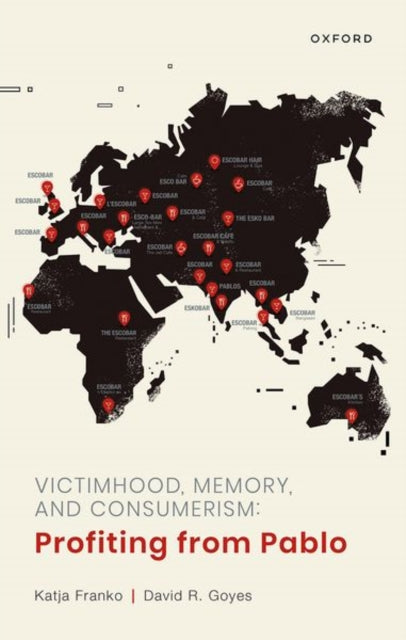
Inhabitants of Medellín, Colombia, suffered from war-like violence perpetrated by drug cartels and other actors in the 1980s and 1990s. Three decades later, transnational media companies such as Netflix have transformed the traumatic memories into entertainment, while the main perpetrator, Pablo Escobar, has become a recognizable brand name. "Victimhood, Memory, and Consumerism: Profiting from Pablo" documents the story of violence inflicted on Medellín and critically examines the status of its victims. The authors discuss the appropriation by commercial forces of the city's traumatic past for entertainment, Escobar tours, souvenirs, and other collectibles offered by Medellín's tourism industry, and the less visible gains reaped by political and social actors who participate in the global mythmaking surrounding Escobar. Through interviews with those directly affected by drug violence, the authors show that these cultural forces have immediate symbolic and material consequences. The book aims to address the issue of the status of victims of large-scale drug violence, which has been neglected in the disciplines of criminology, international criminal justice, and victimology.
Format: Hardback
Length: 256 pages
Publication date: 15 September 2023
Publisher: Oxford University Press
Inhabitants of Medellín, Colombia, endured a harrowing period of war-like violence perpetrated by drug cartels and other actors in the 1980s and 1990s. The consequences were devastating, with thousands of lives lost, including innocent civilians, judges, and journalists, while many others were injured and suffered psychological trauma. Three decades later, transnational media companies such as Netflix have capitalized on this traumatic history, transforming the painful memories into entertainment. While Pablo Escobar, the main perpetrator, has become a recognizable brand name, the stories of his victims have faded into oblivion.
"Victimhood, Memory, and Consumerism: Profiting from Pablo" is a powerful documentary that sheds light on the story of violence inflicted on Medellín and critically examines the status of its victims. The book, through unique empirical material, explores the impact of commercial exploitation of the city's violent past on the victims of mass drug violence and on the present nature of the city. The authors delve into various aspects to demonstrate the magnitude of the profits made from Escobar's legacy. They discuss how commercial forces have appropriated the city's traumatic past for entertainment purposes, such as Escobar tours, souvenirs, and other collectibles offered by Medellín's tourism industry. They also expose the less visible gains reaped by political and social actors who participate in the global mythmaking surrounding Escobar.
Through interviews with those directly affected by drug violence, the authors reveal the immediate symbolic and material consequences of these cultural forces. The book offers a poignant critique of the role of the global market economy in the unequal distribution of narrative power among those engaged in processes of collective memory and trauma. It raises important questions about the ethical implications of commodifying violence and the responsibility of media companies and the global community in addressing the legacy of violence.
In conclusion, "Victimhood, Memory, and Consumerism: Profiting from Pablo" is a thought-provoking and important documentary that sheds light on the ongoing struggles of Medellín's victims and challenges the dominant narratives surrounding violence and trauma. It serves as a reminder of the need for justice, healing, and the preservation of memory and the truth about the past.
Weight: 424g
Dimension: 222 x 142 x 13 (mm)
ISBN-13: 9780192874115
This item can be found in:
UK and International shipping information
UK and International shipping information
UK Delivery and returns information:
- Delivery within 2 - 3 days when ordering in the UK.
- Shipping fee for UK customers from £2.39. Fully tracked shipping service available.
- Returns policy: Return within 30 days of receipt for full refund.
International deliveries:
Shulph Ink now ships to Australia, Belgium, Canada, France, Germany, Ireland, Italy, India, Luxembourg Saudi Arabia, Singapore, Spain, Netherlands, New Zealand, United Arab Emirates, United States of America.
- Delivery times: within 5 - 10 days for international orders.
- Shipping fee: charges vary for overseas orders. Only tracked services are available for most international orders. Some countries have untracked shipping options.
- Customs charges: If ordering to addresses outside the United Kingdom, you may or may not incur additional customs and duties fees during local delivery.