MichaelSalmond
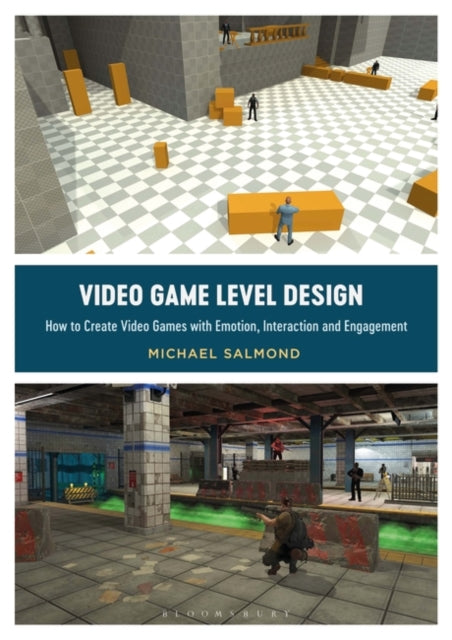
Video Game Level Design: How to Create Video Games with Emotion, Interaction, and Engagement
Video Game Level Design: How to Create Video Games with Emotion, Interaction, and Engagement
💎 Earn 154 Points (£1.54) on this item.
YOU SAVE £3.11
- Condition: Brand new
- UK Delivery times: Usually arrives within 2 - 3 working days
- UK Shipping: Fee starts at £2.39. Subject to product weight & dimension
Bulk ordering. Want 15 or more copies? Get a personalised quote and bigger discounts. Learn more about bulk orders.
Couldn't load pickup availability
- More about Video Game Level Design: How to Create Video Games with Emotion, Interaction, and Engagement
Level design connects players to games through challenges, experiences, and emotions, requiring technical and creative skill. This book explores principles, practices, and methodologies for creating engaging spaces, with case studies from game studios. By the end, readers will have gained valuable insight into the role of a Level Designer and be able to devise, plan, and build their own game levels.
Format: Paperback / softback
Length: 192 pages
Publication date: 11 February 2021
Publisher: Bloomsbury Publishing PLC
Level design is a crucial aspect of game development that connects players to the game through challenges, experiences, and emotions. This book is an invaluable introduction to the evolving practices of Level Designers across the games industry. The role of the Level Designer has become increasingly complex, requiring technical and creative skills to combine architecture, art, player psychology, interaction design, usability, and experience design. This book explores in detail the principles designers employ when planning levels and building engaging spaces for the player. It also delves into the theoretical underpinnings of the processes and charts a path towards thinking like a Level Designer.
Throughout the book, you will be guided through the fundamentals of level design, including research, ideation, best practices, and methodologies. A series of interviews with designers and case studies from game studios examine the application of industry-wide expertise used to create triple-A and indie game titles. By the end of this book, you will have gained valuable insight into the role of a Level Designer and be able to devise, plan, and build your own engaging and entertaining game levels.
One of the key challenges of level design is creating a sense of immersion and engagement for the player. This involves designing levels that are visually appealing, challenging, and rewarding. Level Designers must also consider the player's psychology, such as their motivations, emotions, and cognitive abilities, to create levels that are enjoyable and accessible.
Another important aspect of level design is usability. Levels must be easy to navigate, and players should be able to understand the objectives and mechanics of the game. This involves designing levels that are intuitive and easy to understand, and that provide clear feedback to the player.
Interaction design is also a critical component of level design. Levels must be designed to be interactive, allowing players to interact with the environment and other characters. This involves designing levels that are responsive to player input and that provide a variety of gameplay options.
Experience design is another important aspect of level design. Levels must be designed to create a memorable and enjoyable experience for the player. This involves designing levels that are unique, challenging, and rewarding, and that provide a sense of progression and accomplishment.
In addition to these principles, level design also involves a variety of technical skills. Level Designers must be skilled in 3D modeling, texturing, and lighting, and must be able to use game engines and software to create and manipulate levels. They must also be able to work with a team of developers to ensure that the levels are integrated into the game seamlessly.
One of the challenges of level design is creating levels that are scalable. Levels must be able to be played on a variety of devices and platforms, and must be able to accommodate different player skill levels. This involves designing levels that are flexible and adaptable, and that can be easily modified to meet the needs of the game.
Another challenge of level design is creating levels that are visually appealing. Levels must be visually appealing to the player, and must be able to convey the game's theme and atmosphere. This involves designing levels that are visually interesting and that use a variety of visual techniques, such as lighting, texture, and color.
In addition to these challenges, level design also involves a variety of ethical considerations. Level Designers must be aware of the impact that their levels have on the player, and must ensure that their levels are fair, inclusive, and respectful. This involves designing levels that are accessible to players of all ages, abilities, and backgrounds, and that do not contain offensive or inappropriate content.
To address these challenges, level design has evolved over time. Level Designers have become more skilled and creative, and have developed a variety of techniques and tools to help them create levels that are more engaging and immersive. For example, virtual reality (VR) has become a popular tool for level design, allowing designers to create levels that are more immersive and interactive.
In conclusion, level design is a crucial aspect of game development that connects players to the game through challenges, experiences, and emotions. This book is an invaluable introduction to the evolving practices of Level Designers across the games industry. The role of the Level Designer has become increasingly complex, requiring technical and creative skills to combine architecture, art, player psychology, interaction design, usability, and experience design. By the end of this book, you will have gained valuable insight into the role of a Level Designer and be able to devise, plan, and build your own engaging and entertaining game levels.
Weight: 662g
Dimension: 211 x 269 x 13 (mm)
ISBN-13: 9781350015722
This item can be found in:
UK and International shipping information
UK and International shipping information
UK Delivery and returns information:
- Delivery within 2 - 3 days when ordering in the UK.
- Shipping fee for UK customers from £2.39. Fully tracked shipping service available.
- Returns policy: Return within 30 days of receipt for full refund.
International deliveries:
Shulph Ink now ships to Australia, Belgium, Canada, France, Germany, Ireland, Italy, India, Luxembourg Saudi Arabia, Singapore, Spain, Netherlands, New Zealand, United Arab Emirates, United States of America.
- Delivery times: within 5 - 10 days for international orders.
- Shipping fee: charges vary for overseas orders. Only tracked services are available for most international orders. Some countries have untracked shipping options.
- Customs charges: If ordering to addresses outside the United Kingdom, you may or may not incur additional customs and duties fees during local delivery.