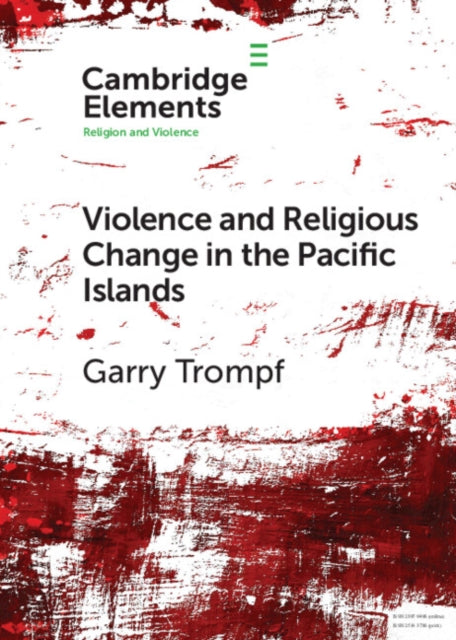
GarryTrompf
Violence and Religious Change in the Pacific Islands
Violence and Religious Change in the Pacific Islands
💎 Earn 84 Points (£0.84) on this item.
We can order this item for you. Delivery usually takes about 4 to 6 weeks.
This item is not held in our immediate stock. We will order it for you after checkout.
Estimated delivery: About 4 to 6 weeks
YOU SAVE £1.01
- Condition: Brand new
- UK Delivery times: Usually arrives within 2 - 3 working days
- UK Shipping: Fee starts at £2.39. Subject to product weight & dimension
Bulk ordering. Want 15 or more copies? Get a personalised quote and bigger discounts. Learn more about bulk orders.
Couldn't load pickup availability
- More about Violence and Religious Change in the Pacific Islands
The Element explores the patterns of violent behavior in the Pacific Islands during religious change, including religion-based violence, resistance to interference, anti-colonial rebellions, and the persistence of traditional modes of violence.
Format: Paperback / softback
Length: 75 pages
Publication date: 31 August 2023
Publisher: Cambridge University Press
The Pacific Islands have experienced a significant shift towards Christianity, accompanied by religious transformations across their vast region. However, this transformation has not been without its challenges. This Element delves into the patterns of violent behavior among the inhabitants of the Pacific Islands, particularly in the context of these religious changes. It explores various topics, including:
1. Religion-Based Violent Reactions to Early Intruders: The Pacific Islands have a rich history of indigenous cultures and traditions. When early missionaries and explorers arrived, they encountered resistance from some communities, who perceived their religious beliefs as a threat to their traditional ways of life. This led to violent reactions, including attacks on missionaries and their followers.
2. New Religious Movements Resisting Unwanted Interference: In response to the perceived interference of foreign religions, some Pacific Island communities formed new religious movements. These movements aimed to resist unwanted influence and maintain their cultural and spiritual traditions. Examples include cargo cults, which emerged in Melanesia and were influenced by Western ideologies and materialism.
3. Anti-Colonial Rebellions Inspired by Spiritual Impulses: The Pacific Islands have a history of resistance against colonialism and exploitation. Many anti-colonial rebellions were inspired by spiritual impetuses, both indigenous and introduced. These rebellions sought to reclaim sovereignty and independence from foreign powers.
4. Persistence of Traditional Modes of Violence: Despite the religious changes, some traditional modes of violence have persisted in the Pacific Islands. Tribal fighting, sorcery, and tough punishments are still practiced in certain communities, often as a means of maintaining social order and resolving conflicts.
5. Cultural Adaptation and Resilience: The Pacific Islands have a rich cultural heritage that has evolved over centuries. Despite the challenges posed by religious transformations and violent behavior, many communities have found ways to adapt and thrive. This includes the preservation of traditional practices, the development of new forms of spirituality, and the promotion of social cohesion and peace.
The Pacific Islands have undergone a profound religious transformation, characterized by an overwhelming shift towards Christianity. This transformation has brought both challenges and opportunities for the inhabitants of the region. While the adoption of Christianity has brought about social and cultural changes, it has also led to tensions and conflicts.
Religion-Based Violent Reactions to Early Intruders:
The Pacific Islands have a rich history of indigenous cultures and traditions, which have been deeply intertwined with their spiritual beliefs. When early missionaries and explorers arrived in the Pacific, they encountered resistance from some communities, who perceived their religious beliefs as a threat to their traditional ways of life. This led to violent reactions, including attacks on missionaries and their followers.
One of the most notable examples of religion-based violence in the Pacific is the case of the Moriori people of New Zealand. The Moriori were a peaceful and prosperous community until the arrival of European settlers in the 18th century. The settlers brought with them Christianity, which the Moriori rejected as a foreign religion. In response, the Moriori launched a series of violent attacks on the settlers, including the massacre of a missionary family in 1830.
Another example is the case of the Tanna people of Vanuatu. The Tanna people are traditionally animist and have a strong belief in spirits and magic. When the French arrived in the 19th century, they brought with them Christianity, which the Tanna rejected as a foreign religion. In response, the Tanna launched a series of violent attacks on the French, including the destruction of a French missionary station in 1880.
New Religious Movements Resisting Unwanted Interference:
In response to the perceived interference of foreign religions, some Pacific Island communities formed new religious movements. These movements aimed to resist unwanted influence and maintain their cultural and spiritual traditions. Examples include cargo cults, which emerged in Melanesia and were influenced by Western ideologies and materialism.
Cargo cults are a form of religious movement that emerged in the Pacific in the late 19th and early 20th centuries. They are characterized by their belief in supernatural beings, such as cargo ships, airplanes, and other modern objects, which they believe bring wealth and prosperity. Cargo cults often engage in ritualistic practices, such as building shrines and offering sacrifices, in the hope of attracting the attention of these supernatural beings.
However, cargo cults have been criticized for their violent and destructive behavior. Many cult members have been known to engage in acts of violence, including murder, theft, and destruction of property, in the belief that these actions will bring them closer to their supernatural beings. Cargo cults have also been linked to social and economic problems, such as poverty and unemployment, as cult members often devote their time and resources to pursuing their religious beliefs rather than engaging in productive activities.
Anti-Colonial Rebellions Inspired by Spiritual Impulses:
The Pacific Islands have a history of resistance against colonialism and exploitation. Many anti-colonial rebellions were inspired by spiritual impetuses, both indigenous and introduced. These rebellions sought to reclaim sovereignty and independence from foreign powers.
One of the most notable anti-colonial rebellions in the Pacific was the Mau Mau Uprising in Kenya. The Mau Mau Uprising was a movement of African farmers who were oppressed by the British colonial government. The movement was inspired by the teachings of African spiritual leaders, such as the prophet Mwai Kibaki, who believed that the British were oppressing Africans and stealing their land. The Mau Mau Uprising led to the displacement of millions of people and the deaths of thousands of Africans.
Another example is the case of the Bougainville Rebellion in Papua New Guinea. The Bougainville Rebellion was a movement of indigenous people who were oppressed by the Australian colonial government. The movement was inspired by the teachings of indigenous spiritual leaders, such as the warrior chief Joseph Kabui, who believed that the Australian government was stealing their land and resources. The Bougainville Rebellion led to the displacement of thousands of people and the deaths of hundreds of Australians.
Persistence of Traditional Modes of Violence:
Despite the religious changes and anti-colonial rebellions, some traditional modes of violence have persisted in the Pacific Islands. Tribal fighting, sorcery, and tough punishments are still practiced in certain communities, often as a means of maintaining social order and resolving conflicts.
Tribal fighting is a form of violence that is deeply rooted in the culture and traditions of many Pacific Island communities. It is often used as a means of resolving conflicts between communities or between individuals. Tribal fighting can take many forms, including armed conflict, ritual combat, and sorcery.
Sorcery is a form of spiritual practice that is believed to have the power to control the natural world and to bring about supernatural phenomena. Sorcery is often used as a means of seeking revenge or to protect oneself from harm. Sorcery can also be used to control the behavior of others or to gain power and influence.
Tough punishments are also a form of violence that is still practiced in certain Pacific Island communities. These punishments are often used as a means of maintaining social order and discipline. They can include physical punishment, such as beatings or flogging, as well as social punishment, such as ostracism or exclusion from community activities.
Cultural Adaptation and Resilience:
Despite the challenges posed by religious transformations and violent behavior, many Pacific Island communities have found ways to adapt and thrive. This includes the preservation of traditional practices, the development of new forms of spirituality, and the promotion of social cohesion and peace.
One of the ways in which Pacific Island communities have adapted to religious transformations is by incorporating Christian teachings into their traditional practices. This has led to the development of a hybrid form of Christianity that blends traditional beliefs and practices with Christian teachings. For example, in the Solomon Islands, there is a tradition of sorcery that is often used to heal and protect people. However, many people in the Solomon Islands have also incorporated Christian teachings into their sorcery practices, such as the belief in the power of prayer and the forgiveness of sins.
Another way in which Pacific Island communities have adapted to religious transformations is by developing new forms of spirituality. Many Pacific Island communities have developed their own forms of spirituality, which are often based on their indigenous beliefs and traditions. For example, in the Mariana Islands, there is a tradition of animism that is often used to explain natural phenomena and to guide people's behavior. However, many people in the Mariana Islands have also developed their own form of Christianity, which blends traditional beliefs and practices with Christian teachings.
Promoting social cohesion and peace is also an important way in which Pacific Island communities have adapted to religious transformations. This can be achieved through the promotion of education, the development of social programs, and the promotion of cultural exchange. For example, in the Federated States of Micronesia, there is a program that provides education and training to young people in order to promote social cohesion and peace. The program also promotes cultural exchange between different communities in order to promote understanding and respect.
Conclusion:
The Pacific Islands have undergone a profound religious transformation, characterized by an overwhelming shift towards Christianity. While this transformation has brought about social and cultural changes, it has also led to tensions and conflicts. Religion-based violent reactions to early intruders, new religious movements resisting unwanted interference, anti-colonial rebellions inspired by spiritual impetuses, and the persistence of traditional modes of violence are all examples of the challenges faced by the Pacific Islands. However, many Pacific Island communities have found ways to adapt and thrive, including the preservation of traditional practices, the development of new forms of spirituality, and the promotion of social cohesion and peace. It is important to recognize the importance of cultural diversity and to work towards promoting understanding and respect between different communities in the Pacific Islands.
Weight: 118g
Dimension: 126 x 178 x 9 (mm)
ISBN-13: 9781009094047
UK and International shipping information
UK and International shipping information
UK Delivery and returns information:
- Delivery within 2 - 3 days when ordering in the UK.
- Shipping fee for UK customers from £2.39. Fully tracked shipping service available.
- Returns policy: Return within 30 days of receipt for full refund.
International deliveries:
Shulph Ink now ships to Australia, Belgium, Canada, France, Germany, Ireland, Italy, India, Luxembourg Saudi Arabia, Singapore, Spain, Netherlands, New Zealand, United Arab Emirates, United States of America.
- Delivery times: within 5 - 10 days for international orders.
- Shipping fee: charges vary for overseas orders. Only tracked services are available for most international orders. Some countries have untracked shipping options.
- Customs charges: If ordering to addresses outside the United Kingdom, you may or may not incur additional customs and duties fees during local delivery.