Shulph Ink
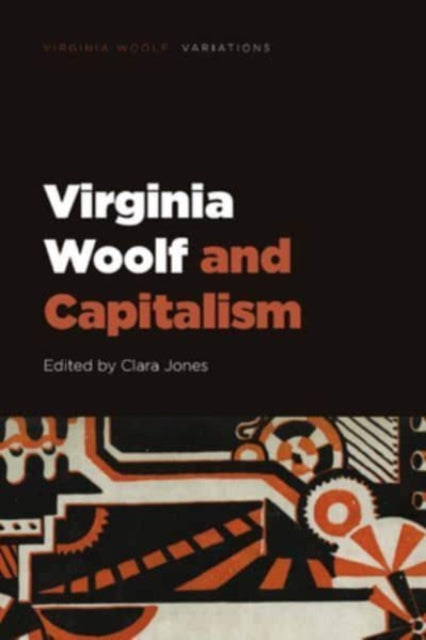
Virginia Woolf and Capitalism
Virginia Woolf and Capitalism
💎 Earn 383 Points (£3.83) on this item.
YOU SAVE £23.30
- Condition: Brand new
- UK Delivery times: Usually arrives within 2 - 3 working days
- UK Shipping: Fee starts at £2.39. Subject to product weight & dimension
Bulk ordering. Want 15 or more copies? Get a personalised quote and bigger discounts. Learn more about bulk orders.
Couldn't load pickup availability
- More about Virginia Woolf and Capitalism
Virginia Woolf and Capitalism explores Woolf's engagement with and critiques of capitalism, arguing for its central importance in understanding her as an author, activist, and publisher. The collection draws attention to her thinking about history, labor, and economics and provides space for understandings of Woolf in the context of our late-capitalist moment. Chapters by leading and emerging scholars range across Woolf's oeuvre in all its generic diversity, showcasing critical approaches from the archival to the creative to the pedagogical.
Format: Hardback
Length: 336 pages
Publication date: 30 June 2024
Publisher: Edinburgh University Press
Virginia Woolf and Capitalism: An Exploration of Her Engagement and Critiques of Capitalism Throughout Her Life
Virginia Woolf and Capitalism is a groundbreaking collection that delves into Woolf's engagement with and critiques of capitalism throughout her life. Drawing on existing scholarship on the place of economics, class, gender, and empire in Woolf's writing, this collection aims to shed light on her thinking about history, labor, and economics and provide a contemporary understanding of her work in the context of late-capitalist society.
The collection features chapters by leading and emerging scholars who explore Woolf's oeuvre across its diverse generic spectrum, from her earliest short fiction and Night and Day to Three Guineas and Between the Acts. These chapters employ a range of critical approaches, including archival, creative, and pedagogical, to offer fresh insights into Woolf's fiction and non-fiction.
One of the key themes of the collection is Woolf's critique of capitalism and its impact on society. Woolf argues that capitalism is a system that perpetuates inequality, exploitation, and oppression and that it is fundamentally at odds with the values of freedom, creativity, and individuality. She highlights the ways in which capitalism has shaped the lives of individuals and communities, from the working class to the upper class, and has led to the destruction of the natural world.
Woolf's critique of capitalism is not limited to her fiction. She also wrote extensively about the economic and political systems of her time, including the rise of fascism and the decline of the British Empire. Her essays and letters provide a vivid and insightful account of the social and political landscape of the early twentieth century, and her insights into the nature of power and authority are still relevant today.
Despite her critique of capitalism, Woolf was not a socialist or a communist. She believed that capitalism could be reformed and that it could provide opportunities for individuals and communities to thrive. However, she also recognized that capitalism was inherently unstable and that it could lead to economic crises and social unrest.
One of the ways in which Woolf sought to reform capitalism was through her writing. She used her fiction to explore the lives of individuals and communities who were affected by capitalism, and she used her non-fiction to advocate for social and economic change. For example, in her essay "Three Guineas," Woolf argued that women should be given the same rights as men and that they should be able to work outside the home. She also advocated for the abolition of the British Empire and for the establishment of a more democratic and egalitarian society.
Woolf's writing was also influenced by her experiences of poverty and social exclusion. She grew up in a middle-class family, but her father's financial difficulties led to her family's financial collapse. This experience had a profound impact on her, and it led her to develop a sense of empathy and compassion for those who were less fortunate than herself.
In addition to her writing, Woolf was also a publisher. She founded the Hogarth Press in 1917, which became a leading publisher of modernist literature. The Press published works by authors such as James Joyce, T.S. Eliot, and Virginia Woolf herself. Woolf's publishing practices were innovative and experimental, and they helped to shape the literary landscape of the twentieth century.
Despite her achievements, Woolf's life was marked by personal tragedy. She suffered from mental illness throughout her life, and she died by suicide in 1941. Her death was a significant loss to the literary world, and it has led to a renewed interest in her work.
In recent years, there has been a growing interest in Woolf's work in the context of late-capitalist society. Scholars have argued that Woolf's critique of capitalism is still relevant today, and that her writing can provide a valuable insight into the nature of power and authority.
One of the challenges of studying Woolf's work in the context of late-capitalist society is the fact that her writing is often difficult to read. Her prose is dense and complex, and it can be difficult to follow her arguments. However, there are many resources available to help scholars and readers understand her work.
One of the most important resources for studying Woolf's work is the Virginia Woolf Online Archive, which is a digital archive of her writings and correspondence. The Archive contains over 100,000 pages of material, and it is available to anyone with an internet connection. The Archive includes a range of materials, including letters, diaries, essays, and novels, and it provides a comprehensive overview of Woolf's life and work.
In addition to the Virginia Woolf Online Archive, there are many other resources available to scholars and readers. There are numerous books and articles on Woolf's work, and there are also many exhibitions and events that celebrate her life and work.
One of the most significant exhibitions on Woolf's work in recent years was the exhibition "Virginia Woolf: A Writer's Life" at the National Portrait Gallery in London. The exhibition featured over 100 works of art, including paintings, sculptures, and photographs, and it explored Woolf's life and work in detail. The exhibition was a huge success, and it attracted thousands of visitors from around the world.
Another important resource for studying Woolf's work in the context of late-capitalist society is the work of feminist scholars. Feminist scholars have argued that Woolf's writing is deeply feminist, and that it provides a valuable insight into the experiences of women in society. Feminist scholars have also argued that Woolf's writing can be used to challenge the dominant narratives of power and authority.
One of the most influential feminist scholars on Woolf's work is the feminist critic Judith Butler. Butler has argued that Woolf's writing is a form of performative activism, and that it can be used to challenge the dominant narratives of power and authority. Butler has also argued that Woolf's writing can be used to explore the relationship between gender and power.
In conclusion, Virginia Woolf and Capitalism is a groundbreaking collection that delves into Woolf's engagement with and critiques of capitalism throughout her life. Drawing on existing scholarship on the place of economics, class, gender, and empire in Woolf's writing, this collection aims to shed light on her thinking about history, labor, and economics and provide a contemporary understanding of her work in the context of late-capitalist society. The collection features chapters by leading and emerging scholars who explore Woolf's oeuvre across its diverse generic spectrum, and it provides a range of critical approaches to her work. Despite her critique of capitalism, Woolf was not a socialist or a communist, and she believed that capitalism could be reformed and that it could provide opportunities for individuals and communities to thrive. Her writing was also influenced by her experiences of poverty and social exclusion, and it has had a profound impact on the literary world. In recent years, there has been a growing interest in Woolf's work in the context of late-capitalist society, and there are many resources available to help scholars and readers understand her work.
Weight: 660g
Dimension: 240 x 163 x 24 (mm)
ISBN-13: 9781399514088
UK and International shipping information
UK and International shipping information
UK Delivery and returns information:
- Delivery within 2 - 3 days when ordering in the UK.
- Shipping fee for UK customers from £2.39. Fully tracked shipping service available.
- Returns policy: Return within 30 days of receipt for full refund.
International deliveries:
Shulph Ink now ships to Australia, Belgium, Canada, France, Germany, Ireland, Italy, India, Luxembourg Saudi Arabia, Singapore, Spain, Netherlands, New Zealand, United Arab Emirates, United States of America.
- Delivery times: within 5 - 10 days for international orders.
- Shipping fee: charges vary for overseas orders. Only tracked services are available for most international orders. Some countries have untracked shipping options.
- Customs charges: If ordering to addresses outside the United Kingdom, you may or may not incur additional customs and duties fees during local delivery.