Robert Longyear
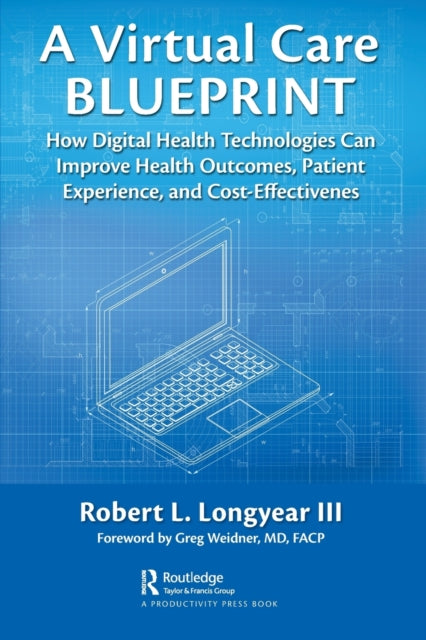
Virtual Care Blueprint: How Digital Health Technologies Can Improve Health Outcomes, Patient Experience, and Cost Effectiveness
Virtual Care Blueprint: How Digital Health Technologies Can Improve Health Outcomes, Patient Experience, and Cost Effectiveness
💎 Earn 174 Points (£1.74) on this item.
We can order this item for you. Delivery usually takes about 4 to 6 weeks.
This item is not held in our immediate stock. We will order it for you after checkout.
Estimated delivery: About 4 to 6 weeks
YOU SAVE £2.07
- Condition: Brand new
- UK Delivery times: Usually arrives within 2 - 3 working days
- UK Shipping: Fee starts at £2.39. Subject to product weight & dimension
Bulk ordering. Want 15 or more copies? Get a personalised quote and bigger discounts. Learn more about bulk orders.
Couldn't load pickup availability
- More about Virtual Care Blueprint: How Digital Health Technologies Can Improve Health Outcomes, Patient Experience, and Cost Effectiveness
The Covid-19 pandemic has accelerated the adoption of digital health technologies and virtual care models, including telemedicine, remote patient monitoring (RPM), and hybrid virtual care models. These models offer potential benefits in terms of improved health outcomes, patient experience, and cost-effectiveness. Robert L. Longyear III's book "A Virtual Care Blueprint: How Digital Health Technologies Can Improve Health Outcomes, Patient Experience, and Cost-Effectiveness" provides evidence-based information on RPM and virtual care, outlining their potential impact on a modern healthcare delivery system.
Format: Paperback / softback
Length: 186 pages
Publication date: 23 September 2021
Publisher: Taylor & Francis Ltd
The Covid-19 pandemic has accelerated the adoption of digital health technologies and virtual care models in healthcare systems worldwide. Telemedicine, in particular, has experienced a significant surge in usage as healthcare organizations and governments strive to provide access to infection-free health services. While telemedicine has been around for nearly two decades, its utilization has grown significantly in recent years, particularly with the rapid acceleration of internet and smartphone adoption in the 2010s and again in 2020 due to the Covid-19 pandemic.
Beyond traditional audio-visual telemedicine modalities, newer, more advanced models of tech-enabled clinical services have gained popularity. These models include remote patient monitoring (RPM) and other hybrid virtual care models, which leverage ubiquitous modern telecommunication technologies such as smartphones to deliver care. RPM-based care models have the potential to fill the gaps of transactional telemedicine and provide longitudinal care appropriate for patients with chronic conditions.
Despite the apparent recent acceleration of interest in and adoption of RPM-based virtual care models, substantial research exists on RPM covering patient reported outcomes, clinical effectiveness, and economic factors. In A Virtual Care Blueprint: How Digital Health Technologies Can Improve Health Outcomes, Patient Experience, and Cost-Effectiveness, Robert L. Longyear III explores the science, frontline clinical perspectives, and potential impact of RPM-based virtual care programs. The book seeks to provide evidence-based information on the benefits and challenges of RPM-based virtual care, with a particular focus on its potential to improve health outcomes, patient experience, and cost-effectiveness.
One of the key advantages of RPM-based virtual care is its ability to provide remote monitoring and management of chronic conditions. By leveraging technology, healthcare providers can monitor patients' vital signs, symptoms, and medication adherence remotely, reducing the need for in-person visits and improving patient convenience. This can lead to better disease management, improved patient outcomes, and reduced healthcare costs.
Another advantage of RPM-based virtual care is its ability to bridge the gap between healthcare providers and patients. Patients with chronic conditions often face challenges in accessing care, particularly in rural or underserved areas. RPM-based virtual care can provide care to these patients regardless of their location, ensuring that they receive the care they need without the need for travel or long wait times. This can also improve patient satisfaction and engagement, as patients feel more connected to their healthcare providers and are more likely to adhere to their treatment plans.
However, there are also challenges associated with RPM-based virtual care. One of the main concerns is the potential for information overload and burnout among healthcare providers. With the increasing volume of data and information being collected and analyzed, healthcare providers may struggle to keep up with the demand and may experience burnout or dissatisfaction with their work. This can lead to reduced quality of care and increased healthcare costs.
To address these challenges, it is important to develop and implement effective strategies for RPM-based virtual care. This includes ensuring that healthcare providers receive adequate training and support to manage the workload, developing efficient data management systems, and implementing patient-centered care models that prioritize the needs and preferences of patients.
In conclusion, the Covid-19 pandemic has accelerated the adoption of digital health technologies and virtual care models in healthcare systems worldwide. Telemedicine, in particular, has experienced a significant surge in usage as healthcare organizations and governments strive to provide access to infection-free health services. Newer, more advanced models of tech-enabled clinical services, such as remote patient monitoring (RPM), have gained popularity and have the potential to improve health outcomes, patient experience, and cost-effectiveness. However, there are also challenges associated with RPM-based virtual care, such as information overload and burnout among healthcare providers. By developing and implementing effective strategies for RPM-based virtual care, we can ensure that patients receive the care they need while minimizing the risks and maximizing the benefits of this innovative approach to healthcare delivery.
Weight: 314g
Dimension: 151 x 229 x 14 (mm)
ISBN-13: 9780367650940
This item can be found in:
UK and International shipping information
UK and International shipping information
UK Delivery and returns information:
- Delivery within 2 - 3 days when ordering in the UK.
- Shipping fee for UK customers from £2.39. Fully tracked shipping service available.
- Returns policy: Return within 30 days of receipt for full refund.
International deliveries:
Shulph Ink now ships to Australia, Belgium, Canada, France, Germany, Ireland, Italy, India, Luxembourg Saudi Arabia, Singapore, Spain, Netherlands, New Zealand, United Arab Emirates, United States of America.
- Delivery times: within 5 - 10 days for international orders.
- Shipping fee: charges vary for overseas orders. Only tracked services are available for most international orders. Some countries have untracked shipping options.
- Customs charges: If ordering to addresses outside the United Kingdom, you may or may not incur additional customs and duties fees during local delivery.