R. David Edmunds
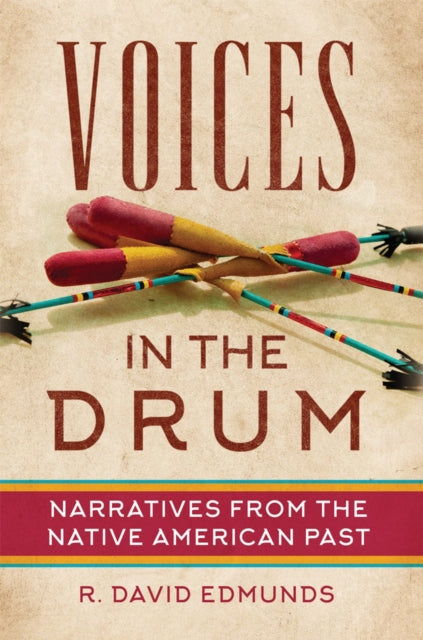
Voices in the Drum: Narratives from the Native American Past
Voices in the Drum: Narratives from the Native American Past
💎 Earn 114 Points (£1.14) on this item.
YOU SAVE £2.99
- Condition: Brand new
- UK Delivery times: Usually arrives within 2 - 3 working days
- UK Shipping: Fee starts at £2.39. Subject to product weight & dimension
Bulk ordering. Want 15 or more copies? Get a personalised quote and bigger discounts. Learn more about bulk orders.
Couldn't load pickup availability
- More about Voices in the Drum: Narratives from the Native American Past
Voices in the Drum is a collection of nine stories that blend historical research with creative storytelling to give voice to indigenous individuals and families and illustrate the impact of pivotal events on their lives. The stories feature fictional characters who interact with real historical figures and take part in actual events, such as the Battle of Fallen Timbers, the Trail of Tears, the California gold rush, and the forced removal of Native children to off-reservation boarding schools. The people portrayed belong to various tribes, and their individual stories range from humorous to tragic, giving readers a palpable sense of how tribal peoples reacted to the disruptive changes forced on them by European colonizers and U.S. government policies.
Format: Paperback / softback
Length: 352 pages
Publication date: 23 October 2023
Publisher: University of Oklahoma Press
The history of indigenous peoples in North America is a complex and multifaceted tale that has been shaped by a multitude of factors, including colonization, cultural exchange, and political upheaval. Over centuries, these communities have developed unique cultures, languages, and traditions that have been deeply rooted in their ancestral lands. However, their journey has not been without challenges, as they have faced discrimination, violence, and the loss of their traditional ways of life. In recent years, there has been a growing recognition of the importance of preserving and celebrating the heritage of indigenous peoples. This has led to a renewed interest in their history, culture, and perspectives, as well as a commitment to addressing the ongoing challenges they face. One of the key ways in which scholars are exploring the history of indigenous peoples in North America is through the use of statistical data. This approach allows researchers to gain a deeper understanding of the past and to identify patterns and trends that may have influenced their development. However, it is important to note that statistical data alone cannot fully capture the human side of the story. It is only through the combination of careful research and creative storytelling that we can truly understand the experiences and perspectives of indigenous peoples. One such historian is R. David Edmunds, a renowned author and scholar who has dedicated his career to studying the history of indigenous peoples in North America. In his book, Voices in the Drum: The History of Native Americans, Edmunds combines meticulous research with engaging storytelling to give voice to indigenous individuals and families and to illustrate the impact of pivotal events on their lives. The book features nine stories, each of which focuses on a fictional character who is a composite, or representation, of historical people. These characters take the reader on an epic journey through time, beginning in the early 1400s with the Mound Builder cultures and ending with the modern-day urbanization of Native people. Along the way, they interact with real historical figures, such as Anthony Wayne, Tecumseh, and John Sutter, and take part in actual events, such as the Battle of Fallen Timbers, the Trail of Tears, the California gold rush, and the forced removal of Native children to off-reservation boarding schools. The people portrayed in these pages belong to various tribes, including the Potawatomis, Lakotas, Oneidas, and Cherokees. Their individual stories, ranging from humorous to tragic, give readers a palpable sense of how tribal peoples reacted to the disruptive changes forced on them by European colonizers and U.S. government policies. Voices in the Drum is not only an entertaining and insightful read, but it is also a valuable tool for educators. It provides a comprehensive overview of the history of indigenous peoples in North America, from their arrival in the continent to the present day. It also raises important questions about the ongoing struggles and challenges that these communities face, and encourages readers to consider the ways in which we can work towards preserving and celebrating their heritage. In conclusion, the history of indigenous peoples in North America is a complex and multifaceted tale that has been shaped by a multitude of factors, including colonization, cultural exchange, and political upheaval. Over centuries, these communities have developed unique cultures, languages, and traditions that have been deeply rooted in their ancestral lands. However, their journey has not been without challenges, as they have faced discrimination, violence, and the loss of their traditional ways of life. In recent years, there has been a growing recognition of the importance of preserving and celebrating the heritage of indigenous peoples. This has led to a renewed interest in their history, culture, and perspectives, as well as a commitment to addressing the ongoing challenges they face. Through the use of statistical data and creative storytelling, scholars are able to gain a deeper understanding of the past and to illustrate the experiences and perspectives of indigenous peoples. Voices in the Drum, by R. David Edmunds, is a valuable tool for anyone interested in learning more about the history of indigenous peoples in North America. It provides a comprehensive overview of the past and raises important questions about the ongoing struggles and challenges that these communities face. By reading this book
The history of indigenous peoples in North America is a complex and multifaceted tale that has been shaped by a multitude of factors, including colonization, cultural exchange, and political uphe. Over centuries, these communities have developed unique cultures, languages, and traditions that have been deeply rooted in their ancestral lands. However, their journey has not been without challenges, as they have faced discrimination, violence, and the loss of their traditional ways of life. In recent years, there has been a growing recognition of the importance of preserving and celebrating the heritage of indigenous peoples. This has led to a renewed interest in their history, culture, and perspectives, as well as a commitment to addressing the ongoing challenges they face. One of the key ways in which scholars are exploring the history of indigenous peoples in North America is through the use of statistical data. This approach allows researchers to gain a deeper understanding of the past and to identify patterns and trends that may have influenced their development. However, it is important to note that statistical data alone cannot fully capture the human side. It is only through the combination of careful research and creative storytelling that we can truly understand the experiences and perspectives of indigenous peoples. One such historian is R. David Edmunds, a renowned author and scholar who has dedicated his career to studying the history of indigenous peoples in North America. In his book, Voices in the Drum: The History of Native Americans, Edmunds combines meticulous research with engaging storytelling to give voice to indigenous individuals and families and to illustrate the impact of pivotal events on their lives. The book features nine stories, each of which focuses on a fictional character who is a composite, or representation, of historical people. These characters take the reader on an epic journey through time, beginning in the early 1400s with the Mound Builder cultures and ending with the modern-day urbanization of Native people. Along the way, they interact with real historical figures, such as Anthony Wayne, Tecumseh, and John Sutter, and take part in actual events, such as the Battle of Fallen Timbers, the Trail of Tears, the California gold rush, and the forced removal of Native children to off-reservation boarding schools. The people portrayed in these pages belong to various tribes, including the Potawatomis, Lakotas, Oneidas, and Cherokees. Their individual stories, ranging from humorous to tragic, give readers a palpable sense of how tribal peoples reacted to the disruptive changes forced on them by European colonizers and U.S. government policies. Voices in the Drum is not only an entertaining and insightful read, but it is also a valuable tool for. It provides a comprehensive overview of the history of indigenous peoples in North America, from their arrival in the continent to the present day. It also raises important questions about the ongoing struggles and challenges that these communities face, and encourages readers to consider the ways in which we can work to preserve and celebrate their heritage. In conclusion, the history of indigenous peoples in North America is a complex and multifaceted tale that has been shaped by a multitude of factors, including colonization, cultural exchange, and political upheaval. Over centuries, these communities have developed unique cultures, languages, and traditions that have been deeply rooted in their ancestral lands. However, their journey has not been without challenges, as they have faced discrimination, violence, and the loss of their traditional ways of life. In recent years, there has been a growing recognition of the importance of preserving and celebrating the heritage of indigenous peoples. This has led to a renewed interest in their history, culture, and perspectives, as well as a commitment to addressing the ongoing challenges they face. One of the key ways in which scholars are exploring the history of indigenous peoples in North America is through the use of statistical data. This approach allows researchers to gain a deeper understanding of the past and to identify patterns and trends that may have influenced their development. However, it is important to note that statistical data alone cannot fully capture the human side. It is only through the combination of careful research and creative storytelling that we can truly understand the experiences and perspectives of indigenous peoples. One such historian is R. David Edmunds, a renowned author and scholar who has dedicated his career to studying the history of indigenous peoples in North America. In his book, Voices in the Drum: The History of Native Americans, Edmunds combines meticulous research with engaging storytelling to give voice to indigenous individuals and families and to illustrate the impact of pivotal events on their lives. The book features nine stories, each of which focuses on a fictional character who is a composite, or representation, of historical people. These characters take the reader on an epic journey through time, beginning in the early 1400s with the Mound Builder cultures and ending with the modern-day urbanization of Native people. Along the way, they interact with real historical figures, such as Anthony Wayne, Tecumseh, and John Sutter, and take part in actual events, such as the Battle of Fallen Timbers, the Trail of Tears, the California gold rush, and the forced removal of Native children to off-reservation boarding schools. The people portrayed in these pages belong to various tribes, including the Potawatomis, Lakotas, Oneidas, and Cherokees. Their individual stories, ranging from humorous to tragic, give readers a palpable sense of how tribal peoples reacted to the disruptive changes forced on them by European colonizers and U.S. government policies. Voices in the Drum is not only an entertaining and insightful read, but it is also a valuable tool for. It provides a comprehensive overview of the history of indigenous peoples in North America, from their arrival in the continent to the present day. It also raises important questions about the ongoing struggles and challenges that these communities face, and encourages readers to consider the ways in which we can work to preserve and celebrate their heritage. In conclusion, the history of indigenous peoples in North America is a complex and multifaceted tale that has been shaped by a multitude of factors, including colonization, cultural exchange, and political upheaval. Over centuries, these communities have developed unique cultures, languages, and traditions that have been deeply rooted in their ancestral lands. However, their journey has not been without challenges, as they have faced discrimination, violence, and the loss of their traditional ways of life. In recent years, there has been a growing recognition of the importance of preserving and celebrating the heritage of indigenous peoples. This has led to a renewed interest in their history, culture, and perspectives, as well as a commitment to addressing the ongoing challenges they face. Through the use of statistical data and creative storytelling, scholars are able to gain a deeper understanding of the past and to illustrate the experiences and perspectives of indigenous peoples. Voices in the Drum, by R. David Edmunds, is a valuable tool for anyone interested in learning more about the history of indigenous peoples in North America. It provides a comprehensive overview of the past and raises important questions about the ongoing struggles and challenges that these communities face. By reading this
Weight: 532g
Dimension: 152 x 230 x 25 (mm)
ISBN-13: 9780806192772
UK and International shipping information
UK and International shipping information
UK Delivery and returns information:
- Delivery within 2 - 3 days when ordering in the UK.
- Shipping fee for UK customers from £2.39. Fully tracked shipping service available.
- Returns policy: Return within 30 days of receipt for full refund.
International deliveries:
Shulph Ink now ships to Australia, Belgium, Canada, France, Germany, Ireland, Italy, India, Luxembourg Saudi Arabia, Singapore, Spain, Netherlands, New Zealand, United Arab Emirates, United States of America.
- Delivery times: within 5 - 10 days for international orders.
- Shipping fee: charges vary for overseas orders. Only tracked services are available for most international orders. Some countries have untracked shipping options.
- Customs charges: If ordering to addresses outside the United Kingdom, you may or may not incur additional customs and duties fees during local delivery.