Shulph Ink
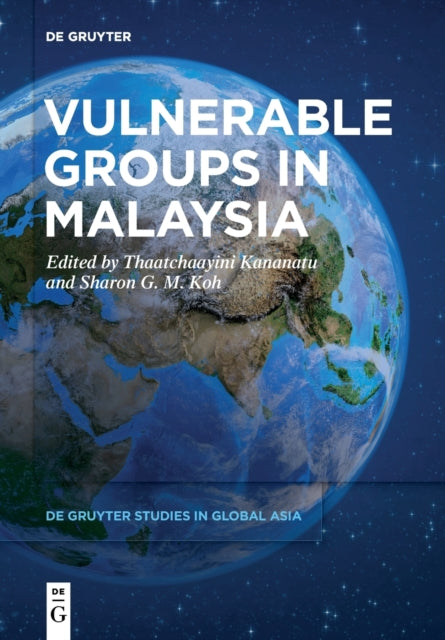
Vulnerable Groups in Malaysia
Vulnerable Groups in Malaysia
YOU SAVE £33.36
- Condition: Brand new
- UK Delivery times: Usually arrives within 2 - 3 working days
- UK Shipping: Fee starts at £3.89. Subject to product weight & dimension
Bulk ordering. Want 15 or more copies? Get a personalised quote and bigger discounts. Learn more about bulk orders.
Couldn't load pickup availability
- More about Vulnerable Groups in Malaysia
This book explores the vulnerabilities of particular groups in Malaysia, such as transgenders, women, children, Aboriginal and indigenous people, rural fisherfolk, stateless, and economically disempowered, mirroring the spectrum of vulnerable groups defined by the United Nations Global Compact in the 2016 Sustainable Development Goals Report.
Format: Paperback / softback
Length: 174 pages
Publication date: 12 October 2020
Publisher: De Gruyter
Vulnerability is a multifaceted concept that can be examined from various angles, including social, legal, economic, and political. This book delves into these dimensions and uncovers the vulnerabilities experienced by specific groups in Malaysia, such as transgenders, women, children, Aboriginal and indigenous people, rural fisherfolk, stateless individuals, and economically disadvantaged individuals. By aligning with the spectrum of "vulnerable groups" defined by the United Nations Global Compact in the 2016 Sustainable Development Goals Report, this book emphasizes the unique characteristics that contribute to vulnerability, including gender, age, ethnicity, socioeconomic status, and indigeneity. The case studies of vulnerable groups in Malaysia, a multicultural, diverse, and plural Asian state, will be of interest to undergraduate and postgraduate students, academics, researchers, and policy-makers who specialize in Asian Studies and vulnerabilities.
Introduction:
Vulnerability is a complex and multifaceted concept that encompasses a wide range of factors and experiences. It refers to the susceptibility of individuals, communities, or systems to harm, exploitation, or adverse consequences. Vulnerability can arise from various social, legal, economic, and political factors, including gender, age, ethnicity, socioeconomic status, and geographic location.
Dimensions of Vulnerability:
Vulnerability can be studied from different dimensions, each of which contributes to its understanding and manifestation. The social dimension refers to the relationships and interactions within society that can expose individuals or groups to harm or discrimination. This includes factors such as social exclusion, marginalization, discrimination, and lack of access to basic resources and services.
The legal dimension encompasses the legal frameworks and policies that govern society and protect individuals from harm. This includes issues such as human rights, labor laws, and access to justice. Legal vulnerabilities can arise when these frameworks are inadequate, discriminatory, or fail to provide adequate protection for vulnerable groups.
The economic dimension relates to the resources, opportunities, and income available to individuals or groups. Economic vulnerabilities can arise when individuals or communities are unable to access sufficient resources to meet their basic needs, such as food, shelter, and healthcare. This can also be exacerbated by factors such as unemployment, poverty, and inequality.
The political dimension involves the power and influence of individuals, groups, or institutions in society. Political vulnerabilities can arise when individuals or groups are excluded from decision-making processes, or when their voices are not heard or valued. This can also be influenced by factors such as corruption, authoritarianism, and lack of democratic governance.
Vulnerabilities in Malaysia:
Malaysia is a multicultural, diverse, and plural Asian state that faces a range of vulnerabilities. These vulnerabilities are influenced by a combination of social, legal, economic, and political factors.
One of the most significant vulnerabilities in Malaysia is the issue of gender inequality. Women in Malaysia face discrimination and marginalization in various aspects of life, including employment, education, and healthcare. They are often paid less than men for the same work and have limited access to leadership positions and decision-making roles. Women also face higher rates of violence and abuse, particularly in domestic settings and in the workplace.
Another vulnerable group in Malaysia is the indigenous people, who make up a significant portion of the population. Indigenous people face discrimination, marginalization, and loss of their traditional lands and resources. They are often excluded from decision-making processes and have limited access to education, healthcare, and other basic services. Indigenous people also face higher rates of poverty and unemployment compared to other ethnic groups.
Children are also vulnerable in Malaysia, particularly those who are marginalized or living in poverty. They face a range of risks, including child labor, child abuse, and exploitation. Children are also vulnerable to environmental degradation and climate change, as they are often disproportionately affected by these issues.
Rural fisherfolk are another vulnerable group in Malaysia, particularly those who rely on fishing for their livelihood. Fishing communities face a range of challenges, including overfishing, pollution, and climate change. They are often marginalized and have limited access to education, healthcare, and other basic services.
Stateless individuals are also vulnerable in Malaysia, particularly those who are unable to prove their citizenship or legal status. Stateless individuals face a range of legal and social barriers, including limited access to education, healthcare, and employment. They are also at risk of exploitation and human rights.
Economically disadvantaged individuals are also vulnerable in Malaysia, particularly those who are unable to access sufficient resources to meet their basic needs. This includes individuals who are living in poverty, unemployed, or have limited access to education and training. Economically disadvantaged individuals are also at risk of exploitation and human rights abuses.
Conclusion:
Vulnerability is a complex and multifaceted concept that requires a comprehensive and multi-dimensional approach to address. It is essential to recognize and understand the vulnerabilities experienced by different groups in Malaysia and to take steps to address these vulnerabilities. This includes promoting gender equality, protecting the rights of indigenous people, addressing child labor and exploitation, and providing access to education, healthcare, and other basic services for all individuals, regardless of their background or status.
Weight: 312g
Dimension: 172 x 239 x 16 (mm)
ISBN-13: 9783110607970
UK and International shipping information
UK and International shipping information
We deliver throughout the United Kingdom and to 128 countries and territories worldwide, including the United States, Australia, Canada, Germany, Spain and France.