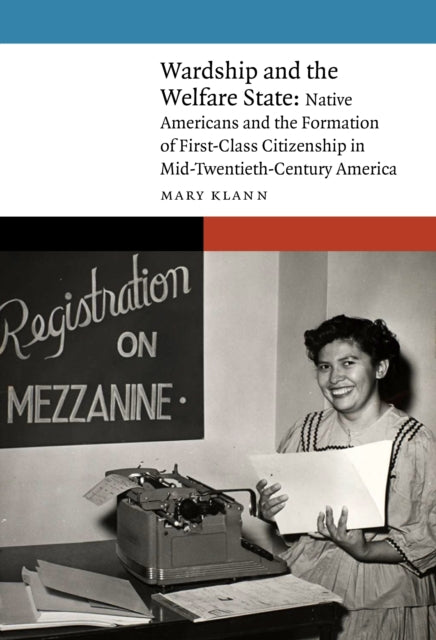
Mary Klann
Wardship and the Welfare State: Native Americans and the Formation of First-Class Citizenship in Mid-Twentieth-Century America
Wardship and the Welfare State: Native Americans and the Formation of First-Class Citizenship in Mid-Twentieth-Century America
💎 Earn 247 Points (£2.47) on this item.
YOU SAVE £6.44
- Condition: Brand new
- UK Delivery times: Usually arrives within 2 - 3 working days
- UK Shipping: Fee starts at £2.39. Subject to product weight & dimension
Bulk ordering. Want 15 or more copies? Get a personalised quote and bigger discounts. Learn more about bulk orders.
Couldn't load pickup availability
- More about Wardship and the Welfare State: Native Americans and the Formation of First-Class Citizenship in Mid-Twentieth-Century America
Wardship and the Welfare State examines the ideological dimensions and practical intersections of public policy and Native American citizenship, Indian wardship, and social welfare rights after World War II, tracing the development of a new conception of first-class citizenship against its apparent opposite, the older and fraught idea of Indian wardship. Critics of the federal welfare states expansion in the 1930s through 1960s feared that as more Americans received government aid, they too could become dependent wards, victims of the poverty they saw on reservations. Native nations and pan-Native organizations insisted on Natives government-to-government relationships with the United States and maintained their rights to welfare benefits, rejecting stereotyped portrayals of Natives perpetual poverty and dependency and asserting and defining tribal sovereignty.
Format: Hardback
Length: 326 pages
Publication date: 01 June 2024
Publisher: University of Nebraska Press
Wardship and the Welfare State examines the ideological dimensions and practical intersections of public policy and Native American citizenship, Indian wardship, and social welfare rights after World War II. By examining Native wardships intersections with three pieces of mid-twentieth-century welfare legislation—the 1935 Social Security Act, the 1942 Servicemens Dependents Allowance Act, and the 1944 GI Bill—Mary Klann traces the development of a new conception of first-class citizenship.
Wards were considered dependent, while first-class citizens were considered independent. Wards were thought to receive gratuitous aid from the government, while first-class citizens were considered responsible. Critics of the federal welfare states expansion in the 1930s through 1960s feared that as more Americans received government aid, they too could become dependent wards, victims of the poverty they saw on reservations. Because critics believed wardship prevented Native men and women from fulfilling expectations of work, family, and political membership, they advocated terminating Natives trust relationships with the federal government. As these critics mistakenly equated wardship with welfare, state officials also prevented Native people from accessing needed welfare benefits.
But to Native peoples wardship was not welfare and welfare was not wardship. Native nations and pan-Native organizations insisted on Natives government-to-government relationships with the United States and maintained their rights to welfare benefits. In so doing, they rejected stereotyped portrayals of Nativ.
Dimension: 229 x 152 (mm)
ISBN-13: 9781496218179
This item can be found in:
UK and International shipping information
UK and International shipping information
UK Delivery and returns information:
- Delivery within 2 - 3 days when ordering in the UK.
- Shipping fee for UK customers from £2.39. Fully tracked shipping service available.
- Returns policy: Return within 30 days of receipt for full refund.
International deliveries:
Shulph Ink now ships to Australia, Belgium, Canada, France, Germany, Ireland, Italy, India, Luxembourg Saudi Arabia, Singapore, Spain, Netherlands, New Zealand, United Arab Emirates, United States of America.
- Delivery times: within 5 - 10 days for international orders.
- Shipping fee: charges vary for overseas orders. Only tracked services are available for most international orders. Some countries have untracked shipping options.
- Customs charges: If ordering to addresses outside the United Kingdom, you may or may not incur additional customs and duties fees during local delivery.