Robert R. Botello
We Dance for the Virgen Volume 19: Authenticity of Tradition in a San Antonio Matachines Troupe
We Dance for the Virgen Volume 19: Authenticity of Tradition in a San Antonio Matachines Troupe
💎 Earn 188 Points (£1.88) on this item.
YOU SAVE £2.24
- Condition: Brand new
- UK Delivery times: Usually arrives within 2 - 3 working days
- UK Shipping: Fee starts at £2.39. Subject to product weight & dimension
Bulk ordering. Want 15 or more copies? Get a personalised quote and bigger discounts. Learn more about bulk orders.
Couldn't load pickup availability
- More about We Dance for the Virgen Volume 19: Authenticity of Tradition in a San Antonio Matachines Troupe
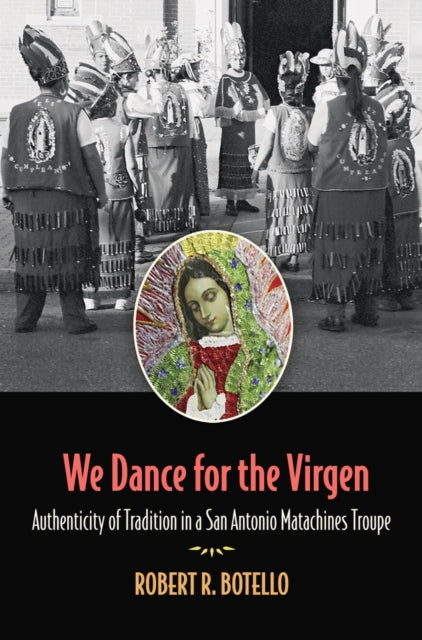
The danza de matachines is a tradition with roots in the Spanish colonization of Mexico that summons history for Mexican, Chicano, and indigenous communities. The elaborate ritual, regalia, and practices associated with the tradition tell of the repeated appearances of Our Lady of Guadalupe to the Aztec Indian Juan Diego. Matachines have been dancing in Mexico and portions of the southwestern United States for as long as 300 years, and various troupes in San Antonio date their beginnings to the late 1800s. In We Dance for the Virgen, Robert R. Botello reviews the history of the tradition while contrasting the troupes internal changes in traditions with those originating from the larger social and political context of San Antonio. He ultimately examines issues of cultural appropriation arising from the association of the troupe with the Roman Catholic Archdiocese of San Antonio, revealing the resilience in a tradition that has remained true to its origins across many generations of dancers.
Format: Hardback
Length: 256 pages
Publication date: 30 July 2022
Publisher: Texas A&M University Press
The danza de matachines is a deeply rooted tradition in Mexican, Chicano, and indigenous communities, with its origins dating back to the Spanish colonization of Mexico. This elaborate ritual, regalia, and practices tell the story of Our Lady of Guadalupe's repeated appearances to the Aztec Indian Juan Diego, providing instructions for the building of a church. Matachines have been dancing in Mexico and portions of the southwestern United States for over 300 years, with various troupes in San Antonio dating their beginnings to the late 1800s. In We Dance for the Virgen, Robert R. Botello, who participated in a family-based troupe from 2006 to 2019, reviews the history of the tradition while contrasting the troupes' internal changes in traditions with those originating from the larger social and political context of San Antonio. Botello ultimately examines issues of cultural appropriation arising from the association of the troupe with the Roman Catholic Archdiocese of San Antonio, revealing the resilience in a tradition that has remained true to its origins across many generations of dancers.
The danza de matachines is a deeply rooted tradition in Mexican, Chicano, and indigenous communities, with its origins dating back to the Spanish colonization of Mexico. This elaborate ritual, regalia, and practices tell the story of Our Lady of Guadalupe's repeated appearances to the Aztec Indian Juan Diego, providing instructions for the building of a church. Matachines have been dancing in Mexico and portions of the southwestern United States for over 300 years, with various troupes in San Antonio dating their beginnings to the late 1800s. In We Dance for the Virgen, Robert R. Botello, who participated in a family-based troupe from 2006 to 2019, reviews the history of the tradition while contrasting the troupes' internal changes in traditions with those originating from the larger social and political context of San Antonio. Botello ultimately examines issues of cultural appropriation arising from the association of the troupe with the Roman Catholic Archdiocese of San Antonio, revealing the resilience in a tradition that has remained true to its origins across many generations of dancers.
The danza de matachines is a tradition with roots in the Spanish colonization of Mexico that summons history for Mexican, Chicano, and indigenous communities. The elaborate ritual, regalia, and practices associated with the tradition tell of the repeated appearances of Our Lady of Guadalupe to the Aztec Indian Juan Diego as she provided instructions for the building of a church. Matachines have been dancing in Mexico and portions of the southwestern United States for as long as 300 years, and various troupes in San Antonio date their beginnings to the late 1800s, as immigrants from Mexico brought the tradition to the southern reaches of Texas. In We Dance for the Virgen, Robert R. Botello, who participated in a family-based troupe from 2006 to 2019, reviews the history of the tradition while contrasting the troupes' internal changes in traditions with those originating from the larger social and political context of San Antonio. In Botello's words, this book "is as much about the dance and its history as it is about my transformation as a matachines dancer." Botello ultimately examines issues of cultural appropriation arising from the association of the troupe with the Roman Catholic Archdiocese of San Antonio, revealing the resilience in a tradition that has remained true to its origins across many generations of dancers.
Weight: 558g
Dimension: 161 x 236 x 19 (mm)
ISBN-13: 9781648430473
This item can be found in:
UK and International shipping information
UK and International shipping information
UK Delivery and returns information:
- Delivery within 2 - 3 days when ordering in the UK.
- Shipping fee for UK customers from £2.39. Fully tracked shipping service available.
- Returns policy: Return within 30 days of receipt for full refund.
International deliveries:
Shulph Ink now ships to Australia, Belgium, Canada, France, Germany, Ireland, Italy, India, Luxembourg Saudi Arabia, Singapore, Spain, Netherlands, New Zealand, United Arab Emirates, United States of America.
- Delivery times: within 5 - 10 days for international orders.
- Shipping fee: charges vary for overseas orders. Only tracked services are available for most international orders. Some countries have untracked shipping options.
- Customs charges: If ordering to addresses outside the United Kingdom, you may or may not incur additional customs and duties fees during local delivery.