Christopher T. Keaveney
Western Rock Artists, Madame Butterfly, and the Allure of Japan: Dancing in an Eastern Dream
Western Rock Artists, Madame Butterfly, and the Allure of Japan: Dancing in an Eastern Dream
💎 Earn 191 Points (£1.91) on this item.
We can order this item for you. Delivery usually takes about 4 to 6 weeks.
This item is not held in our immediate stock. We will order it for you after checkout.
Estimated delivery: About 4 to 6 weeks
- Condition: Brand new
- UK Delivery times: Usually arrives within 2 - 3 working days
- UK Shipping: Fee starts at £2.39. Subject to product weight & dimension
Bulk ordering. Want 15 or more copies? Get a personalised quote and bigger discounts. Learn more about bulk orders.
Couldn't load pickup availability
- More about Western Rock Artists, Madame Butterfly, and the Allure of Japan: Dancing in an Eastern Dream
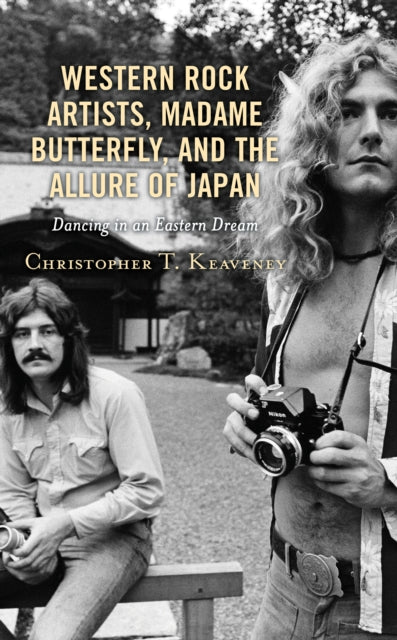
This work examines how Western rock and pop artists perpetuated long-held stereotypes of Japan in their direct encounters with the country and songs and music videos with Japanese content, using Edward Saids Orientalism framework.
Format: Paperback / softback
Length: 284 pages
Publication date: 20 December 2021
Publisher: Lexington Books
This essay delves into the pervasive influence of Western rock and pop artists, particularly during the era of album rock from the 1970s to the 1990s, on perpetuating long-held stereotypes of Japan in their direct encounters with the country and in songs and music videos featuring Japanese content. Drawing upon the framework of Edward Said's Orientalism, the essay explores how these artists have perpetuated a range of cultural misconceptions and biases, from the portrayal of Japanese women as submissive and exotic to the representation of Japanese culture as primitive and backward. Through a critical analysis of popular music and media, the essay seeks to expose the ways in which these stereotypes have been reinforced and challenged over time.
The influence of Western rock and pop artists on perpetuating stereotypes of Japan is a complex and multifaceted issue that requires a thorough examination. In their encounters with Japan, these artists have often perpetuated a range of cultural misconceptions and biases, from portraying Japanese women as submissive and exotic to depicting Japanese culture as primitive and backward. These stereotypes have been reinforced through popular music and media, which have played a significant role in shaping public perceptions of Japan.
One of the most prevalent stereotypes perpetuated by Western rock and pop artists is the notion that Japanese women are submissive and exotic. This portrayal is often found in songs and music videos that feature Japanese women as objects of desire or as symbols of Japanese culture. For example, in the music video for "Call Me Maybe" by Carly Rae Jepsen, a Japanese woman is depicted as a submissive and exotic figure who is willing to do anything for her lover. This portrayal is not only offensive but also perpetuates harmful stereotypes about Japanese women, as it suggests that they are only capable of fulfilling the desires of men.
Another stereotype perpetuated by Western rock and pop artists is the notion that Japanese culture is primitive and backward. This portrayal is often found in songs and music videos that feature Japanese culture as a backdrop or as a source of inspiration. For example, in the music video for "Kung Fu Fighting" by the Beastie Boys, a group of Japanese warriors is depicted as a source of strength and power, while the Western characters are portrayed as weak and cowardly. This portrayal is not only offensive but also perpetuates harmful stereotypes about Japanese culture, as it suggests that it is inferior to Western culture.
Despite these stereotypes, there have been efforts to challenge and subvert these perceptions over time. For example, in the 1990s, a wave of Japanese rock and pop artists emerged, who challenged traditional stereotypes and embraced their own unique cultural identity. These artists, such as J-Pop group AKB48 and rock band Radwimps, sought to break down cultural barriers and promote understanding between Japan and the West.
In conclusion, the influence of Western rock and pop artists on perpetuating stereotypes of Japan is a complex and multifaceted issue that requires a thorough examination. While these artists have often perpetuated harmful cultural misconceptions and biases, there have been efforts to challenge and subvert these perceptions over time. It is important for artists and media to be aware of the impact that their work can have on public perceptions of Japan and to strive to promote understanding and respect for different cultures.
Weight: 382g
Dimension: 153 x 228 x 20 (mm)
ISBN-13: 9781793625274
This item can be found in:
UK and International shipping information
UK and International shipping information
UK Delivery and returns information:
- Delivery within 2 - 3 days when ordering in the UK.
- Shipping fee for UK customers from £2.39. Fully tracked shipping service available.
- Returns policy: Return within 30 days of receipt for full refund.
International deliveries:
Shulph Ink now ships to Australia, Belgium, Canada, France, Germany, Ireland, Italy, India, Luxembourg Saudi Arabia, Singapore, Spain, Netherlands, New Zealand, United Arab Emirates, United States of America.
- Delivery times: within 5 - 10 days for international orders.
- Shipping fee: charges vary for overseas orders. Only tracked services are available for most international orders. Some countries have untracked shipping options.
- Customs charges: If ordering to addresses outside the United Kingdom, you may or may not incur additional customs and duties fees during local delivery.