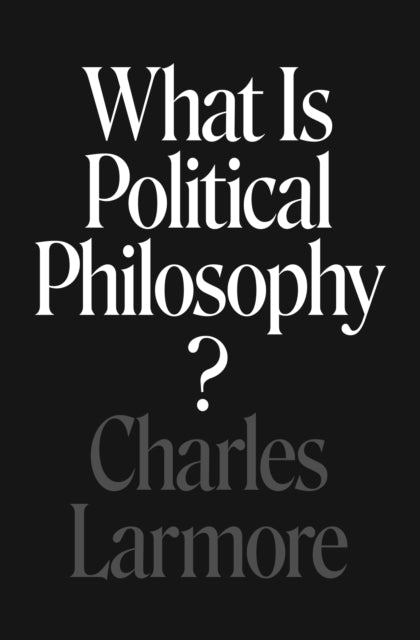
Charles Larmore
What Is Political Philosophy?
What Is Political Philosophy?
💎 Earn 88 Points (£0.88) on this item.
YOU SAVE £4.35
- Condition: Brand new
- UK Delivery times: Usually arrives within 2 - 3 working days
- UK Shipping: Fee starts at £2.39. Subject to product weight & dimension
Bulk ordering. Want 15 or more copies? Get a personalised quote and bigger discounts. Learn more about bulk orders.
Couldn't load pickup availability
- More about What Is Political Philosophy?
Charles Larmore redefines political philosophy by focusing on the regulation of conflict and the conditions for political authority. He argues for a version of political liberalism centered on political legitimacy and suited to our times, challenging classical liberalism and political realism.
Format: Paperback / softback
Length: 200 pages
Publication date: 26 July 2022
Publisher: Princeton University Press
Political philosophy is a branch of philosophy that examines the nature, scope, and legitimacy of political authority and institutions. It seeks to understand the principles and values that guide political decision-making and to evaluate the effectiveness and fairness of different political systems. Political philosophy encompasses a wide range of topics, including the nature of government, the rights and responsibilities of citizens, the origins and evolution of political institutions, and the theories of political ideology and theory.
One of the central problems in political philosophy is the regulation of conflict. Political systems must find ways to manage and resolve conflicts between different groups and individuals, such as through negotiation, compromise, and the rule of law. Political philosophers have developed a range of theories and approaches to this problem, including democratic theory, liberalism, communitarianism, and realism.
Another important problem in political philosophy is the question of political legitimacy. What constitutes a legitimate government, and how can we ensure that governments are accountable to their citizens? Political philosophers have explored this question through the lens of various theories, including constitutionalism, republicanism, and anarchism.
Political philosophy also examines the relationship between political authority and individual rights. Political systems must balance the need for authority to govern with the rights and freedoms of individuals. This is particularly important in contemporary society, where the power of governments has been expanding and the rights of individuals have been increasingly threatened.
Political philosophy is also concerned with the nature of political knowledge and the role of reason in political decision-making. Political philosophers have explored the nature of political truth, the role of evidence in political judgment, and the limits of rationality in political decision-making.
In recent years, political philosophy has become increasingly interdisciplinary, drawing on insights from other fields such as economics, psychology, and sociology. This has led to the development of new approaches to political philosophy, such as behavioral political science and political psychology.
Overall, political philosophy is a critical and important field of study that seeks to understand the nature and implications of political authority
Political philosophy is a branch of philosophy that examines the nature, scope, and legitimacy of political authority. It seeks to understand the principles and values that guide political decision-making and to evaluate the effectiveness and fairness of different political systems. Political philosophy encompasses a wide range of topics, including the nature of government, the rights and responsibilities of citizens, the origins and evolution of political institutions, and the theories of political ideology and theory.
One of the central problems in political philosophy is the regulation of conflict. Political systems must find ways to manage and resolve conflicts between different groups and individuals, such as through negotiation, compromise, and the rule
Political philosophy is a branch of philosophy that examines the nature, scope, and legitimacy of political authority. It seeks to understand the principles and values that guide political decision-making and to evaluate the effectiveness and fairness of different political systems. Political philosophy encompasses a wide range of topics, including the nature of government, the rights and responsibilities of citizens, the origins, and evolution of political institutions, and the theories of political ideology and theory.
One of the central problems in political philosophy is the regulation of conflict. Political systems must find ways to manage and resolve conflicts between different groups and individuals, such as through negotiation, compromise, and the rule of law. Political philosophers have developed a range of theories and approaches to this problem, including democratic theory, liberalism, communitarianism, and realism.
Another important problem in political philosophy is the question of political legitimacy. What constitutes a legitimate government, and how can we ensure that governments are accountable to their citizens? Political philosophers have explored this question through the lens of various theories, including constitutionalism, republicanism, and anarchism.
Political philosophy also examines the relationship between political authority. Political systems must balance the need for authority to govern with the rights and freedoms of individuals. This is particularly important in contemporary society, where the power of governments has been expanding and the rights of individuals have been increasingly threatened.
Political philosophy is also concerned with the nature of political knowledge and the role of reason in political decision-making. Political philosophers have explored the nature of political truth, the role of evidence in political judgment, and the limits of rationality in political decision-making.
In recent years, political philosophy has become increasingly interdisciplinary, drawing on insights from other fields such as economics, psychology, and sociology. This has led to the development of new approaches to political philosophy, such as behavioral political science and political psychology.
Overall, political philosophy is a critical and important field of study that seeks to understand the nature and implications of political authority
Political philosophy is a branch of philosophy that examines the nature, scope, and legitimacy of political authority. It seeks to understand the principles and values that guide political decision-making and to evaluate the effectiveness and fairness of different political systems. Political philosophy encompasses a wide range of topics, including the nature of government, the rights and responsibilities of citizens, the origins. Political philosophy encompasses a wide range of topics, including the nature of government, the rights and responsibilities of citizens, the origins, and evolution of political institutions, and the theories of political ideology and theory.
One of the central problems in political philosophy is the regulation of conflict. Political systems must find ways to manage and resolve conflicts between different groups and individuals, such as through negotiation, compromise, and the rule the rule political rule of law. Political philosophers have developed a range of theories and approaches to this problem, including democratic theory, liberalism, communitarianism, and realism.
Another important problem in political philosophy is the question of political legitimacy. What constitutes a legitimate government, and how can we ensure that governments are accountable to their citizens? Political philosophers have explored this question through the lens of various theories, including constitutionalism, republicanism, and anarchism.
Political philosophy also examines the relationship between political authority. Political systems must balance the need for authority. Political systems must balance the need for authority to govern with the rights and freedoms of individuals. This is particularly important in contemporary society, where the power of governments has been expanding and the rights of individuals have been increasingly threatened.
Political philosophy is also concerned with the nature of political knowledge and the role of reason in political decision-making. Political philosophers have explored the nature of political truth, the role of evidence in political judgment, and the limits of rationality in political decision-making.
In recent years, political philosophy has become increasingly interdisciplinary, drawing on insights from other fields such as economics, psychology, and sociology. This has led to the development of new approaches to political philosophy, such as behavioral political science and political psychology.
Overall, political philosophy is a critical and important field of study that seeks to understand the nature and implications of political
Weight: 266g
Dimension: 138 x 214 x 17 (mm)
ISBN-13: 9780691241562
UK and International shipping information
UK and International shipping information
UK Delivery and returns information:
- Delivery within 2 - 3 days when ordering in the UK.
- Shipping fee for UK customers from £2.39. Fully tracked shipping service available.
- Returns policy: Return within 30 days of receipt for full refund.
International deliveries:
Shulph Ink now ships to Australia, Belgium, Canada, France, Germany, Ireland, Italy, India, Luxembourg Saudi Arabia, Singapore, Spain, Netherlands, New Zealand, United Arab Emirates, United States of America.
- Delivery times: within 5 - 10 days for international orders.
- Shipping fee: charges vary for overseas orders. Only tracked services are available for most international orders. Some countries have untracked shipping options.
- Customs charges: If ordering to addresses outside the United Kingdom, you may or may not incur additional customs and duties fees during local delivery.