Shimon Brathwaite
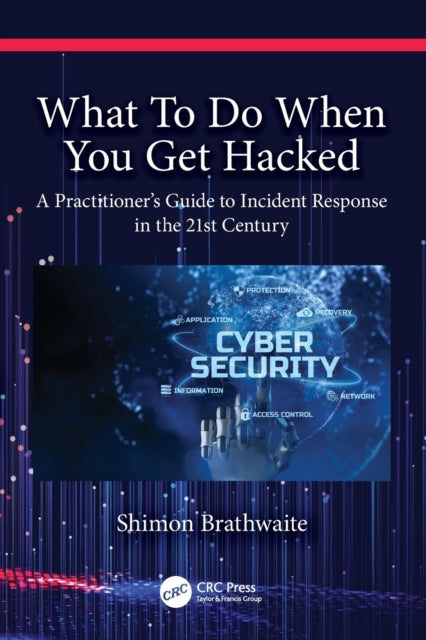
What To Do When You Get Hacked: A Practitioner's Guide to Incident Response in the 21st Century
What To Do When You Get Hacked: A Practitioner's Guide to Incident Response in the 21st Century
💎 Earn 207 Points (£2.07) on this item.
We can order this item for you. Delivery usually takes about 4 to 6 weeks.
This item is not held in our immediate stock. We will order it for you after checkout.
Estimated delivery: About 4 to 6 weeks
YOU SAVE £2.47
- Condition: Brand new
- UK Delivery times: Usually arrives within 2 - 3 working days
- UK Shipping: Fee starts at £2.39. Subject to product weight & dimension
Bulk ordering. Want 15 or more copies? Get a personalised quote and bigger discounts. Learn more about bulk orders.
Couldn't load pickup availability
- More about What To Do When You Get Hacked: A Practitioner's Guide to Incident Response in the 21st Century
1) The first step is to identify the intrusion and contain it.
2) The second step is to investigate the incident and gather evidence.
3) The third step is to notify affected parties and take necessary actions to prevent future attacks.
The steps to respond to a cyber-attack are to identify the intrusion, investigate the incident, notify affected parties, and take necessary actions to prevent future attacks.
Format: Paperback / softback
Length: 176 pages
Publication date: 16 November 2022
Publisher: Taylor & Francis Ltd
1. What to do when you get hacked
If you suspect that your system has been hacked, it's important to take immediate action to secure your data and prevent further damage. Here are some steps you can take:
- Disconnect your system from the internet: This will help to limit the spread of the malware or virus that may have infected your system.
- Back up your data: Make sure to back up your important files and data to an external hard drive or cloud storage service. This will ensure that you have a copy of your data in case your system is completely compromised.
- Run a virus scan: Use a reputable antivirus program to scan your system for any malware or viruses. This will help to identify and remove any harmful software that may be on your system.
- Change your passwords: If you suspect that your passwords have been compromised, it's important to change them immediately. Use strong, unique passwords for each of your online accounts.
- Monitor your system: Keep an eye on your system for any unusual activity or behavior. This may include strange pop-ups, slow performance, or unauthorized access to your files or data.
- Contact your IT department: If you have a dedicated IT department, contact them immediately to report the incident. They can help you to assess the damage and take steps to prevent future attacks.
It's important to note that responding to a hack can be a complex and time-consuming process. It's best to seek professional help if you are unsure of how to proceed.
2. A guide to incident response
An incident response plan is a critical component of any cybersecurity strategy. It outlines the steps that an organization should take in the event of a security breach or other cyber incident. Here are some key elements of an effective incident response plan:
- Detection and analysis: The first step in any incident response plan is to detect and analyze the incident. This includes identifying the source of the attack, determining the extent of the damage, and understanding the impact on the organization's systems and data.
- Containment and mitigation: Once the incident has been detected and analyzed, the next step is to contain and mitigate the damage. This may include isolating affected systems, removing malware or viruses, and restoring data from backups.
- Investigation and forensics: After the incident has been contained and mitigated, the organization should conduct a thorough investigation and forensics analysis. This includes identifying the attacker's motives, methods, and tools used in the attack, and gathering evidence to support legal or regulatory investigations.
- Communication and notification: Finally, the organization should communicate and notify affected parties, such as customers, employees, and regulatory authorities, about the incident. This includes providing information about the nature of the incident, the steps that have been taken to address it, and any potential risks or consequences.
An effective incident response plan should be tailored to the specific needs and risks of the organization. It should be regularly reviewed and updated to reflect changes in the organization's technology, infrastructure, and security posture.
3. Incident response and cybersecurity for small businesses
Small businesses are particularly vulnerable to cyber threats, as they may lack the resources and expertise to implement robust cybersecurity measures. However, there are several steps that small businesses can take to improve their cybersecurity posture and respond to incidents effectively.
- Implement a strong password policy: Small businesses should require employees to use strong, unique passwords for all online accounts. This includes email accounts, social media accounts, and financial accounts.
- Regularly update software and hardware: Small businesses should ensure that their software and hardware are up-to-date with the latest security patches and updates. This will help to prevent known vulnerabilities from being exploited.
- Train employees: Small businesses should provide employees with regular cybersecurity training to educate them about common threats, such as phishing attacks, malware, and ransomware. This will help to reduce the risk of a security breach.
- Implement firewalls and antivirus software: Small businesses should use firewalls and antivirus software to protect their systems from unauthorized access and malware attacks. This will help to detect and prevent potential threats.
- Monitor network activity: Small businesses should monitor their network activity for any unusual or suspicious behavior. This may include using intrusion detection systems (IDS) or network security monitoring (NSM) tools to detect and respond to potential threats.
- Backup data regularly: Small businesses should regularly back up their data to an external hard drive or cloud storage service. This will ensure that they have a copy of their data in case of a security breach or other disaster.
- Implement two-factor authentication: Small businesses should implement two-factor authentication to add an extra layer of security to their online accounts. This requires users to provide two forms of identification, such as a password and a code sent to their phone or email.
In conclusion, incident response and cybersecurity for small businesses are critical components of any cybersecurity strategy. By implementing a strong password policy, regularly updating software and hardware, training employees, implementing firewalls and antivirus software, monitoring network activity, backing up data regularly, and implementing two-factor authentication, small businesses can reduce the risk of a security breach and respond effectively to incidents if they occur.
Weight: 300g
Dimension: 155 x 234 x 19 (mm)
ISBN-13: 9781032206080
UK and International shipping information
UK and International shipping information
UK Delivery and returns information:
- Delivery within 2 - 3 days when ordering in the UK.
- Shipping fee for UK customers from £2.39. Fully tracked shipping service available.
- Returns policy: Return within 30 days of receipt for full refund.
International deliveries:
Shulph Ink now ships to Australia, Belgium, Canada, France, Germany, Ireland, Italy, India, Luxembourg Saudi Arabia, Singapore, Spain, Netherlands, New Zealand, United Arab Emirates, United States of America.
- Delivery times: within 5 - 10 days for international orders.
- Shipping fee: charges vary for overseas orders. Only tracked services are available for most international orders. Some countries have untracked shipping options.
- Customs charges: If ordering to addresses outside the United Kingdom, you may or may not incur additional customs and duties fees during local delivery.