Roberta Baxter
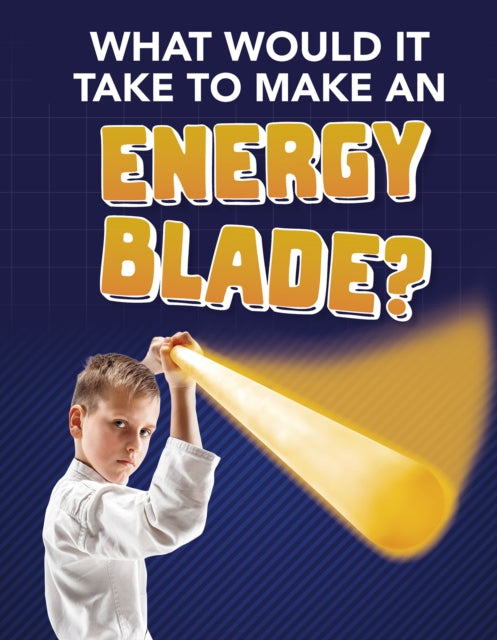
What Would It Take to Make an Energy Blade?
What Would It Take to Make an Energy Blade?
💎 Earn 31 Points (£0.31) on this item.
YOU SAVE £2.63
- Condition: Brand new
- UK Delivery times: Usually arrives within 2 - 3 working days
- UK Shipping: Fee starts at £2.39. Subject to product weight & dimension
Bulk ordering. Want 15 or more copies? Get a personalised quote and bigger discounts. Learn more about bulk orders.
Couldn't load pickup availability
- More about What Would It Take to Make an Energy Blade?
Energy blades are weapons or tools that look like glowing swords in science fiction. Scientists have ideas about how they could work, such as using plasma. Learn about the science and technology behind creating a real-life energy blade!
Format: Paperback / softback
Length: 32 pages
Publication date: 04 March 2021
Publisher: Capstone Global Library Ltd
Energy blades, those captivating weapons or tools reminiscent of glowing swords, have captured the imagination of science fiction enthusiasts for decades. While they may seem like mere fiction, scientists have been exploring the possibilities of creating such powerful devices. In this article, we delve into the science and technology behind energy blades, shedding light on how they could potentially work in the real world.
Plasma, a highly ionized gas, is one of the key elements considered in the development of energy blades. Plasma, when subjected to extreme temperatures and pressures, can exhibit remarkable properties, such as high electrical conductivity, intense heat, and the ability to generate powerful magnetic fields. These characteristics make plasma an ideal candidate for powering energy blades.
One proposed method for creating energy blades involves using plasma jets. These jets would be generated by a powerful energy source, such as a nuclear reactor or a high-energy laser. The plasma would be accelerated through a nozzle, creating a high-speed jet of ionized gas. The jet would then be directed towards a target, where it would collide and ionize the material, resulting in a cutting or heating effect.
Another approach is to use plasma torches. These torches would consist of a plasma chamber filled with a mixture of gases, such as helium and nitrogen. The chamber would be subjected to high electrical currents, which would ionize the gases and create a plasma. The plasma would then be expelled through a nozzle, creating a powerful beam of light and heat.
To enhance the cutting or heating capabilities of energy blades, scientists are exploring the use of magnetic fields. By manipulating the magnetic field around the plasma, it is possible to control its behavior and optimize its performance. For example, by creating a magnetic field that is perpendicular to the plasma jet, it is possible to increase the velocity and intensity of the jet, resulting in a more powerful cutting or heating effect.
In addition to plasma, other materials such as carbon nanotubes and graphene are being investigated for their potential use in energy blades. Carbon nanotubes, for instance, are known for their high strength and stiffness, making them ideal for creating lightweight and durable blades. Graphene, on the other hand, is a highly conductive material that can be used to create efficient energy transfer systems.
Despite the promising advancements in energy blade technology, there are still several challenges that need to be addressed. One of the biggest challenges is the development of a powerful and efficient energy source that can provide the necessary energy to power the plasma jets or torches. Another challenge is the control of the plasma, which requires precise manipulation of the magnetic field and other parameters to achieve the desired cutting or heating effect.
Despite these challenges, the potential of energy blades as a real-life weapon or tool is undeniable. With continued research and development, it may be possible to create energy blades that are not only powerful but also safe and reliable. Energy blades could have a wide range of applications, from military and defense to industrial and medical. For example, energy blades could be used for cutting through materials, such as steel or concrete, in construction or mining applications. They could also be used for medical procedures, such as precision surgery or tissue ablation.
In conclusion, energy blades, those captivating weapons or tools reminiscent of glowing swords, have captured the imagination of science fiction enthusiasts for decades. While they may seem like mere fiction, scientists have been exploring the possibilities of creating such powerful devices. Plasma, a highly ionized gas, is one of the key elements considered in the development of energy blades. By using plasma jets or torches, it is possible to create powerful cutting or heating effects that can be used in a wide range of applications. While there are still several challenges to be addressed, the potential of energy blades as a real-life weapon or tool is undeniable. With continued research and development, it may be possible to create energy blades that are not only powerful but also safe and reliable.
Weight: 108g
Dimension: 173 x 227 x 5 (mm)
ISBN-13: 9781474796910
UK and International shipping information
UK and International shipping information
UK Delivery and returns information:
- Delivery within 2 - 3 days when ordering in the UK.
- Shipping fee for UK customers from £2.39. Fully tracked shipping service available.
- Returns policy: Return within 30 days of receipt for full refund.
International deliveries:
Shulph Ink now ships to Australia, Belgium, Canada, France, Germany, Ireland, Italy, India, Luxembourg Saudi Arabia, Singapore, Spain, Netherlands, New Zealand, United Arab Emirates, United States of America.
- Delivery times: within 5 - 10 days for international orders.
- Shipping fee: charges vary for overseas orders. Only tracked services are available for most international orders. Some countries have untracked shipping options.
- Customs charges: If ordering to addresses outside the United Kingdom, you may or may not incur additional customs and duties fees during local delivery.