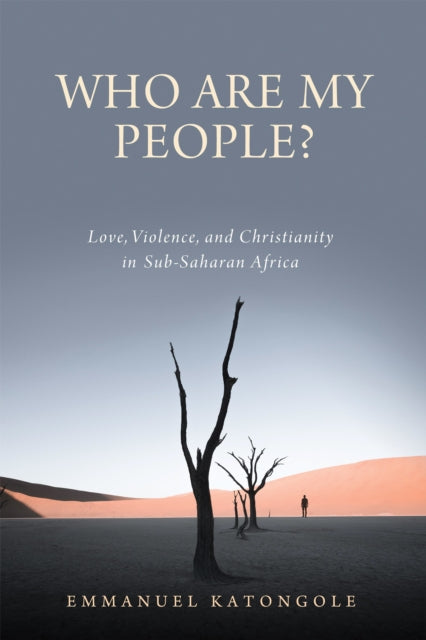
Emmanuel Katongole
Who Are My People?: Love, Violence, and Christianity in Sub-Saharan Africa
Who Are My People?: Love, Violence, and Christianity in Sub-Saharan Africa
💎 Earn 357 Points (£3.57) on this item.
YOU SAVE £8.60
- Condition: Brand new
- UK Delivery times: Usually arrives within 2 - 3 working days
- UK Shipping: Fee starts at £2.39. Subject to product weight & dimension
Bulk ordering. Want 15 or more copies? Get a personalised quote and bigger discounts. Learn more about bulk orders.
Couldn't load pickup availability
- More about Who Are My People?: Love, Violence, and Christianity in Sub-Saharan Africa
Who Are My People? explores the complex relationship between identity, violence, and Christianity in Africa, arguing that the recurring forms of violence reflect an ongoing crisis of belonging. It traces the crisis through three key markers of identity: ethnicity, religion, and land, and reveals that Christianity can generate and nurture alternative forms of community, nonviolent agency, and ecological possibilities.
Format: Hardback
Length: 244 pages
Publication date: 01 May 2022
Publisher: University of Notre Dame Press
Who Are My People? is a thought-provoking book that delves into the intricate relationship between identity, violence, and Christianity in Africa. Author Emmanuel Katongole explores the question of what it means to be both an African and a Christian in a continent plagued by recurring forms of violence. Through a philosophical and theological lens, Katongole examines the crisis of belonging in Africa, tracing it through three key markers of identity: ethnicity, religion, and land. He highlights the unique modernity of the crisis of belonging and reveals that its manifestations of ethnic, religious, and ecological violence are not separate forms of violence but rather modalities of the same crisis.
Who Are My People?
Explores the Complex Relationship Between Identity, Violence, and Christianity in Africa
In Who Are My People?, Emmanuel Katongole examines the complex relationship between identity, violence, and Christianity in Africa. The book explores the question of what it means to be both an African and a Christian in a continent that is often riddled with violence. Katongole argues that the recurring forms of violence in Africa reflect an ongoing crisis of belonging. He traces the crisis through three key markers of identity: ethnicity, religion, and land.
The Unique Modernity of the Crisis of Belonging
Katongole highlights the unique modernity of the crisis of belonging in Africa. He argues that the crisis of belonging in Africa is not just a historical phenomenon but also a contemporary one. The modernity of the crisis is characterized by the fact that it is not limited to any particular region or group of people but is rather a global phenomenon. This modernity of the crisis is reflected in the unique forms of violence that are prevalent in Africa.
Manifestations of Ethnic, Religious, and Ecological Violence
Katongole identifies three key manifestations of ethnic, religious, and ecological violence in Africa. Ethnic violence is characterized by the conflict between different ethnic groups. Religious violence is characterized by the conflict between different religious groups. Ecological violence is characterized by the destruction of the environment. These three forms of violence are not separate forms of violence but rather modalities of the same crisis.
Christianity as a Source of Alternative Forms of Community, Nonviolent Agency, and Ecological Possibilities
Katongole argues that Christianity can generate and nurture alternative forms of community, nonviolent agency, and ecological possibilities. He highlights the role of Christian individuals and communities in resisting violence and healing its wounds. These individuals and communities invent new forms of identity, new communities, and a new relationship with the land.
The Book's Structure
The book is divided into two parts. Part One deals with the philosophical and theological issues related to the question of African identity. Part Two includes three chapters, each of which engages a form of violence, locating it within the broader story of modern sub-Saharan Africa. Each chapter includes stories of Christian individuals and communities who not only resist violence but are determined to heal its wounds and the burden of history shaped by Africa's unique modernity.
Conclusion
In conclusion, Who Are My People? is a thought-provoking book that explores the complex relationship between identity, violence, and Christianity in Africa. Katongole's analysis of the crisis of belonging in Africa reveals that the recurring forms of violence in Africa are not just historical phenomena but also contemporary ones. He highlights the unique modernity of the crisis of belonging and reveals that its manifestations of ethnic, religious, and ecological violence are not separate forms of violence but rather modalities of the same crisis. Christianity can generate and nurture alternative forms of community, nonviolent agency, and ecological possibilities. This engaging, interdisciplinary study, combining philosophical analysis and theological exploration, along with theoretical argument and practical resources, will interest scholars and students of theology, peace studies, and African studies.
Dimension: 229 x 152 (mm)
ISBN-13: 9780268202569
This item can be found in:
UK and International shipping information
UK and International shipping information
UK Delivery and returns information:
- Delivery within 2 - 3 days when ordering in the UK.
- Shipping fee for UK customers from £2.39. Fully tracked shipping service available.
- Returns policy: Return within 30 days of receipt for full refund.
International deliveries:
Shulph Ink now ships to Australia, Belgium, Canada, France, Germany, Ireland, Italy, India, Luxembourg Saudi Arabia, Singapore, Spain, Netherlands, New Zealand, United Arab Emirates, United States of America.
- Delivery times: within 5 - 10 days for international orders.
- Shipping fee: charges vary for overseas orders. Only tracked services are available for most international orders. Some countries have untracked shipping options.
- Customs charges: If ordering to addresses outside the United Kingdom, you may or may not incur additional customs and duties fees during local delivery.