Curtis Bateman
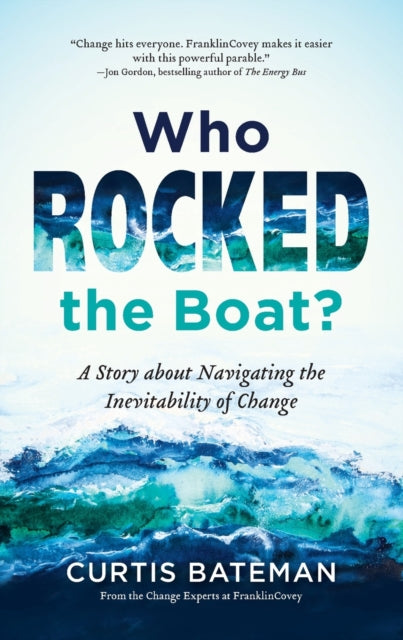
Who Rocked the Boat?: A Story about Navigating the Inevitability of Change
Who Rocked the Boat?: A Story about Navigating the Inevitability of Change
💎 Earn 46 Points (£0.46) on this item.
YOU SAVE £2.72
- Condition: Brand new
- UK Delivery times: Usually arrives within 2 - 3 working days
- UK Shipping: Fee starts at £2.39. Subject to product weight & dimension
Bulk ordering. Want 15 or more copies? Get a personalised quote and bigger discounts. Learn more about bulk orders.
Couldn't load pickup availability
- More about Who Rocked the Boat?: A Story about Navigating the Inevitability of Change
The quote "Change is not merely necessary to life; it is life" by Alvin Toffler emphasizes the importance of embracing change. This FranklinCovey book helps individuals navigate disruptive change by using a river journey parable and applying the FranklinCovey Change Model. The model provides a structure to orient, ground, and gain clarity about change, enabling individuals to make key decisions, adopt new behaviors, and create ideal conditions for innovation. Understanding the Change Model is particularly crucial in today's fast-paced and disruptive world.
Format: Paperback / softback
Length: 100 pages
Publication date: 15 November 2022
Publisher: Yellow Pear Press
"Change is not merely necessary to life—it is life." - Alvin Toffler
In this FranklinCovey book on responding to change, explore your own experiences with change using a river journey parable as a point-of-reference. Take this voyage and discover timeless principles and timely results from an industry leader who has helped numerous organizations turn disruptive change into individual and collective opportunity.
Who Rocked the Boat?
We all travel along various rivers in life, which means at any moment we can find ourselves navigating their uncertainty—whether a global pandemic, a new boss, a shift in employment, business restructuring, a new role on a team, starting a new course in school, a new business strategy, the birth of a child, divorce, or responding to a setback on a project or personal goal.
Shift happens! Change is going to happen. It's a fact of life. Understanding your reactions and making good choices could make the difference between capitalizing on an opportunity or resisting and missing an important chance.
The FranklinCovey Change Model.
While every change is unique, there is a predictable pattern to change, and understanding this pattern and building the skills to navigate it is often the difference between success and failure. The FranklinCovey Change Model provides the structure necessary to orient, ground, and gain clarity about change. Then, like the ships crew in the river journey parable, we can use the model as a map to chart our way forward: making key decisions, adopting new behaviors, and building ideal conditions for innovation.
Today, with change coming at us in fast and increasingly disruptive ways, understanding The Change Model is more important than ever.
If books such as T.E. Lawrence's Seven Pillars of Wisdom and Sun Tzu's The Art of War can teach us about the strategies and tactics of war, then books such as The Change Model can teach us about the strategies and tactics of change.
The Change Model is a powerful tool for navigating the uncertainty of change. It provides a framework for understanding the different stages of change, identifying the triggers that lead to change, and developing the skills necessary to respond effectively to change.
The first stage of the Change Model is the Unfreeze stage. This stage is characterized by a sense of discomfort and uncertainty about the change that is about to occur. During this stage, individuals may feel resistance to the change, or they may be uncertain about the benefits of the change. It is important to recognize that this stage is normal and that it is an opportunity to gather information and prepare for the change.
The second stage of the Change Model is the Change stage. This stage is characterized by a sense of excitement and anticipation about the change that is about to occur. During this stage, individuals may be motivated to take action and make changes in their lives. It is important to recognize that this stage is a time of opportunity and that it is an opportunity to make positive changes in your life.
The third stage of the Change Model is the Refreeze stage. This stage is characterized by a sense of stability and security about the change that has occurred. During this stage, individuals may feel that the change has become a part of their lives and that they are able to adapt to it. It is important to recognize that this stage is a time of consolidation and that it is an opportunity to build on the changes that have been made.
The fourth stage of the Change Model is the Rebound stage. This stage is characterized by a sense of uncertainty and instability about the change that has occurred. During this stage, individuals may feel that the change has been a mistake and that they are unable to adapt to it. It is important to recognize that this stage is a time of crisis and that it is an opportunity to regroup and reassess the situation.
The fifth stage of the Change Model is the Normalization stage. This stage is characterized by a sense of stability and routine about the change that has occurred. During this stage, individuals may feel that the change has become a part of their lives and that they are able to manage it effectively. It is important to recognize that this stage is a time of maturity and that it is an opportunity to build on the changes that have been made.
The sixth stage of the Change Model is the Exit stage. This stage is characterized by a sense of closure and completion about the change that has occurred. During this stage, individuals may feel that the change has been a positive experience and that they are able to move on with their lives. It is important to recognize that this stage is a time of celebration and that it is an opportunity to reflect on the changes that have been made.
The Change Model is a powerful tool for navigating the uncertainty of change. It provides a framework for understanding the different stages of change, identifying the triggers that lead to change, and developing the skills necessary to respond effectively to change. By recognizing the different stages of change and developing the skills necessary to respond effectively to change, individuals can capitalize on opportunities and avoid missing important chances.
In conclusion, change is not merely necessary to life—it is life. By understanding the different stages of change and developing the skills necessary to respond effectively to change, individuals can capitalize on opportunities and avoid missing important chances. The FranklinCovey Change Model is a powerful tool for navigating the uncertainty of change and provides a framework for understanding the different stages of change, identifying the triggers that lead to change, and developing the skills necessary to respond effectively to change.
Weight: 122g
Dimension: 120 x 189 x 10 (mm)
ISBN-13: 9781684810772
This item can be found in:
UK and International shipping information
UK and International shipping information
UK Delivery and returns information:
- Delivery within 2 - 3 days when ordering in the UK.
- Shipping fee for UK customers from £2.39. Fully tracked shipping service available.
- Returns policy: Return within 30 days of receipt for full refund.
International deliveries:
Shulph Ink now ships to Australia, Belgium, Canada, France, Germany, Ireland, Italy, India, Luxembourg Saudi Arabia, Singapore, Spain, Netherlands, New Zealand, United Arab Emirates, United States of America.
- Delivery times: within 5 - 10 days for international orders.
- Shipping fee: charges vary for overseas orders. Only tracked services are available for most international orders. Some countries have untracked shipping options.
- Customs charges: If ordering to addresses outside the United Kingdom, you may or may not incur additional customs and duties fees during local delivery.