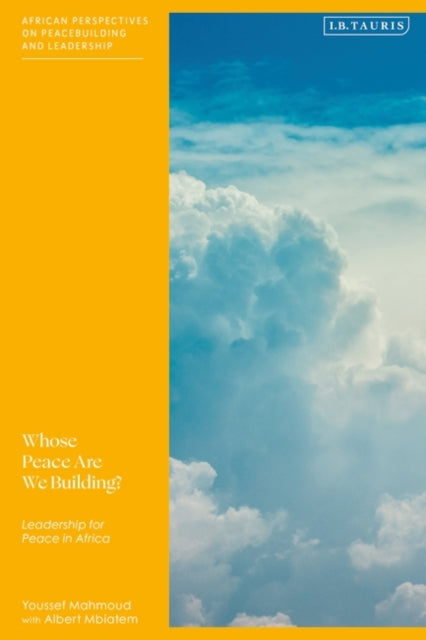
YoussefMahmoud,MbiatemAlbert
Whose Peace Are We Building?: Leadership for Peace in Africa
Whose Peace Are We Building?: Leadership for Peace in Africa
YOU SAVE £5.05
- Condition: Brand new
- UK Delivery times: Usually arrives within 2 - 3 working days
- UK Shipping: Fee starts at £3.89. Subject to product weight & dimension
Bulk ordering. Want 15 or more copies? Get a personalised quote and bigger discounts. Learn more about bulk orders.
Couldn't load pickup availability
- More about Whose Peace Are We Building?: Leadership for Peace in Africa
Leadership is essential for peace, and Youssef Mahmoud argues for a paradigm shift in the type of leadership required to bring about strong, global diplomacy for peace. He offers an unparalleled insight into the leadership challenges of complex and often seemingly intractable conflict situations based on his experiences in Burundi, Central African Republic, and Chad.
Format: Paperback / softback
Length: 216 pages
Publication date: 11 March 2021
Publisher: Bloomsbury Publishing PLC
The relationship between leadership and peace is a complex and multifaceted one, with various factors influencing its development and sustenance. In this essay, we will explore the relationship between leadership and peace in greater detail, examining the different types of leadership styles, processes, and strategies required to promote peace and prevent conflict.
Leadership plays a critical role in promoting peace and preventing conflict. Effective leadership can create a sense of unity, purpose, and direction among individuals and communities, which can help to build resilience and promote social cohesion. Leaders who are able to inspire and motivate others to work towards a common goal can create a positive environment that is conducive to peace and stability.
However, the relationship between leadership and peace is not always straightforward. Different types of leadership styles, processes, and strategies may be required in different contexts, depending on the specific challenges and opportunities that exist. For example, leaders who are operating in complex and often intractable conflict situations may need to adopt a more collaborative and inclusive approach, working closely with host authorities, other stakeholders, and local communities to build trust and cooperation.
One of the key challenges of promoting peace and preventing conflict is understanding the local context. Leaders who are able to gain a deeper understanding of the local context are better equipped to develop effective strategies and policies that address the root causes of conflict and promote sustainable peace. This requires a willingness to listen, learn, and adapt to the unique needs and perspectives of the people and communities that they are working with.
Another important aspect of leadership in promoting peace is building trust and cooperation with host authorities and other stakeholders on the ground. Leaders who are able to establish strong relationships with these groups are more likely to be able to implement effective policies and programs that promote peace and stability. This requires a commitment to transparency, accountability, and respect for human rights and dignity.
In addition to these leadership challenges, there are also a number of strategic approaches that can be taken to promote peace and prevent conflict. One of these is the use of diplomacy and negotiation to resolve conflicts peacefully. Diplomats and negotiators can work to build trust and create a framework for dialogue and negotiation that can lead to a peaceful resolution of disputes.
Another strategic approach is the use of peacekeeping operations and peacebuilding programs. These programs aim to support and strengthen local institutions and communities, promote social cohesion, and build resilience to conflict. Peacekeeping operations can provide a security and stability framework that can help to prevent conflict from escalating, while peacebuilding programs can help to address the root causes of conflict and promote sustainable peace.
In conclusion, the relationship between leadership and peace is a complex and multifaceted one, with various factors influencing its development and sustenance. Effective leadership can create a sense of unity, purpose, and direction among individuals and communities, build trust and cooperation with host authorities and other stakeholders, and develop effective strategies and policies that promote peace and prevent conflict. However, the challenges of promoting peace and preventing conflict are diverse and complex, and require a range of leadership styles, processes, and strategies to address. By understanding the local context, building trust and cooperation, and using strategic approaches such as diplomacy and negotiation, leaders can play a critical role in promoting peace and preventing conflict in the world.
Weight: 352g
Dimension: 157 x 233 x 20 (mm)
ISBN-13: 9780755618880
UK and International shipping information
UK and International shipping information
We deliver throughout the United Kingdom and to 128 countries and territories worldwide, including the United States, Australia, Canada, Germany, Spain and France.