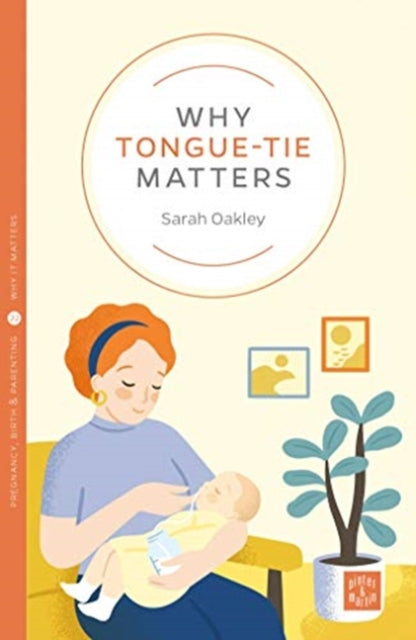
Sarah Oakley
Why Tongue-tie Matters
Why Tongue-tie Matters
💎 Earn 31 Points (£0.31) on this item.
YOU SAVE £2.63
- Condition: Brand new
- UK Delivery times: Usually arrives within 2 - 3 working days
- UK Shipping: Fee starts at £2.39. Subject to product weight & dimension
Bulk ordering. Want 15 or more copies? Get a personalised quote and bigger discounts. Learn more about bulk orders.
Couldn't load pickup availability
- More about Why Tongue-tie Matters
The book "Why Tongue-tie Matters" is a valuable guide for parents of babies with feeding difficulties, providing information about tongue-tie, its impact on feeding, when to suspect it, and how to access assessment and treatment. It offers strategies to alleviate feeding difficulties and discusses recovery after division and its impact on speech and oral health.
Format: Paperback / softback
Length: 160 pages
Publication date: 05 August 2021
Publisher: Pinter & Martin Ltd.
For parents of babies with feeding difficulties, the journey to a diagnosis of tongue-tie and the challenges involved in accessing treatment can be long and arduous. Information is often conflicting, and professionals do not always agree.
Why Tongue-tie Matters aims to steer a course through research and practice to explain how tongue-tie impacts feeding, when you should suspect tongue-tie, and how to access assessment and treatment. With strategies that can help alleviate the feeding difficulties associated with tongue-tie, and information about recovery after division and the impact on speech and oral health, the book is an invaluable guide for parents and the health professionals supporting them.
Tongue-tie, also known as ankyloglossia, is a congenital oral condition that affects the tongue's ability to move freely. It is estimated that around 1 in 10 babies are born with tongue-tie, with boys being more commonly affected than girls. Tongue-tie can cause a range of feeding difficulties, including difficulty latching onto the nipple, excessive drooling, and poor weight gain.
In addition to feeding difficulties, tongue-tie can also impact speech development and oral health. Babies with tongue-tie may struggle to produce certain sounds, such as "s" or "z," and may develop speech delays. They may also be more prone to oral infections, such as thrush, due to the difficulty of cleaning their tongue.
Diagnosing tongue-tie can be challenging, as there is no definitive test. Healthcare professionals may use a variety of methods, including physical examination, observation of feeding, and imaging tests, to determine if a baby has tongue-tie. However, not all healthcare professionals are familiar with tongue-tie, and some may not recognize the symptoms or consider it a significant issue.
Accessing treatment for tongue-tie can also be a challenge. In some cases, healthcare professionals may recommend division of the tongue-tie using a simple surgical procedure. However, not all insurance plans cover this procedure, and some parents may be reluctant to undergo surgery for their baby. In addition, there is some controversy surrounding the use of surgical division for tongue-tie, with some experts questioning its effectiveness and safety.
Despite these challenges, there are strategies that can help alleviate the feeding difficulties associated with tongue-tie. These include using specialized feeding techniques, such as the "breast-fed tongue-tie technique," which involves positioning the baby's tongue in a specific way during feeding to improve latch and reduce drooling. In addition, parents can provide support and encouragement to their baby, such as offering frequent feedings and providing a calm and supportive environment during feeding.
Recovery after division of the tongue-tie can vary depending on the individual baby. Some babies may experience immediate improvement in feeding, while others may take longer to adjust. In some cases, babies may experience temporary speech delays or other side effects during the recovery period. However, with proper care and support, most babies with tongue-tie can recover fully and develop normally.
In conclusion, tongue-tie is a common condition that can impact feeding and speech development in babies. For parents of babies with feeding difficulties, the journey to a diagnosis and access to treatment can be long and arduous. However, with the right information and support, parents can help their baby overcome the challenges associated with tongue-tie and develop normally. Why Tongue-tie Matters is an invaluable guide for parents and healthcare professionals supporting babies with tongue-tie, providing information about the condition, its impact on feeding and speech, and strategies for assessment and treatment.
Weight: 132g
Dimension: 111 x 171 x 11 (mm)
ISBN-13: 9781780666457
This item can be found in:
UK and International shipping information
UK and International shipping information
UK Delivery and returns information:
- Delivery within 2 - 3 days when ordering in the UK.
- Shipping fee for UK customers from £2.39. Fully tracked shipping service available.
- Returns policy: Return within 30 days of receipt for full refund.
International deliveries:
Shulph Ink now ships to Australia, Belgium, Canada, France, Germany, Ireland, Italy, India, Luxembourg Saudi Arabia, Singapore, Spain, Netherlands, New Zealand, United Arab Emirates, United States of America.
- Delivery times: within 5 - 10 days for international orders.
- Shipping fee: charges vary for overseas orders. Only tracked services are available for most international orders. Some countries have untracked shipping options.
- Customs charges: If ordering to addresses outside the United Kingdom, you may or may not incur additional customs and duties fees during local delivery.