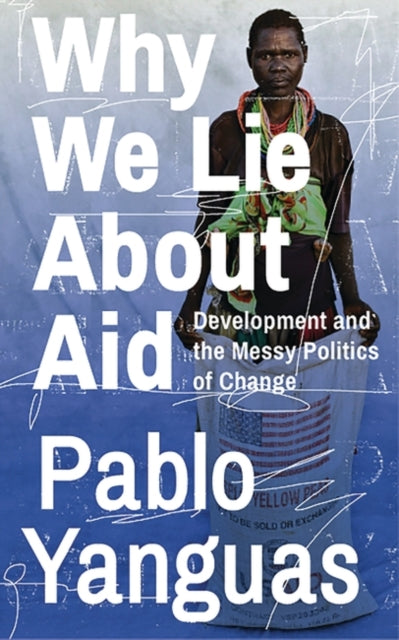
Pablo Yanguas
Why We Lie About Aid: Development and the Messy Politics of Change
Why We Lie About Aid: Development and the Messy Politics of Change
💎 Earn 86 Points (£0.86) on this item.
We can order this item for you. Delivery usually takes about 4 to 6 weeks.
This item is not held in our immediate stock. We will order it for you after checkout.
Estimated delivery: About 4 to 6 weeks
YOU SAVE £3.66
- Condition: Brand new
- UK Delivery times: Usually arrives within 2 - 3 working days
- UK Shipping: Fee starts at £2.39. Subject to product weight & dimension
Bulk ordering. Want 15 or more copies? Get a personalised quote and bigger discounts. Learn more about bulk orders.
Couldn't load pickup availability
- More about Why We Lie About Aid: Development and the Messy Politics of Change
A provocative look at the truth behind aid and its real meaning of political influence and struggle.
Format: Paperback / softback
Length: 275 pages
Publication date: 15 February 2018
Publisher: Bloomsbury Publishing PLC
Foreign aid is often perceived as a matter of charity, while international development is seen as a matter of technical fixes. However, this perception leads to a highly dysfunctional aid system that mistakenly prioritizes short-term results over long-term transformation. Donor publics are constantly told that this is the way to go, resulting in a system that is criticized from both the right and the left. The right argues that we spend too much on aid, while the left claims that we don't spend enough.
In reality, aid should not be solely about the levels of spending or interventions tied to vague notions of accountability and ownership. Instead, as Yanguas argues in his highly provocative book, aid should be about struggle, about taking sides. It should be about politics. This approach has been quietly applied by innovative development practitioners around the world, providing political coverage for local reformers to open up spaces for change.
Yanguas draws on a diverse range of stories from various countries, including Britain, the United States, Sierra Leone, and Honduras, to provide an eye-opening account of what we really mean when we talk about aid. He challenges the conventional wisdom that aid is about providing resources and technical expertise to developing countries, arguing that it is much more than that. Aid is about supporting local reformers who are fighting for their rights and dignity, and it is about creating spaces for them to thrive.
One of the key insights of Yanguas's book is that aid is not just about giving money or resources. It is also about creating political space for local reformers to operate. This means challenging the power of entrenched interests and institutions that often stand in the way of progress. It requires building alliances with local communities and civil society organizations, as well as engaging with the political establishment.
Yanguas's book provides a valuable roadmap for those who want to make a difference in the world of aid. It challenges the conventional wisdom that aid is a one-size-fits-all solution and emphasizes the importance of tailoring interventions to the specific needs and contexts of each country. It also highlights the importance of recognizing the political dimension of aid and the role that local reformers can play in driving change.
In conclusion, Yanguas's book is a must-read for anyone who wants to understand the complex and challenging world of aid. It provides a fresh perspective on aid that challenges the conventional wisdom and emphasizes the importance of taking a political approach to development. By recognizing the struggle and taking sides
The reality, as Yanguas argues in this highly provocative book, is that aid isn't – or at least shouldn't be – about levels of spending, nor interventions shackled to vague notions of 'accountability and 'ownership. Instead, a different approach is possible, one that acknowledges aid as being about struggle, about taking sides. It is an approach that has been quietly applied by innovative development practitioners around the world, providing political coverage for local reformers to open up spaces for change. Drawing on a variety of convention-defying stories from a variety of countries – from Britain to the US, Sierra Leone to Honduras – Yanguas provides an eye-opening account of what we really mean when we talk about aid.
Foreign aid is often perceived as a matter of charity, while international development is seen as a matter of technical fixes. However, this perception leads to a highly dysfunctional aid system that mistakenly prioritizes short-term results over long-term transformation. Donor publics are constantly told that this is the way to go, resulting in a system that is criticized from both the right and the left. The right argues that we spend too much on aid, while the left claims that we don't spend enough.
In reality, aid should not be solely about the levels of spending or interventions tied to vague notions of accountability and ownership. Instead, as Yanguas argues in his highly provocative book, aid should be about struggle, about taking. It should be about politics. This approach has been quietly applied by innovative development practitioners around the world, providing political coverage for local reformers to open up spaces for change.
Yanguas draws on a diverse range of stories from various countries, including Britain, the United States, Sierra Leone, and Honduras, to provide an eye-opening account of what we really mean when we talk about aid. He challenges the conventional wisdom that aid is about providing resources and technical expertise to developing countries, arguing that it is much more than that. Aid is about supporting local reformers who are fighting for their rights and dignity, and it is about creating spaces for them to thrive.
One of the key insights of Yanguas's book is that aid is not just about giving money or resources. It is also about creating political space for local reformers to operate. This means challenging the power of entrenched interests and institutions that often stand in the way of progress. It requires building alliances with local communities and civil society organizations, as well as engaging with the political establishment.
Yanguas's book provides a valuable roadmap for those who want to make a difference in the world of aid. It challenges the conventional wisdom that aid is a one-size-fits-all solution and emphasizes the importance of tailoring interventions to the specific needs and contexts of each country. It also highlights the importance of recognizing the political dimension of aid and the role that local reformers can play in driving change.
In conclusion, Yanguas's book is a must-read for anyone who wants to understand the complex and challenging world of aid. It provides a fresh perspective on aid that challenges the conventional wisdom and emphasizes the importance of taking a political approach to development. By recognizing the struggle and taking sides.
Weight: 308g
Dimension: 137 x 215 x 21 (mm)
ISBN-13: 9781783609338
UK and International shipping information
UK and International shipping information
UK Delivery and returns information:
- Delivery within 2 - 3 days when ordering in the UK.
- Shipping fee for UK customers from £2.39. Fully tracked shipping service available.
- Returns policy: Return within 30 days of receipt for full refund.
International deliveries:
Shulph Ink now ships to Australia, Belgium, Canada, France, Germany, Ireland, Italy, India, Luxembourg Saudi Arabia, Singapore, Spain, Netherlands, New Zealand, United Arab Emirates, United States of America.
- Delivery times: within 5 - 10 days for international orders.
- Shipping fee: charges vary for overseas orders. Only tracked services are available for most international orders. Some countries have untracked shipping options.
- Customs charges: If ordering to addresses outside the United Kingdom, you may or may not incur additional customs and duties fees during local delivery.