MelanieJoy
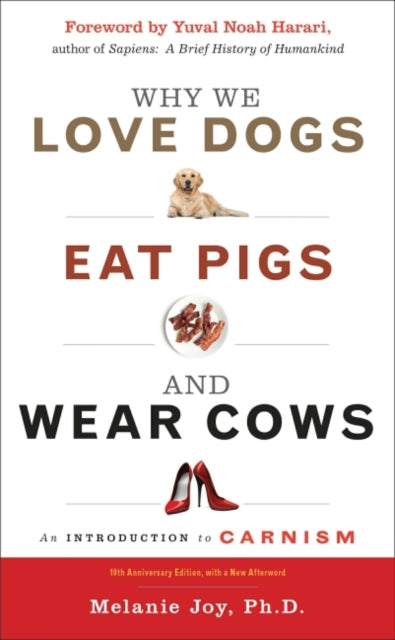
Why We Love Dogs, Eat Pigs and Wear Cows: An Introduction to Carnism 10th Anniversary Edition, with a New Afterword
Why We Love Dogs, Eat Pigs and Wear Cows: An Introduction to Carnism 10th Anniversary Edition, with a New Afterword
💎 Earn 60 Points (£0.60) on this item.
YOU SAVE £4.97
- Condition: Brand new
- UK Delivery times: Usually arrives within 2 - 3 working days
- UK Shipping: Fee starts at £2.39. Subject to product weight & dimension
Bulk ordering. Want 15 or more copies? Get a personalised quote and bigger discounts. Learn more about bulk orders.
Couldn't load pickup availability
- More about Why We Love Dogs, Eat Pigs and Wear Cows: An Introduction to Carnism 10th Anniversary Edition, with a New Afterword
An Introduction to Carnism, a groundbreaking book by Melanie Joy, explores why humans feel affection and compassion for certain animals but are callous to the suffering of others. It highlights the belief system that conditions us to eat certain animals when we would never dream of eating others, causing extensive animal suffering and global injustice. Becoming aware of carnism is vital for personal empowerment and social transformation, enabling us to make our food choices more freely.
Format: Paperback / softback
Length: 224 pages
Publication date: 17 September 2020
Publisher: Red Wheel/Weiser
An Introduction to Carnism: A Groundbreaking Contribution to Animal Welfare
Yuval Harari, New York Times best-selling author of Sapiens: A Brief History of Humankind, describes An Introduction to Carnism as an "important and groundbreaking contribution to the struggle for the welfare of animals." In this absorbing examination, Melanie Joy, a social psychologist, explores the reasons why humans feel affection and compassion for certain animals while being callous to the suffering of others. Why We Love Dogs, Eat Pigs, and Wear Cows offers a fascinating insight into carnism, the belief system that conditions us to eat certain animals while disregarding others. Carnism not only leads to extensive animal suffering and global injustice but also drives us to act against our own interests and the interests of others without fully realizing the consequences of our actions. Recognizing carnism and its mechanisms is crucial for personal empowerment and social transformation, as it allows us to make more informed and free choices regarding our food choices. Without awareness, there is no true free choice.
Carnism: A Belief System That Conditions Us to Eat Certain Animals
Carnism is a belief system that shapes our attitudes and behaviors towards animals. It is deeply ingrained in our culture, society, and personal experiences, and it has significant implications for animal welfare. Carnism is based on the idea that animals are here for human use and consumption, and that our relationship with them is one of dominance and control. This belief system has led to the exploitation and abuse of animals for centuries, and it continues to do so today.
One of the primary ways in which carnism affects animal welfare is through the production of meat, dairy, and eggs. Animals raised for these purposes are subjected to harsh conditions, including confinement, forced breeding, and slaughter. These conditions can lead to physical and psychological harm, including stress, anxiety, and depression. In addition, the production of meat, dairy, and eggs is a major contributor to climate change, deforestation, and water pollution.
Another way in which carnism affects animal welfare is through the consumption of animal products. Many people consume meat, dairy, and eggs without realizing the impact that these products have on animals. For example, meat production requires a significant amount of land, water, and energy, and it contributes to deforestation and climate change. Dairy production requires a large amount of water, and it can lead to the exploitation of cows and other animals. Egg production requires a significant amount of energy, and it can lead to the exploitation of chickens.
Carnism also affects animal welfare through the use of animals in entertainment, research, and testing. Animals are often used in experiments to test the safety and effectiveness of products, and they are subjected to painful and stressful procedures. In addition, animals are used in entertainment, such as circuses, rodeos, and zoos, and they are often subjected to cruel and abusive treatment.
The Impact of Carnism on Animal Welfare
The impact of carnism on animal welfare is significant and far-reaching. Animals are subjected to a wide range of physical and psychological harm, and they are often treated as commodities rather than living beings. This has led to a decline in animal welfare standards and a growing demand for animal rights.
One of the most significant impacts of carnism on animal welfare is the exploitation and abuse of animals for food. Animals are raised in conditions that are often cruel and inhumane, and they are subjected to forced breeding, confinement, and slaughter. This can lead to physical and psychological harm, including stress, anxiety, and depression. In addition, the production of meat, dairy, and eggs is a major contributor to climate change, deforestation, and water pollution.
Another impact of carnism on animal welfare is the use of animals in entertainment, research, and testing. Animals are often used in experiments to test the safety and effectiveness of products, and they are subjected to painful and stressful procedures. In addition, animals are used in entertainment, such as circuses, rodeos, and zoos, and they are often subjected to cruel and abusive treatment.
The Solution to Carnism
The solution to carnism is to adopt a more compassionate and ethical approach to our relationship with animals. This can be done by reducing our consumption of animal products, supporting animal rights, and promoting animal welfare.
Reducing our consumption of animal products is one of the most effective ways to reduce the impact of carnism on animal welfare. This can be done by eating a plant-based diet, which is lower in fat, cholesterol, and calories than a meat-based diet. It can also be done by reducing our consumption of dairy products, which are high in fat and cholesterol.
Supporting animal rights is another important way to reduce the impact of carnism on animal welfare. Animal rights organizations work to protect animals from exploitation and abuse, and they advocate for policies that promote animal welfare. By supporting animal rights, we can help to ensure that animals are treated with respect and dignity.
Promoting animal welfare is also important in reducing the impact of carnism on animal welfare. Animal welfare organizations work to improve the conditions of animals in captivity, and they advocate for policies that promote animal welfare. By promoting animal welfare, we can help to ensure that animals are treated with respect and dignity.
Conclusion
An Introduction to Carnism is an important and groundbreaking contribution to the struggle for the welfare of animals. Carnism is a belief system that shapes our attitudes and behaviors towards animals, and it has significant implications for animal welfare. By reducing our consumption of animal products, supporting animal rights, and promoting animal welfare, we can help to reduce the impact of carnism on animal welfare and create a more compassionate and ethical world.
Weight: 310g
Dimension: 132 x 216 x 16 (mm)
ISBN-13: 9781590035016
Edition number: 3 Revised edition
UK and International shipping information
UK and International shipping information
UK Delivery and returns information:
- Delivery within 2 - 3 days when ordering in the UK.
- Shipping fee for UK customers from £2.39. Fully tracked shipping service available.
- Returns policy: Return within 30 days of receipt for full refund.
International deliveries:
Shulph Ink now ships to Australia, Belgium, Canada, France, Germany, Ireland, Italy, India, Luxembourg Saudi Arabia, Singapore, Spain, Netherlands, New Zealand, United Arab Emirates, United States of America.
- Delivery times: within 5 - 10 days for international orders.
- Shipping fee: charges vary for overseas orders. Only tracked services are available for most international orders. Some countries have untracked shipping options.
- Customs charges: If ordering to addresses outside the United Kingdom, you may or may not incur additional customs and duties fees during local delivery.