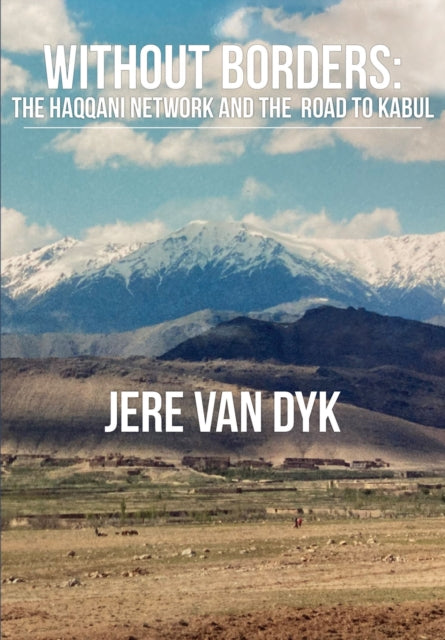
Jere Van Dyk
Without Borders: The Haqqani Network and the Road to Kabul
Without Borders: The Haqqani Network and the Road to Kabul
💎 Earn 190 Points (£1.90) on this item.
YOU SAVE £4.94
- Condition: Brand new
- UK Delivery times: Usually arrives within 2 - 3 working days
- UK Shipping: Fee starts at £2.39. Subject to product weight & dimension
Bulk ordering. Want 15 or more copies? Get a personalised quote and bigger discounts. Learn more about bulk orders.
Couldn't load pickup availability
- More about Without Borders: The Haqqani Network and the Road to Kabul
The Haqqani Network and the Road to Kabul is a book that tells the story of the Haqqani Network's origins, political awakening, and rise, from being America's allies in the Afghan-Soviet war to becoming America's enemy after 9/11. It explores the ideology and movement of the Haqqani Mujahideen, born in the Mongol conquest of Baghdad in 1258, and its influence in the greater Middle East.
Format: Hardback
Length: 404 pages
Publication date: 30 September 2022
Publisher: Academica Press
The Haqqani Network and the Road to Kabul is a captivating exploration of the origins, political awakening, and remarkable rise of the Haqqani Network, a designation coined by the United States and its allies, while the Haqqani family refers to it as the Haqqani Mujahideen. The author's firsthand experience living with the Haqqanis in the rugged mountains of eastern Afghanistan during the 1980s, when they were America's allies in the Afghan-Soviet war, provides a unique perspective into the network's evolution. However, the narrative takes a dramatic turn after the events of 9/11, when the Haqqani Network became America's adversary. This book chronicles the author's relentless pursuit to reconnect with the Haqqanis and his subsequent quest to comprehend their profound influence in the broader Middle East.
The origins of the Haqqani Network can be traced back to the Mongol conquest of Baghdad in 1258, a historical event that left a lasting impact on the region. This ideology and movement resurfaced in Arabia and India during the 18th century, flourishing in the anti-Christian, anti-British, anti-European, and anti-Russian colonial movements of the 19th and 20th centuries. It continued to evolve and adapt, receiving significant support from the United States in modern times, resulting in the formation of the Haqqani Mujahideen and their allies and followers across the globe.
The Haqqani Network's ascent to prominence is a testament to its resilience and adaptability. It has navigated the complex political landscape of Afghanistan and the broader Middle East, leveraging its connections and influence to shape regional dynamics. The network's strategic alliances and intricate web of relationships have allowed it to thrive in a region characterized by instability and conflict.
One of the key aspects of the Haqqani Network's success is its ability to operate seamlessly across borders. It has established a presence in multiple countries, including Pakistan, Iran, and Syria, where it has been able to exploit the vulnerabilities of local governments and exert influence over regional affairs. The network's ability to operate in these complex environments has enabled it to evade detection and maintain its operational freedom.
The Haqqani Network's influence extends beyond its military capabilities. It has played a significant role in shaping the political landscape of Afghanistan, particularly in the region of North Waziristan. The network has been able to leverage its connections with local tribes and power brokers to maintain a footh. It has also been involved in the facilitation of cross-border trade, particularly the trafficking of drugs and weapons, contributing to the destabilization of the region.
The Haqqani Network's involvement in the Afghan-Soviet war and its subsequent role in the US-led invasion of Afghanistan further highlights its significance. The network's support for the anti-Soviet resistance movement and its collaboration with the Taliban during the 1990s played a crucial role in the collapse of the Soviet Union and the establishment of a Taliban-controlled Afghanistan. However, the network's involvement in the subsequent civil war and its support for anti-American forces have also contributed to the ongoing instability in the country.
The Haqqani Network's rise to prominence has also raised concerns about its relationship with other militant groups and its potential impact on regional security. The network has been linked to al-Qaeda, the Islamic State, and other extremist organizations, raising questions about its loyalty and its intentions. The network's ability to operate across borders and its close ties with these organizations have made it a target for counterterrorism efforts by the United States and its allies.
Despite these challenges, the Haqqani Network remains a significant player in the regional political landscape. Its ability to adapt and evolve has allowed it to remain a resilient and influential force. The network's connections with local tribes and power brokers, its strategic alliances, and its ability to operate across borders make it a formidable adversary. However, its involvement in illicit activities and its links to other extremist organizations pose significant risks to regional stability and security.
In conclusion, The Haqqani Network and the Road to Kabul is a captivating exploration of the origins, political awakening
The Haqqani Network and the Road to Kabul is a captivating exploration of the origins, political awakening, and remarkable rise of the Haqqani Network, a designation coined by the United States and its allies, while the Haqqani family refers to it as the Haqqani Mujahideen. The author's firsthand experience living with the Haqqanis in the rugged mountains of eastern Afghanistan during the 1980s, when they were America's allies in the Afghan-Soviet war, provides a unique perspective into the network's evolution. However, the narrative takes a dramatic turn after the events of 9/11, when the Haqqani Network became America's adversary. This book chronicles the author's relentless pursuit to reconnect with the Haqqanis and his subsequent quest to comprehend their profound influence in the broader Middle East.
The origins of the Haqqani Network can be traced back to the Mongol conquest of Baghdad in 1258, a historical event that left a lasting impact on the region. This ideology and movement resurfaced in Arabia and India during the 18th century, flourishing in the anti-Christian, anti-British, anti-European, and anti-Russian colonial movements of the 19th and 20th centuries. It continued to evolve and adapt, receiving significant support from the United States in modern times, resulting in the formation of the Haqqani Mujahideen and their allies and followers across the globe.
The Haqqani Network's ascent to prominence is a testament to its resilience and adaptability. It has navigated the complex political landscape of Afghanistan and the broader Middle East, leveraging its connections and influence to shape regional dynamics. The network's strategic alliances and intricate web of relationships have allowed it to thrive in a region characterized by instability and conflict.
One of the key aspects of the Haqqani Network's success is its ability to operate seamlessly across borders. It has established a presence in multiple countries, including Pakistan, Iran, and Syria, where it has been able to exploit the vulnerabilities of local governments and exert influence over regional affairs. The network's ability to operate in these complex environments has enabled it to evade detection and maintain its operational freedom.
The Haqqani Network's influence extends beyond its military capabilities. It has played a significant role in shaping the political landscape of Afghanistan, particularly in the region of North Waziristan. The network has been able to leverage its connections with local tribes and power brokers to maintain a. It has also been involved in the facilitation of cross-border trade, particularly the trafficking of drugs and weapons, contributing to the destabilization of the region.
The Haqqani Network's involvement in the Afghan-Soviet war and its subsequent role in the US-led invasion of Afghanistan further highlights its significance. The network's support for the anti-Soviet resistance movement and its collaboration with the Taliban during the 1990s played a crucial role in the collapse of the Soviet Union and the establishment of a Taliban-controlled Afghanistan. However, the network's involvement in the subsequent civil war and its support for anti-American forces have also contributed to the ongoing instability in the country.
The Haqqani Network's rise to prominence has also raised concerns about its relationship with other militant groups and its potential impact on regional security. The network has been linked to al-Qaeda, the Islamic State, and other extremist organizations, raising questions about its loyalty and its intentions. The network's ability to operate across borders and its close ties with these organizations have made it a target for counterterrorism efforts by the United States and its allies.
Despite these challenges, the Haqqani Network remains a significant player in the regional political landscape. Its ability to adapt and evolve has allowed it to remain a resilient and influential force. The network's connections with local tribes and power brokers, its strategic alliances, and its ability to operate across borders make it a formidable adversary. However, its involvement in illicit activities and its links to other extremist organizations pose significant risks to regional stability and security.
In conclusion, The Haqqani Network and the Road to Kabul is a captivating exploration of the origins, political awakening
The Haqqani Network and the Road to Kabul is a captivating exploration of the origins, political awakening, and remarkable rise of the Haqqani Network, a designation coined by the United States and its allies, while the Haqqani family refers to it as the Haqqani Mujahideen. The author's firsthand experience living with the Haqqanis in the rugged mountains of eastern Afghanistan during the 1980s, when they were America's allies in the Afghan-Soviet war, provides a unique perspective into the network's evolution. However, the narrative takes a dramatic turn after the events of 9/11, when the Haqqani Network became America's adversary. This book chronicles the author's relentless pursuit to reconnect with the Haqqanis and his subsequent quest to comprehend their profound influence in the broader Middle East.
The origins of the Haqqani Network can be traced back to the Mongol conquest of Baghdad in 1258, a historical event that left a lasting impact on the region. This ideology and movement resurfaced in Arabia and India during the 18th century, flourishing in the anti-Christian, anti-British, anti-European, and anti-Russian colonial movements of the 19th and 20th centuries. It continued to evolve and adapt, receiving significant support from the United States in modern times, resulting in the formation of the Haqqani Mujahideen and their allies and followers across the globe.
The Haqqani Network's ascent to prominence is a testament to its resilience and adaptability. It has navigated the complex political landscape of Afghanistan and the broader Middle East, leveraging its connections and influence to shape regional dynamics. The network's strategic alliances and intricate web of relationships have allowed it to thrive in a region characterized by instability and conflict.
One of the key aspects of the Haqqani Network's success is its ability to operate seamlessly across borders. It has established a presence in multiple countries, including Pakistan, Iran, and Syria, where it has been able to exploit the vulnerabilities of local governments and exert influence over regional affairs. The network's ability to operate in these complex environments has enabled it to evade detection and maintain its operational freedom.
The Haqqani Network's influence extends beyond its military capabilities. It has played a significant role in shaping the political landscape of Afghanistan, particularly in the region of North Waziristan. The network has been able to leverage its connections with local tribes and power brokers to maintain a. It has also been involved in the facilitation of cross-border trade, particularly the trafficking of drugs and weapons, contributing to the destabilization of the region.
The Haqqani Network's involvement in the Afghan-Soviet war and its subsequent role in the US-led invasion of Afghanistan further highlights its significance. The network's support for the anti-Soviet resistance movement and its collaboration with the Taliban during the 1990s played a crucial role in the collapse of the Soviet Union and the establishment of a Taliban-controlled Afghanistan. However, the network's involvement in the subsequent civil war and its support for anti-American forces have also contributed to the ongoing instability in the country.
The Haqqani Network's rise to prominence has also raised concerns about its relationship with other militant groups and its potential impact on regional security. The network has been linked to al-Qaeda, the Islamic State, and other extremist organizations, raising questions about its loyalty and its intentions. The network's ability to operate across borders and its close ties with these organizations have made it a target for counterterrorism efforts by the United States and its allies.
Despite these challenges, the Haqqani Network remains a significant player in the regional political landscape. Its ability to adapt and evolve has allowed it to remain a resilient and influential force. The network's connections with local tribes and power brokers, its strategic alliances, and its ability to operate across borders make it a formidable adversary. However, its involvement in illicit activities and its links to other extremist organizations pose significant risks to regional stability and security.
In conclusion, The Haqqani Network and the Road to Kabul is a captivating exploration of the origins, political awakening, and remarkable rise of the Haqqani Network, a designation coined by the United States and its allies, while the Haqqani family refers to it as the Haqqani Mujahideen. The author's firsthand experience living with the Haqqanis in the rugged mountains of eastern Afghanistan during the 1980s, when they were America's allies in the Afghan-Soviet war, provides a unique perspective into the network's evolution. However, the narrative takes a dramatic turn after the events of 9/11, when the Haqqani Network became America's adversary. This book chronicles the author's relentless pursuit to reconnect with the Haqqanis and his subsequent quest to comprehend their profound influence in the broader Middle East.
Dimension: 229 x 152 (mm)
ISBN-13: 9781680538656
UK and International shipping information
UK and International shipping information
UK Delivery and returns information:
- Delivery within 2 - 3 days when ordering in the UK.
- Shipping fee for UK customers from £2.39. Fully tracked shipping service available.
- Returns policy: Return within 30 days of receipt for full refund.
International deliveries:
Shulph Ink now ships to Australia, Belgium, Canada, France, Germany, Ireland, Italy, India, Luxembourg Saudi Arabia, Singapore, Spain, Netherlands, New Zealand, United Arab Emirates, United States of America.
- Delivery times: within 5 - 10 days for international orders.
- Shipping fee: charges vary for overseas orders. Only tracked services are available for most international orders. Some countries have untracked shipping options.
- Customs charges: If ordering to addresses outside the United Kingdom, you may or may not incur additional customs and duties fees during local delivery.