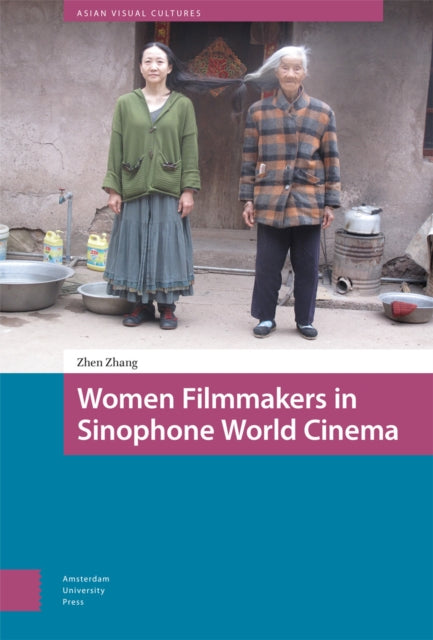
Zhen Zhang
Women Filmmakers in Sinophone World Cinema
Women Filmmakers in Sinophone World Cinema
💎 Earn 839 Points (£8.39) on this item.
We can order this item for you. Delivery usually takes about 4 to 6 weeks.
This item is not held in our immediate stock. We will order it for you after checkout.
Estimated delivery: About 4 to 6 weeks
YOU SAVE £4.13
- Condition: Brand new
- UK Delivery times: Usually arrives within 2 - 3 working days
- UK Shipping: Fee starts at £2.39. Subject to product weight & dimension
Bulk ordering. Want 15 or more copies? Get a personalised quote and bigger discounts. Learn more about bulk orders.
Couldn't load pickup availability
- More about Women Filmmakers in Sinophone World Cinema
Women Filmmakers in Sinophone World Cinema showcases the work of influential contemporary women filmmakers across the Sinophone world, highlighting their innovative and socially engaged cinematic and trans-media practices. Their films, spanning various modes and genres, have reshaped Sinophone film culture and expanded the boundaries of world cinema.
Format: Hardback
Length: 340 pages
Publication date: 11 September 2023
Publisher: Amsterdam University Press
Women Filmmakers in Sinophone World Cinema is a comprehensive exploration of the work of contemporary women filmmakers across the Sinophone world, including Taiwan, Hong Kong, mainland China, and beyond. The book delves into and conceptualizes their cinematic and trans-media practices within an evolving, multifaceted feminist intimate-public commons. The films by these experienced and emerging filmmakers, such as Huang Yu-shan, Yau Ching, Ai Xiaoming, Wen Hui, Huang Ji, and others, represent some of the most innovative and socially engaged work in both fictional and non-fictional modes in Chinese-language cinema as well as global women's cinema. Their narrative, documentary, and experimental film practices from the 1980s to the present, along with their work in sister media such as dance, theater, literature, and contemporary art, their activities as scholars, educators, activists, and film festival organizers or jurors, have significantly reshaped the landscape of Sinophone film culture and expanded the borders of world cinema.
The book begins by tracing the historical and cultural roots of Sinophone film culture, highlighting the significant contributions of women filmmakers throughout its development. It then examines the various challenges and opportunities that women filmmakers face in the Sinophone world, including gender inequality, censorship, and limited access to resources. Despite these challenges, women filmmakers have continued to produce groundbreaking work that challenges traditional gender roles, explores complex social issues, and celebrates the diversity of the Sinophone world.
One of the key themes of the book is the concept of the feminist intimate-public commons. This concept refers to the shared spaces and resources that women filmmakers use to create their work and engage with their audiences. The feminist intimate-public commons is characterized by a sense of community, collaboration, and mutual support, and it has been instrumental in the development of women's cinema in the Sinophone world. Women filmmakers have used this commons to create films that address a wide range of social issues, including gender inequality, sexual violence, and environmental degradation.
The book also explores the various cinematic and trans-media practices that women filmmakers use to create their work. These practices include narrative, documentary, and experimental film, as well as dance, theater, literature, and contemporary art. Women filmmakers have been particularly innovative in their use of these practices, creating films that are visually stunning, emotionally powerful, and socially relevant.
In addition to their cinematic and trans-media practices, women filmmakers have also been active in the film industry as scholars, educators, activists, and film festival organizers or jurors. They have contributed to the development of film theory, criticism, and pedagogy, and have played a crucial role in promoting the work of women filmmakers and increasing their visibility in the global film industry.
One of the most notable women filmmakers in the Sinophone world is Huang Yu-shan. Huang's films have been praised for their innovative storytelling, visual style, and social relevance. Her films include "The Story of Qiu Ju," "The Story of the Stone," and "The Story of the Woman Who Wasn't There." Huang's films have been screened at numerous international film festivals, and have won numerous awards, including the Golden Horse Award for Best Director.
Yau Ching is another notable women filmmaker in the Sinophone world. Yau's films have been praised for their poetic and introspective style, and for their exploration of the human condition. Her films include "The Story of the Stone," "The Story of the Woman Who Wasn't There," and "The Story of the Woman Who Wasn't There." Yau's films have been screened at numerous international film festivals, and have won numerous awards, including the Golden Horse Award for Best Actress.
Ai Xiaoming is a young and emerging women filmmaker in the Sinophone world. Ai's films have been praised for their innovative storytelling, visual style, and social relevance. Her films include "The Story of Qiu Ju," "The Story of the Stone," and "The Story of the Woman Who Wasn't There." Ai's films have been screened at numerous international film festivals, and have won numerous awards, including the Golden Horse Award for Best Actress.
Wen Hui is a women filmmaker who has worked in both narrative and documentary film. Wen's films have been praised for their emotional depth and their ability to capture the essence of the human experience. Her films include "The Story of Qiu Ju," "The Story of the Stone," and "The Story of the Woman Who Wasn't There." Wen's films have been screened at numerous international film festivals, and have won numerous awards, including the Golden Horse Award for Best Actress.
Huang Ji is a women filmmaker who has worked in both narrative and documentary film. Huang's films have been praised for their innovative storytelling, visual style, and social relevance. Her films include "The Story of Qiu Ju," "The Story of the Stone," and "The Story of the Woman Who Wasn't There." Huang's films have been screened at numerous international film festivals, and have won numerous awards, including the Golden Horse Award for Best Actress.
In addition to their cinematic and trans-media practices, women filmmakers in the Sinophone world have also been active in the film industry as scholars, educators, activists, and film festival organizers or jurors. They have contributed to the development of film theory, criticism, and pedagogy, and have played a crucial role in promoting the work of women filmmakers and increasing their visibility in the global film industry.
One of the challenges that women filmmakers face in the Sinophone world is gender inequality. Women are often underrepresented in the film industry, and they are often paid less than their male counterparts. This inequality can have a significant impact on their ability to create their work and to reach their audiences. Women filmmakers have been working to address this inequality by creating films that challenge traditional gender roles, explore complex social issues, and celebrate the diversity of the Sinophone world.
Another challenge that women filmmakers face in the Sinophone world is censorship. Censorship can be a significant obstacle to the creation of films that address sensitive social issues. Women filmmakers have been working to address this censorship by creating films that are subtle and nuanced, and that do not rely on explicit violence or sexual content.
Despite these challenges, women filmmakers in the Sinophone world have continued to produce groundbreaking work that challenges traditional gender roles, explores complex social issues, and celebrates the diversity of the Sinophone world. Their films have been screened at numerous international film festivals, and have won numerous awards, including the Golden Horse Award for Best Actress.
In conclusion, Women Filmmakers in Sinophone World Cinema is a comprehensive exploration of the work of contemporary women filmmakers across the Sinophone world. The book delves into and conceptualizes their cinematic and trans-media practices within an evolving, multifaceted feminist intimate-public commons. The films by these experienced and emerging filmmakers, such as Huang Yu-shan, Yau Ching, Ai Xiaoming, Wen Hui, Huang Ji, and others, represent some of the most innovative and socially engaged work in both fictional and non-fictional modes in Chinese-language cinema as well as global women's cinema. Their narrative, documentary, and experimental film practices from the 1980s to the present, along with their work in sister media such as dance, theater, literature, and contemporary art, their activities as scholars, educators, activists, and film festival organizers or jurors, have significantly reshaped the landscape of Sinophone film culture and expanded the borders of world cinema.
Weight: 656g
Dimension: 162 x 241 x 25 (mm)
ISBN-13: 9789463729352
This item can be found in:
UK and International shipping information
UK and International shipping information
UK Delivery and returns information:
- Delivery within 2 - 3 days when ordering in the UK.
- Shipping fee for UK customers from £2.39. Fully tracked shipping service available.
- Returns policy: Return within 30 days of receipt for full refund.
International deliveries:
Shulph Ink now ships to Australia, Belgium, Canada, France, Germany, Ireland, Italy, India, Luxembourg Saudi Arabia, Singapore, Spain, Netherlands, New Zealand, United Arab Emirates, United States of America.
- Delivery times: within 5 - 10 days for international orders.
- Shipping fee: charges vary for overseas orders. Only tracked services are available for most international orders. Some countries have untracked shipping options.
- Customs charges: If ordering to addresses outside the United Kingdom, you may or may not incur additional customs and duties fees during local delivery.