Shulph Ink
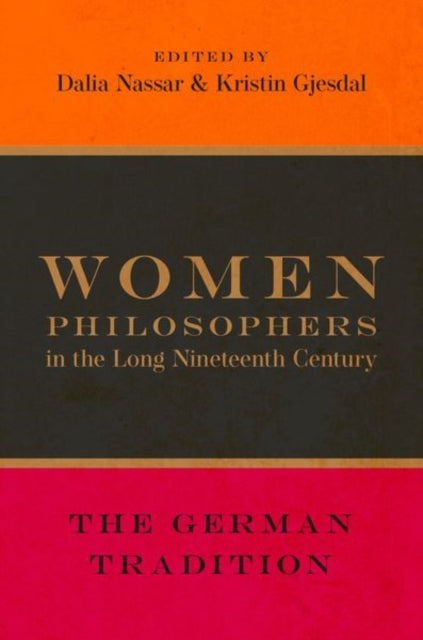
Women Philosophers in the Long Nineteenth Century: The German Tradition
Women Philosophers in the Long Nineteenth Century: The German Tradition
💎 Earn 175 Points (£1.75) on this item.
- Condition: Brand new
- UK Delivery times: Usually arrives within 2 - 3 working days
- UK Shipping: Fee starts at £2.39. Subject to product weight & dimension
Bulk ordering. Want 15 or more copies? Get a personalised quote and bigger discounts. Learn more about bulk orders.
Couldn't load pickup availability
- More about Women Philosophers in the Long Nineteenth Century: The German Tradition
The long nineteenth century was a transformative period for women philosophers in German-speaking countries, contributing to romanticism, idealism, socialism, Nietzscheanism, and phenomenology. Despite their lesser-known status today, their works were widely read and influential in their own time, shedding light on nineteenth-century philosophy and its potential to transform lives. This volume presents the works of nine women philosophers, offering an introduction to their lives and positions and making their writings accessible to students and scholars alike.
Format: Paperback / softback
Length: 304 pages
Publication date: 12 October 2021
Publisher: Oxford University Press Inc
The long nineteenth century, marked by the French Revolution and culminating in World War I, proved to be a transformative era for women philosophers in German-speaking countries and contexts. Spanning the realms of romanticism, idealism, socialism, Nietzscheanism, and phenomenology, this period is often associated with renowned male philosophers such as Hegel, Schopenhauer, Kierkegaard, Nietzsche, and Marx, yet women philosophers played a significant role in these philosophical movements. While their works may not be as well-known as their male counterparts, these women philosophers were widely read and influential in their own time. Their contributions shed valuable light on nineteenth-century philosophy and philosophy more broadly, revealing the interconnectedness of various movements and demonstrating the transformative power of philosophy in shaping lives and being shaped by lived experiences and practices.
In the nineteenth century, women philosophers delved into a diverse array of philosophical topics and styles. Working within and in conversation with popular philosophical movements, they contributed to shaping the philosophical agenda and offered distinctive perspectives on existential, political, aesthetic, and epistemological questions. Despite facing barriers to formal education and academic positions, women thinkers developed a unique approach to philosophizing that was accessible, intuitive, and deeply rooted in activism.
The present volume aims to introduce English-language readers to the works of nine remarkable women philosophers, many of whom have been overlooked or marginalized in the past. By making their writings accessible for the first time, this volume seeks to stimulate further interest and scholarship on the contributions of these women thinkers. The volume includes a comprehensive introduction that provides context and highlights the significance of their work.
The nineteenth century witnessed a remarkable flourishing of women's philosophical thought in Germany. Prominent figures such as Sophie von Schlegel, Caroline Schlegel, and Friedrich Schiller actively engaged in philosophical discourse and contributed to the development of German idealism. However, it was during the later half of the century that women's philosophical voices gained greater prominence.
One of the most influential women philosophers of the period was Friedrich Schiller. Born in Marbach am Neckar in 1759, Schiller was a playwright, poet, and philosopher who played a significant role in shaping German literature and culture. Despite facing societal barriers and discrimination, Schiller pursued her intellectual passions and became a respected member of the German intellectual elite.
Schiller's philosophical writings were deeply influenced by the ideals of German idealism, which emphasized the importance of the individual and the pursuit of personal fulfillment. She believed that philosophy should be accessible to all and should serve as a means of promoting social and political change. In her essay "On the Freedom of the Human Will," Schiller argued that human beings possess a natural inclination towards freedom and that society should strive to create an environment that fosters this inclination.
Another notable woman philosopher of the nineteenth century was Caroline Schlegel. Born in Stuttgart in 1767, Schlegel was the sister of the renowned German philosopher Friedrich Schiller. She was a prolific writer and editor who played a crucial role in promoting women's rights and the importance of education. Schlegel's philosophical writings were influenced by the Enlightenment and the ideals of liberalism and democracy. She believed that women should have equal opportunities to education and should be actively involved in shaping society.
In addition to Schiller and Schlegel, other women philosophers who made significant contributions to nineteenth-century philosophy include Sophie von Stade, Dorothea von Martius, and Luise Meitner. Sophie von Stade was a German philosopher who was known for her work in aesthetics and the philosophy of art. She argued that art should be accessible to all and should serve as a means of promoting social and political change. Dorothea von Martius was a German philosopher who was known for her work in political philosophy and feminist theory. She argued that women should have equal rights and opportunities to participate in political life. Luise Meitner was a German physicist who made groundbreaking discoveries in nuclear physics. She was also a philosopher who explored the relationship between science and philosophy and the implications of scientific progress for society.
Despite the progress made by women philosophers in the nineteenth century, they faced significant challenges and barriers. Women were often excluded from formal education and academic positions, and they faced societal discrimination and prejudice. However, their intellectual contributions and activism paved the way
The long nineteenth century, marked by the French Revolution and culminating in World War I, proved to be a transformative era for women philosophers in German-speaking countries and contexts. Spanning the realms of romanticism, idealism, socialism, Nietzscheanism, and phenomenology, this period is often associated with renowned male philosophers such as Hegel, Schopenhauer, Kierkegaard, Nietzsche, and Marx, yet women philosophers played a significant role in these philosophical movements. While their works may not be as well-known as their male counterparts, these women philosophers were widely read and influential in their own time. Their contributions shed valuable light on nineteenth-century philosophy and philosophy more broadly, revealing the interconnectedness of various movements and demonstrating the transformative power of philosophy in shaping lives and being shaped by lived experiences and practices.
In the nineteenth century, women philosophers delved into a diverse array of philosophical topics and styles. Working within and in conversation with popular philosophical movements, they contributed to shaping the philosophical agenda and offered distinctive perspectives on existential, political, aesthetic, and epistemological questions. Despite facing barriers to formal education and academic positions, women thinkers developed a unique approach to philosophizing that was accessible, intuitive, and deeply rooted in activism.
The present volume aims to introduce English-language readers to the works of nine remarkable women philosophers, many of whom have been overlooked or marginalized in the past. By making their writings accessible for the first time, this volume seeks to stimulate further interest and scholarship on the contributions of these women thinkers. The volume includes a comprehensive introduction that provides context and highlights the significance of their work.
The nineteenth century witnessed a remarkable flourishing of women's philosophical thought in Germany. Prominent figures such as Sophie von Schlegel, Caroline Schlegel, and Friedrich Schiller actively engaged in philosophical discourse and contributed to the development of German idealism. However, it was during the later half of the century that women's philosophical voices gained greater prominence.
One of the most influential women philosophers of the period was Friedrich Schiller. Born in Marbach am Neckar in 1759, Schiller was a playwright, poet, and philosopher who played a significant role in shaping German literature and culture. Despite facing societal barriers and discrimination, Schiller pursued her intellectual passions and became a respected member of the German intellectual elite.
Schiller's philosophical writings were deeply influenced by the ideals of German idealism, which emphasized the importance of the individual and the pursuit of personal fulfillment. She believed that philosophy should be accessible to all and should serve as a means of promoting social and political change. In her essay "On the Freedom of the Human Will," Schiller argued that human beings possess a natural inclination towards freedom and that society should strive to create an environment that fosters this inclination.
Another notable woman philosopher of the nineteenth century was Caroline Schlegel. Born in Stuttgart in 1767, Schlegel was the sister of the renowned German philosopher Friedrich Schiller. She was a prolific writer and editor who played a crucial role in promoting women's rights and the importance of education. Schlegel's philosophical writings were influenced by the Enlightenment and the ideals of liberalism and democracy. She believed that women should have equal opportunities to education and should be actively involved in shaping society.
In addition to Schiller and Schlegel, other women philosophers who made significant contributions to nineteenth-century philosophy include Sophie von Stade, Dorothea von Martius, and Luise Meitner. Sophie von Stade was a German philosopher who was known for her work in aesthetics and the philosophy of art. She argued that art should be accessible to all and should serve as a means of promoting social and political change. Dorothea von Martius was a German philosopher who was known for her work in political philosophy and feminist theory. She argued that women should have equal rights and opportunities to participate in political life. Luise Meitner was a German physicist who made groundbreaking discoveries in nuclear physics. She was also a philosopher who explored the relationship between science and philosophy and the implications of scientific progress for society.
Despite the progress made by women philosophers in the nineteenth century, they faced significant challenges and barriers. Women were often excluded from formal education and academic positions, and they faced societal discrimination and prejudice. However, their intellectual contributions and activism paved the way for greater gender equality in the field of philosophy and beyond.
In conclusion, the long nineteenth century was a transformative period for women philosophers in German-speaking countries and contexts. Despite facing barriers and discrimination, these women philosophers made significant contributions to philosophical movements such as idealism, socialism, Nietzscheanism, and phenomenology. Their works shed valuable light on nineteenth-century philosophy and philosophy more broadly, revealing the interconnectedness of various movements and demonstrating the transformative power of philosophy in shaping lives and being shaped by lived experiences and practices. The present volume aims to introduce English-language readers to the works of nine remarkable women philosophers, many of whom have been overlooked or marginalized in the past. By making their writings accessible for the first time, this volume seeks to stimulate further interest and scholarship on the contributions of these women thinkers.
Weight: 486g
Dimension: 157 x 236 x 22 (mm)
ISBN-13: 9780190868048
This item can be found in:
UK and International shipping information
UK and International shipping information
UK Delivery and returns information:
- Delivery within 2 - 3 days when ordering in the UK.
- Shipping fee for UK customers from £2.39. Fully tracked shipping service available.
- Returns policy: Return within 30 days of receipt for full refund.
International deliveries:
Shulph Ink now ships to Australia, Belgium, Canada, France, Germany, Ireland, Italy, India, Luxembourg Saudi Arabia, Singapore, Spain, Netherlands, New Zealand, United Arab Emirates, United States of America.
- Delivery times: within 5 - 10 days for international orders.
- Shipping fee: charges vary for overseas orders. Only tracked services are available for most international orders. Some countries have untracked shipping options.
- Customs charges: If ordering to addresses outside the United Kingdom, you may or may not incur additional customs and duties fees during local delivery.