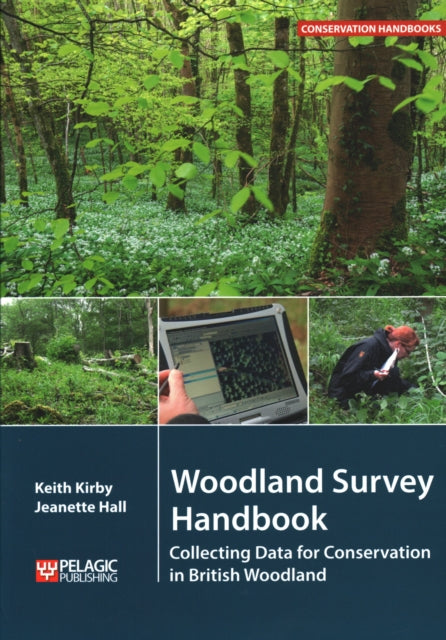
Keith Kirby,Jeanette Hall
Woodland Survey Handbook: Collecting Data for Conservation in British Woodland
Woodland Survey Handbook: Collecting Data for Conservation in British Woodland
💎 Earn 185 Points (£1.85) on this item.
- Condition: Brand new
- UK Delivery times: Usually arrives within 2 - 3 working days
- UK Shipping: Fee starts at £2.39. Subject to product weight & dimension
Bulk ordering. Want 15 or more copies? Get a personalised quote and bigger discounts. Learn more about bulk orders.
Couldn't load pickup availability
- More about Woodland Survey Handbook: Collecting Data for Conservation in British Woodland
This book provides guidance on how to record the wildlife in a wood, including examples and methods for conservation surveys and the use of fast-evolving techniques such as eDNA surveys and LiDAR. It emphasizes the importance of understanding the species and their habitats to protect and manage them effectively.
\n Format: Paperback / softback
\n Length: 220 pages
\n Publication date: 25 February 2019
\n Publisher: Pelagic Publishing
\n
This comprehensive guidebook offers invaluable insights into the art of recording the diverse flora and fauna inhabiting woodlands. It serves as a valuable resource for enthusiasts, researchers, and conservationists alike, providing a wealth of information and practical tips on how to explore and document these precious ecosystems.
Woodlands are home to a remarkable array of plant and animal species, making them some of the most biodiverse terrestrial habitats in Britain. However, many of these woodlands face threats and neglect, limiting their potential richness and diversity. To effectively protect and manage these valuable ecosystems, it is essential to have a comprehensive understanding of the species present, their origins, and their role within the wider landscape.
Conservation surveys play a pivotal role in achieving this understanding. These surveys involve a systematic and scientific approach to gathering data on the flora and fauna of a particular area. They encompass a range of methods, from online research and field observations to more detailed surveys and monitoring techniques.
One of the key methods used in conservation surveys is the identification of species. This involves the use of taxonomic keys, field guides, and other reference materials to accurately identify plants and animals. It is important to note that not all species can be identified using these methods, particularly those that are rare or elusive. In such cases, advanced techniques such as DNA sequencing and other molecular methods may be employed to identify and characterize species.
Another important aspect of conservation surveys is the monitoring of population trends and habitat conditions. This involves regularly collecting data on the abundance and distribution of species, as well as assessing the health and condition of the vegetation and soil. By monitoring these factors, conservationists can identify patterns of decline or habitat loss and take appropriate action to address these issues.
In addition to identification and monitoring, conservation surveys also involve the collection of other types of data. This may include information on the geological and ecological history of the area, as well as details on the management practices and policies in place. This information can be used to develop effective conservation strategies and policies, and to ensure that the conservation efforts are aligned with the broader landscape.
Fast-evolving techniques such as eDNA surveys and the use of LiDAR (Light Detection and Ranging) are increasingly being used in conservation surveys. These techniques offer new opportunities for gathering data on species distribution and abundance, particularly in areas where traditional survey methods may be challenging or inaccessible.
In conclusion, recording the wildlife in a wood is a crucial step towards understanding and protecting these valuable ecosystems. This comprehensive guidebook provides invaluable insights into the art of recording the diverse flora and fauna inhabiting woodlands, offering a wealth of information and practical tips on how to explore and document these precious ecosystems. Whether you are an enthusiast, researcher, or conservationist, this guidebook will help you deepen your knowledge and appreciation of woodlands and contribute to their conservation and management.
\n Weight: 376g\n
Dimension: 172 x 247 x 11 (mm)\n
ISBN-13: 9781784271848\n \n
UK and International shipping information
UK and International shipping information
UK Delivery and returns information:
- Delivery within 2 - 3 days when ordering in the UK.
- Shipping fee for UK customers from £2.39. Fully tracked shipping service available.
- Returns policy: Return within 30 days of receipt for full refund.
International deliveries:
Shulph Ink now ships to Australia, Belgium, Canada, France, Germany, Ireland, Italy, India, Luxembourg Saudi Arabia, Singapore, Spain, Netherlands, New Zealand, United Arab Emirates, United States of America.
- Delivery times: within 5 - 10 days for international orders.
- Shipping fee: charges vary for overseas orders. Only tracked services are available for most international orders. Some countries have untracked shipping options.
- Customs charges: If ordering to addresses outside the United Kingdom, you may or may not incur additional customs and duties fees during local delivery.