C. C.Wolhuter
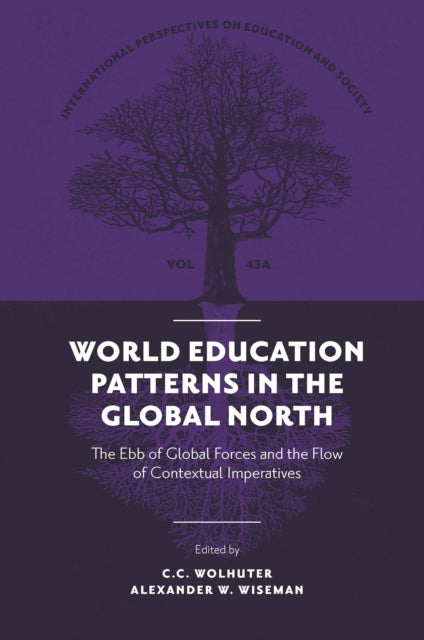
World Education Patterns in the Global North: The Ebb of Global Forces and the Flow of Contextual Imperatives
World Education Patterns in the Global North: The Ebb of Global Forces and the Flow of Contextual Imperatives
💎 Earn 361 Points (£3.61) on this item.
YOU SAVE £1.78
- Condition: Brand new
- UK Delivery times: Usually arrives within 2 - 3 working days
- UK Shipping: Fee starts at £2.39. Subject to product weight & dimension
Bulk ordering. Want 15 or more copies? Get a personalised quote and bigger discounts. Learn more about bulk orders.
Couldn't load pickup availability
- More about World Education Patterns in the Global North: The Ebb of Global Forces and the Flow of Contextual Imperatives
The field of Comparative and International Education is facing extraordinary challenges due to global forces such as the ecological crisis, population explosion, changing nature of work, rise of knowledge economies, economic internationalism, the Fourth Industrial Revolution, technology revolution, changing social relations, empowerment of minority interest groups, rise of multicultural societies, and diminishing stature of the nation-state.
Format: Hardback
Length: 208 pages
Publication date: 01 September 2022
Publisher: Emerald Publishing Limited
Comparative and International Education is a dynamic and rapidly evolving field that is grappling with a multitude of extraordinary challenges across the globe. In the context of the Global North, which encompasses regions such as North America, Central and South-East Europe, and East Asia, World Education Patterns in the Global North takes a comprehensive look at the educational responses and emerging educational landscapes that are being shaped by powerful global forces that are relentlessly pushing for change within these educational contexts. These forces are a diverse array, encompassing the ecological crisis, the exponential growth of the global population, the transformative nature of work, the emergence of knowledge-based economies, the prevalence of economic internationalism, the advent of the Fourth Industrial Revolution, the technological revolution, the shifting dynamics of social relations, the empowerment of minority interest groups, the rise of multicultural societies, the diminishing influence of nation-states, and the emergence of supra-national and international political structures.
The ecological crisis, driven by factors such as climate change, deforestation, and resource depletion, poses a significant threat to the well-being of both human societies and the natural world. It necessitates urgent action to mitigate its impacts and transition towards sustainable practices. The population explosion, accompanied by rapid urbanization and demographic shifts, presents challenges related to resource allocation, social welfare, and sustainable development. It requires innovative solutions to address issues such as housing, education, healthcare, and employment, particularly in developing countries.
The changing nature of work, driven by technological advancements, automation, and global interconnectedness, has profound implications for education and training. It requires individuals to acquire new skills and knowledge that are adaptable to rapidly evolving job markets and industries. This shift also highlights the importance of lifelong learning and the need for education systems to provide flexible and accessible learning opportunities for all.
The rise of knowledge economies, characterized by the dominance of information, knowledge, and intellectual capital, has reshaped the global economic landscape. It has led to the growth of knowledge-based industries, the emergence of new business models, and the increasing importance of education in fostering innovation, entrepreneurship, and economic competitiveness.
Economic internationalism, driven by the increasing interdependence of nations and the globalization of trade, has led to the emergence of international educational exchanges, collaborations, and partnerships. It has facilitated the sharing of knowledge, resources, and best practices, promoting global learning and the development of a more interconnected and inclusive world.
The Fourth Industrial Revolution, characterized by the fusion of artificial intelligence, robotics, biotechnology, and the Internet of Things, has the potential to revolutionize education and training. It opens up new opportunities for personalized learning, remote education, and the integration of technology into the classroom. However, it also raises concerns about job displacement, digital divide, and the ethical implications of automation.
The technology revolution, driven by advancements in computing, communication, and digital technologies, has transformed the way we live, work, and learn. It has facilitated the dissemination of information, the creation of new forms of communication, and the development of innovative educational tools and platforms. It has also enabled the expansion of online education, distance learning, and the integration of virtual and augmented reality into the classroom.
Changing social relations, driven by factors such as social media, cultural diversity, and global interconnectedness, have had a profound impact on education. They have led to the emergence of new forms of social interaction, collaboration, and learning, as well as the need for education systems to address issues related to social justice, equity, and inclusion.
The empowerment of minority interest groups, driven by the recognition of their rights and the pursuit of social equality, has led to the development of inclusive education policies and practices. It has also led to the creation of educational programs that cater to the unique needs and perspectives of marginalized communities, promoting diversity and social mobility.
The rise of multicultural societies, characterized by the presence of diverse populations and cultures, has led to the development of education policies and practices that promote cultural understanding, tolerance, and respect. It has also led to the recognition of the importance of language learning and the promotion of multilingualism as a valuable asset in a globalized world.
The diminishing stature of the nation-state, driven by the emergence of supra-national and international political structures, has led to the rethinking of education policies and practices. It has highlighted the need for education systems to be more inclusive, interdependent, and responsive to global challenges. It has also led to the development of international organizations, such as the United Nations Educational, Scientific, and Cultural Organization (UNESCO), that promote education, science, culture, and peace.
In conclusion, Comparative and International Education is a field that is constantly evolving and adapting to the changing global landscape. It is grappling with a multitude of extraordinary challenges, ranging from the ecological crisis to the population explosion, from the changing nature of work to the rise of knowledge economies. These challenges require innovative solutions, collaborative efforts, and a commitment to social justice, equity, and inclusion. By exploring the educational responses and emerging educational landscapes in the Global North, we can gain valuable insights into the future of education and work towards creating a more sustainable, inclusive, and prosperous world for all.
Weight: 434g
Dimension: 160 x 237 x 18 (mm)
ISBN-13: 9781802625189
This item can be found in:
UK and International shipping information
UK and International shipping information
UK Delivery and returns information:
- Delivery within 2 - 3 days when ordering in the UK.
- Shipping fee for UK customers from £2.39. Fully tracked shipping service available.
- Returns policy: Return within 30 days of receipt for full refund.
International deliveries:
Shulph Ink now ships to Australia, Belgium, Canada, France, Germany, Ireland, Italy, India, Luxembourg Saudi Arabia, Singapore, Spain, Netherlands, New Zealand, United Arab Emirates, United States of America.
- Delivery times: within 5 - 10 days for international orders.
- Shipping fee: charges vary for overseas orders. Only tracked services are available for most international orders. Some countries have untracked shipping options.
- Customs charges: If ordering to addresses outside the United Kingdom, you may or may not incur additional customs and duties fees during local delivery.