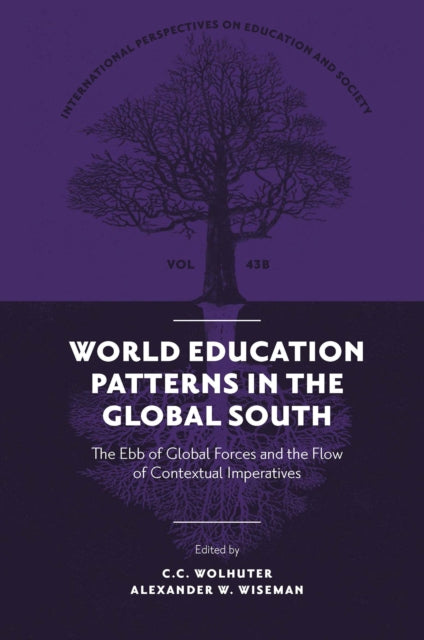
C. C.Wolhuter
World Education Patterns in the Global South: The Ebb of Global Forces and the Flow of Contextual Imperatives
World Education Patterns in the Global South: The Ebb of Global Forces and the Flow of Contextual Imperatives
💎 Earn 385 Points (£3.85) on this item.
YOU SAVE £1.90
- Condition: Brand new
- UK Delivery times: Usually arrives within 2 - 3 working days
- UK Shipping: Fee starts at £2.39. Subject to product weight & dimension
Bulk ordering. Want 15 or more copies? Get a personalised quote and bigger discounts. Learn more about bulk orders.
Couldn't load pickup availability
- More about World Education Patterns in the Global South: The Ebb of Global Forces and the Flow of Contextual Imperatives
World Education Patterns in the Global South explores the educational responses and new educational landscapes being developed in response to global forces in the Global South, such as urbanization, the informal economic sector, religion, democratization, and supranational and international political structures.
Format: Hardback
Length: 264 pages
Publication date: 01 September 2022
Publisher: Emerald Publishing Limited
Comparative and International Education is a dynamic and rapidly evolving field that is grappling with a multitude of extraordinary challenges across the globe. In this comprehensive examination, World Education Patterns in the Global South delves into the diverse educational responses and emerging educational landscapes being shaped by the powerful global forces that are driving transformative change within the educational contexts of the Global South. This region encompasses Central and South-East Asia, Latin America, and the Caribbean, each facing unique challenges and opportunities in their educational journey.
One of the central forces shaping the educational landscape in the Global South is urbanization. As cities continue to grow and expand, the demand for quality education becomes increasingly urgent. This trend is particularly evident in regions such as Central and South-East Asia, where rapid urbanization has led to a burgeoning population and a need for accessible and inclusive educational opportunities.
Another significant force impacting the Global South's education is the rise of the informal economic sector. This sector, characterized by its flexible and often low-paying employment opportunities, has become an increasingly important source of income for many individuals and families. However, it has also created challenges in terms of access to education, particularly for those who are marginalized or excluded from formal education systems.
Religion also plays a pivotal role in shaping the educational landscape in the Global South. The influence of different religious traditions varies widely across the region, from the dominant role of Islam in certain countries to the diverse religious practices observed in Latin America. Religious beliefs and values often influence educational policies, curriculum, and teaching practices, shaping the way in which students understand and engage with their world.
The Creed of Human Rights, which was adopted by the United Nations in 1948, has also had a profound impact on education in the Global South. This document outlines the fundamental rights and freedoms that every individual is entitled to, including the right to education. As a result, many countries in the Global South have made significant efforts to improve access to education, particularly for marginalized and disadvantaged populations.
Democratization is another force that is transforming the educational landscape in the Global South. As societies become more democratic, there is a growing demand for inclusive and equitable education that provides opportunities for all individuals, regardless of their background or socioeconomic status. This trend is particularly evident in countries such as Latin America, where efforts to promote democratic governance and social justice have led to significant improvements in education quality and access.
In addition to these global forces, the rise of supranational and international political structures has also had a significant impact on education in the Global South. The United Nations, for example, has played a key role in promoting education as a fundamental human right and in providing funding and support for educational initiatives in developing countries. However, the influence of these structures can also be contested, with some arguing that they may undermine local sovereignty and lead to the imposition of Western-style education systems that may not be appropriate for the unique cultural and social contexts of the Global South.
Sub-national and decentralised structures, on the other hand, have also emerged as important actors in the Global South's education landscape. These structures allow for greater local autonomy and decision-making in education, and they can respond more effectively to the specific needs and challenges of individual communities. For example, in many countries in Latin America, decentralized education systems have been implemented to promote community participation and to ensure that education is accessible to all individuals, regardless of their location or socioeconomic status.
In conclusion, Comparative and International Education is a dynamic and rapidly evolving field that is grappling with a multitude of extraordinary challenges across the globe. The educational responses and emerging landscapes in the Global South are shaped by a complex interplay of global forces, including urbanization, the rise of the informal economic sector, the changing presence of religion, the Creed of Human Rights, democratization, and the rise of supranational and international political structures. These forces have led to significant improvements in education quality and access, but they have also created challenges and complexities that require careful consideration and innovative solutions. By understanding the unique educational contexts of the Global South and by working together to address these challenges, we can create a more inclusive and equitable educational system that promotes the growth and development of all individuals.
Dimension: 229 x 152 x 18 (mm)
ISBN-13: 9781803826820
This item can be found in:
UK and International shipping information
UK and International shipping information
UK Delivery and returns information:
- Delivery within 2 - 3 days when ordering in the UK.
- Shipping fee for UK customers from £2.39. Fully tracked shipping service available.
- Returns policy: Return within 30 days of receipt for full refund.
International deliveries:
Shulph Ink now ships to Australia, Belgium, Canada, France, Germany, Ireland, Italy, India, Luxembourg Saudi Arabia, Singapore, Spain, Netherlands, New Zealand, United Arab Emirates, United States of America.
- Delivery times: within 5 - 10 days for international orders.
- Shipping fee: charges vary for overseas orders. Only tracked services are available for most international orders. Some countries have untracked shipping options.
- Customs charges: If ordering to addresses outside the United Kingdom, you may or may not incur additional customs and duties fees during local delivery.