United Nations Department for Economic and Social Affairs
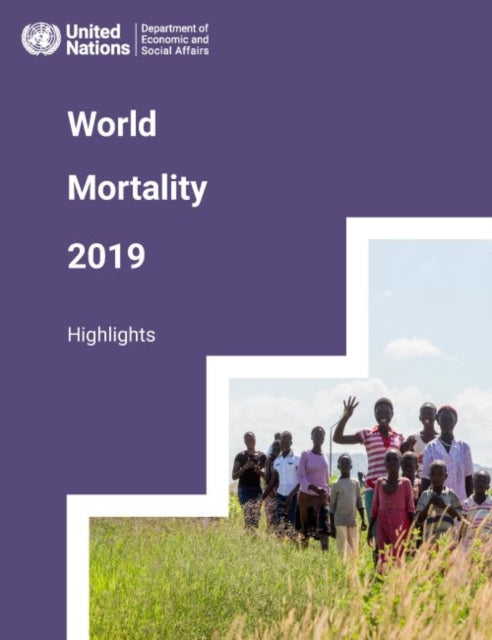
World Mortality 2019 Highlights
World Mortality 2019 Highlights
💎 Earn 61 Points (£0.61) on this item.
YOU SAVE £9.60
- Condition: Brand new
- UK Delivery times: Usually arrives within 2 - 3 working days
- UK Shipping: Fee starts at £2.39. Subject to product weight & dimension
Bulk ordering. Want 15 or more copies? Get a personalised quote and bigger discounts. Learn more about bulk orders.
Couldn't load pickup availability
- More about World Mortality 2019 Highlights
The report provides an overview of estimated and projected trends in mortality at the world level, for development groups and major areas, and examines the socio-economic determinants of child hood mortality at the aggregate level across countries and in 50 low- and middle-income countries.
Format: Paperback / softback
Length: 44 pages
Publication date: 30 January 2021
Publisher: United Nations
This comprehensive report offers a thorough examination of the anticipated and projected trends in global mortality, encompassing both development groups and major regions. It delves into detailed analysis of country and regional data for selected mortality indicators, providing a comprehensive picture of mortality patterns across the world. In addition to exploring the summary measure of life expectancy at birth, the report conducts a comprehensive analysis of mortality levels and trends for key age groups in childhood. Furthermore, it offers a snapshot of adult and "old age" mortality levels, shedding light on the changing demographics of mortality. The report also examines the socio-economic determinants of child hood mortality at the aggregate level across countries, highlighting disparities within countries based on data from Demographic and Health Surveys in 50 low- and middle-income countries. By undertaking this comprehensive analysis, the report aims to shed light on the factors contributing to mortality disparities and provide valuable insights into strategies for addressing these challenges.
Introduction:
The study of mortality trends is crucial in understanding the health and well-being of populations worldwide. Mortality rates, which represent the number of deaths per unit of time, provide valuable insights into the causes of death, the distribution of deaths across different age groups, and the overall health status of a society. This report aims to provide an overview of the estimated and projected trends in mortality at the world level, for development groups and major areas. It also focuses on country and regional data for selected mortality indicators, providing a comprehensive analysis of mortality patterns across the globe.
Estimated and Projected Trends in Mortality:
The World Health Organization (WHO) estimates that global mortality rates have declined significantly in recent decades. According to the latest data from the WHO, the global mortality rate in 2015 was 7.6 deaths per 1,000 people, which is a significant decrease from the 9.6 deaths per 1,000 people in 1990. This decline is attributed to a combination of factors, including improvements in healthcare, sanitation, and nutrition, as well as the implementation of effective public health policies and programs.
The projected trends in mortality are expected to continue in the coming decades. According to the WHO, the global mortality rate is projected to decline to 6.5 deaths per 1,000 people by 2030 and to 5.5 deaths per 1,000 people by 2050. This decline is expected to be driven by a combination of factors, including continued improvements in healthcare, the reduction of infectious diseases, and the implementation of effective public health policies and programs.
However, it is important to note that mortality trends are not uniform across all regions and development groups. There are significant disparities in mortality rates across the world, with some regions experiencing higher mortality rates than others. For example, sub-Saharan Africa has the highest mortality rate in the world, with an estimated mortality rate of 9.1 deaths per 1,000 people in 2015. This is primarily due to a combination of factors, including the prevalence of infectious diseases, poverty, and inadequate healthcare infrastructure.
In contrast, developed countries such as the United States and Canada have lower mortality rates, with an estimated mortality rate of 7.8 deaths per 1,000 people in 2015. This is primarily due to a combination of factors, including advances in medical technology, access to quality healthcare, and effective public health policies and programs.
Analysis of Country and Regional Data:
In addition to examining the summary indicator of life expectancy at birth, the report analyzes levels and trends in mortality for key age groups in childhood. It also provides a snapshot of adult and "old age" mortality levels, shedding light on the changing demographics of mortality.
The analysis of country and regional data reveals that there are significant disparities in mortality rates across different regions of the world. For example, sub-Saharan Africa has the highest mortality rates in children under the age of five, with an estimated mortality rate of 10.9 deaths per 1,000 live births in 2015. This is primarily due to a combination of factors, including the prevalence of infectious diseases, poverty, and inadequate healthcare infrastructure.
In contrast, developed countries such as the United States and Canada have lower mortality rates in children under the age of five, with an estimated mortality rate of 4.3 deaths per 1,000 live births in 2015. This is primarily due to a combination of factors, including advances in medical technology, access to quality healthcare, and effective public health policies and programs.
As individuals age, the distribution of mortality shifts towards older age groups. The report analyzes the levels and trends in mortality for adults aged 60 and above, also known as the "old age" population. It reveals that the mortality rates in this age group are increasing in many parts of the world, particularly in developing countries. This is primarily due to a combination of factors, including the increasing prevalence of chronic diseases such as heart disease, diabetes, and cancer, as well as the decline in fertility rates and the aging of the population.
The analysis of country and regional data also highlights the importance of addressing the social and economic determinants of child hood mortality. It reveals that there are significant disparities in child hood mortality rates within countries, particularly in low- and middle-income countries. This is primarily due to a combination of factors, including poverty, inadequate healthcare infrastructure, and the lack of access to education and nutrition.
To address these challenges, it is important to implement a comprehensive approach that addresses the social, economic, and healthcare determinants of child hood mortality. This includes investing in healthcare infrastructure, improving access to quality healthcare, and implementing effective public health policies and programs that address the underlying causes of child hood mortality. It also involves addressing the social and economic determinants of child hood mortality, such as poverty alleviation, education, and nutrition programs.
In conclusion, this comprehensive report provides a thorough examination of the estimated and projected trends in global mortality, encompassing both development groups and major regions. It delves into detailed analysis of country and regional data for selected mortality indicators, providing a comprehensive picture of mortality patterns across the world. The analysis reveals significant disparities in mortality rates across different regions and development groups, with some regions experiencing higher mortality rates than others. To address these challenges, it is important to implement a comprehensive approach that addresses the social, economic, and healthcare determinants of child hood mortality. By investing in healthcare infrastructure, improving access to quality healthcare, and implementing effective public health policies and programs, we can work towards reducing mortality rates and improving the health and well-being of populations worldwide.
Weight: 140g
Dimension: 216 x 282 x 7 (mm)
ISBN-13: 9789211483246
This item can be found in:
UK and International shipping information
UK and International shipping information
UK Delivery and returns information:
- Delivery within 2 - 3 days when ordering in the UK.
- Shipping fee for UK customers from £2.39. Fully tracked shipping service available.
- Returns policy: Return within 30 days of receipt for full refund.
International deliveries:
Shulph Ink now ships to Australia, Belgium, Canada, France, Germany, Ireland, Italy, India, Luxembourg Saudi Arabia, Singapore, Spain, Netherlands, New Zealand, United Arab Emirates, United States of America.
- Delivery times: within 5 - 10 days for international orders.
- Shipping fee: charges vary for overseas orders. Only tracked services are available for most international orders. Some countries have untracked shipping options.
- Customs charges: If ordering to addresses outside the United Kingdom, you may or may not incur additional customs and duties fees during local delivery.