Eric H. Reiter
Wounded Feelings: Litigating Emotions in Quebec, 1870-1950
Wounded Feelings: Litigating Emotions in Quebec, 1870-1950
💎 Earn 142 Points (£1.42) on this item.
YOU SAVE £3.44
- Condition: Brand new
- UK Delivery times: Usually arrives within 2 - 3 working days
- UK Shipping: Fee starts at £2.39. Subject to product weight & dimension
Bulk ordering. Want 15 or more copies? Get a personalised quote and bigger discounts. Learn more about bulk orders.
Couldn't load pickup availability
- More about Wounded Feelings: Litigating Emotions in Quebec, 1870-1950
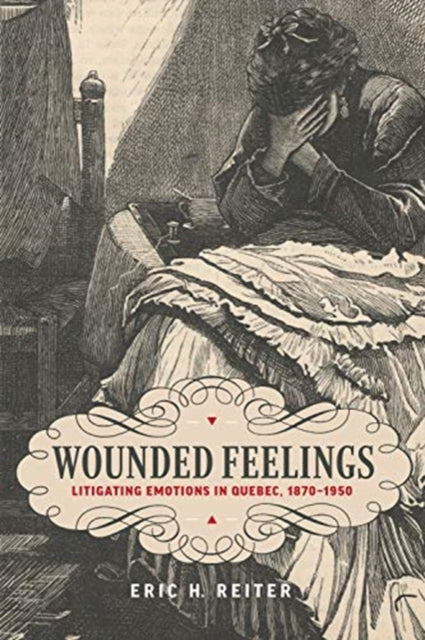
Wounded Feelings is the first legal history of emotions in Canada, exploring how individuals narrated their claims of injured feelings and how the courts assessed those claims using legal rules, social norms, and the judges' own feelings. It reveals contemporary views of emotion and the family, gender, class, linguistic, and racial dynamics that shaped those understandings and their adjudication.
Format: Paperback / softback
Length: 504 pages
Publication date: 04 September 2020
Publisher: University of Toronto Press
Wounded Feelings is a groundbreaking legal history that delves into the complex interplay between emotions and the legal system in Canada. Authored by Eric H. Reiter, the book offers a detailed exploration of how individuals sought legal recourse for emotional injuries such as dishonour, humiliation, grief, and betrayal before the Quebec civil courts from 1870 to 1950. Through meticulous research and analysis, Reiter uncovers the clash between the lived experiences of emotion and the rigid legal categories and terminology employed by lawyers, judges, and courts.
Drawing upon a wealth of archival case files, newspapers, and contemporary legal writings, Reiter examines how individuals narrated their claims of injured feelings and how the courts assessed these claims using legal rules, social norms, and the judges' own feelings. The cases presented in the book offer a revealing glimpse into both contemporary views of emotion and the intricate family, gender, class, linguistic, and racial dynamics that shaped these understandings and their adjudication.
For instance, one case involves a family's profound grief over the death of their infant son due to a physician's prescription error. Another case involves a wealthy woman's mortification at being harassed by a conductor aboard a train, while a third case involves a Black man's indignation at being denied seats at a Montreal cinema. These examples highlight the subjective richness of stories of wounded feelings and the ways in which they were expressed and validated within the legal system.
Reiter's book also traces an important legal change in how moral injury was conceptualized in Quebec civil law over the period. Initially, emotional injuries were primarily viewed as breaches of social norms and etiquette. However, as the idea of personality rights gained traction, moral injury began to be linked to the violation of individual rights. By 1950, the language of violated rights had become increasingly prevalent in the narratives of wounded feelings, reflecting a shift in social understandings of emotion and the ways in which individuals presented their emotional injuries in court.
This legal transformation had profound implications for both social understandings of emotion and the legal process. It allowed individuals to seek legal redress for emotional harm, challenging the traditional notion that emotions were solely private matters. It also facilitated a more nuanced understanding of emotional injuries, recognizing the subjective experiences and trauma that individuals faced.
In conclusion, Wounded Feelings is a seminal work in legal history that offers a rich and nuanced exploration of the relationship between emotions and the legal system in Canada. Through detailed histories of emotional injuries and their legal adjudication, Reiter sheds light on the complex dynamics that shaped contemporary views of emotion and the ways in which individuals sought legal recourse for their wounded feelings. The book's insights into the family, gender, class, linguistic, and racial dynamics that shaped these understandings and their adjudication are invaluable, and its tracing of the legal change in how moral injury was conceptualized is a testament to the evolving nature of legal discourse.
Weight: 762g
Dimension: 154 x 229 x 33 (mm)
ISBN-13: 9781487526986
This item can be found in:
UK and International shipping information
UK and International shipping information
UK Delivery and returns information:
- Delivery within 2 - 3 days when ordering in the UK.
- Shipping fee for UK customers from £2.39. Fully tracked shipping service available.
- Returns policy: Return within 30 days of receipt for full refund.
International deliveries:
Shulph Ink now ships to Australia, Belgium, Canada, France, Germany, Ireland, Italy, India, Luxembourg Saudi Arabia, Singapore, Spain, Netherlands, New Zealand, United Arab Emirates, United States of America.
- Delivery times: within 5 - 10 days for international orders.
- Shipping fee: charges vary for overseas orders. Only tracked services are available for most international orders. Some countries have untracked shipping options.
- Customs charges: If ordering to addresses outside the United Kingdom, you may or may not incur additional customs and duties fees during local delivery.