Nora Sandler
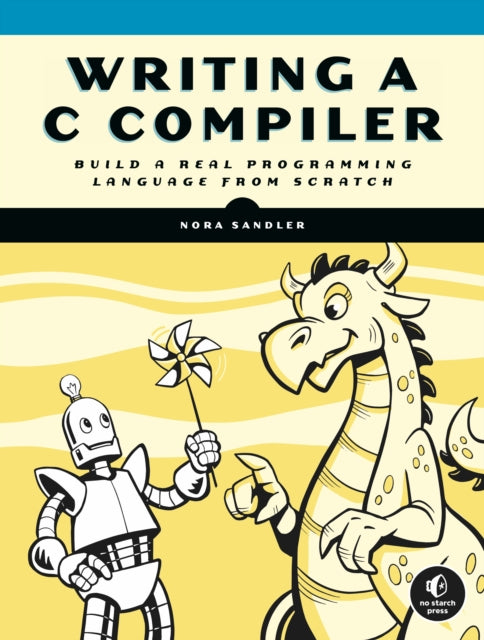
Writing a C Compiler: Build a Real Programming Language from Scratch
Writing a C Compiler: Build a Real Programming Language from Scratch
💎 Earn 237 Points (£2.37) on this item.
YOU SAVE £19.57
- Condition: Brand new
- UK Delivery times: Usually arrives within 2 - 3 working days
- UK Shipping: Fee starts at £2.39. Subject to product weight & dimension
Bulk ordering. Want 15 or more copies? Get a personalised quote and bigger discounts. Learn more about bulk orders.
Couldn't load pickup availability
- More about Writing a C Compiler: Build a Real Programming Language from Scratch
A C compiler is a program that translates code into computer-understandable code, providing valuable knowledge about programming languages and making readers better programmers. Writing a C Compiler offers a step-by-step guide to building a small working compiler, making the topic accessible and practical.
Format: Paperback / softback
Length: 776 pages
Publication date: 20 August 2024
Publisher: No Starch Press,US
A C compiler is a computer program that translates code written by the programmer into code the computer can understand. By building a compiler, readers will gain invaluable knowledge about how programming languages work, which will make them better programmers. Readers are gently led step-by-step to build a small working compiler and will develop throughout the book. Writing a C Compiler offers readers an accessible, practical approach to this complex and often overly theoretical topic.
The first step in writing a C compiler is to understand the basics of programming languages. Programming languages are used to communicate with computers and are made up of a set of rules and symbols that the computer can understand. The most common programming languages are C, C++, Java, and Python.
Next, you need to decide what type of compiler you want to build. There are two main types of compilers: static compilers and dynamic compilers. Static compilers compile the code once and then run it, while dynamic compilers compile the code each time it is run. Static compilers are faster and more efficient, but they are more difficult to write. Dynamic compilers are easier to write, but they are slower and less efficient.
Once you have decided what type of compiler you want to build, you need to write the code. The code for a compiler is written in a programming language that is specific to the compiler. For example, the code for a C compiler is written in C.
The code for a compiler consists of two main parts: the front end and the back end. The front end of the compiler takes the source code and converts it into a form that the back end can understand. The back end of the compiler takes the converted code and converts it into machine code that the computer can execute.
The front end of the compiler is responsible for parsing the source code and identifying the various parts of the code. It also checks for errors in the code and generates warnings and errors. The back end of the compiler is responsible for generating machine code that the computer can execute.
One of the most important aspects of writing a C compiler is to optimize the code. Optimization can improve the performance of the compiler and make it more efficient. There are many different techniques for optimization, including code analysis, code generation, and code optimization.
Code analysis is the process of analyzing the source code to identify areas that can be optimized. Code generation is the process of generating machine code that is optimized. Code optimization is the process of modifying the machine code to improve its performance.
One of the most important techniques for code analysis is to use a compiler analyzer. A compiler analyzer is a tool that analyzes the source code and identifies areas that can be optimized. There are many different compiler analyzers available, and each one has its own strengths and weaknesses.
One of the most popular compiler analyzers is the GNU Compiler Collection (GCC). GCC is a free and open-source compiler that is used by many developers to build C compilers. GCC has many features that can help optimize the code, including code analysis, code generation, and code optimization.
Another important technique for code analysis is to use a profiler. A profiler is a tool that measures the performance of the code. There are many different profilers available, and each one has its own strengths and weaknesses.
One of the most popular profilers is the GNU Profiler (GProf). GProf is a free and open-source profiler that is used by many developers to measure the performance of their C compilers. GProf has many features that can help optimize the code, including code analysis, code generation, and code optimization.
Once you have optimized the code, you need to compile the code. Compiling the code involves converting the source code into machine code that the computer can execute. There are many different compilers available, and each one has its own strengths and weaknesses.
One of the most popular compilers is the GNU Compiler Collection (GCC). GCC is a free and open-source compiler that is used by many developers to build C compilers. GCC has many features that can help optimize the code, including code analysis, code generation, and code optimization.
Another important aspect of writing a C compiler is to test the code. Testing the code involves running the code and checking for errors. There are many different testing tools available, and each one has its own strengths and weaknesses.
One of the most popular testing tools is the GNU Testing Framework (GTest). GTest is a free and open-source testing framework that is used by many developers to test their C compilers. GTest has many features that can help optimize the code, including code analysis, code generation, and code optimization.
Once you have tested the code, you need to release the code. Releasing the code involves making the code available to the public. There are many different ways to release the code, including publishing the code on a website, releasing the code on a software repository, or releasing the code as a binary file.
Releasing the code can be a challenging process, but it is important to ensure that the code is of high quality. To ensure that the code is of high quality, you need to follow a set of best practices.
One of the most important best practices for releasing the code is to use a version control system. A version control system is a tool that allows you to track changes to the code over time. There are many different version control systems available, and each one has its own strengths and weaknesses.
Another important best practice for releasing the code is to use a build system. A build system is a tool that automates the process of building the code. There are many different build systems available, and each one has its own strengths and weaknesses.
In addition to writing the code, you also need to document the code. Documenting the code is important because it allows other developers to understand the code. There are many different documentation tools available, and each one has its own strengths and weaknesses.
One of the most important documentation tools is the GNU Documentation System (GDS). GDS is a free and open-source documentation system that is used by many developers to document their C compilers. GDS has many features that can help optimize the code, including code analysis, code generation, and code optimization.
In conclusion, writing a C compiler is a complex and often overly theoretical topic. However, by building a compiler, readers will gain invaluable knowledge about how programming languages work, which will make them better programmers. Readers are gently led step-by-step to build a small working compiler and will develop throughout the book. Writing a C Compiler offers readers an accessible, practical approach to this complex and often overly theoretical topic.
Dimension: 235 x 177 (mm)
ISBN-13: 9781718500426
This item can be found in:
UK and International shipping information
UK and International shipping information
UK Delivery and returns information:
- Delivery within 2 - 3 days when ordering in the UK.
- Shipping fee for UK customers from £2.39. Fully tracked shipping service available.
- Returns policy: Return within 30 days of receipt for full refund.
International deliveries:
Shulph Ink now ships to Australia, Belgium, Canada, France, Germany, Ireland, Italy, India, Luxembourg Saudi Arabia, Singapore, Spain, Netherlands, New Zealand, United Arab Emirates, United States of America.
- Delivery times: within 5 - 10 days for international orders.
- Shipping fee: charges vary for overseas orders. Only tracked services are available for most international orders. Some countries have untracked shipping options.
- Customs charges: If ordering to addresses outside the United Kingdom, you may or may not incur additional customs and duties fees during local delivery.