Timothy C. Baker
Writing Animals: Language, Suffering, and Animality in Twenty-First-Century Fiction
Writing Animals: Language, Suffering, and Animality in Twenty-First-Century Fiction
💎 Earn 309 Points (£3.09) on this item.
We can order this item for you. Delivery usually takes about 4 to 6 weeks.
This item is not held in our immediate stock. We will order it for you after checkout.
Estimated delivery: About 4 to 6 weeks
YOU SAVE £13.05
- Condition: Brand new
- UK Delivery times: Usually arrives within 2 - 3 working days
- UK Shipping: Fee starts at £2.39. Subject to product weight & dimension
Bulk ordering. Want 15 or more copies? Get a personalised quote and bigger discounts. Learn more about bulk orders.
Couldn't load pickup availability
- More about Writing Animals: Language, Suffering, and Animality in Twenty-First-Century Fiction
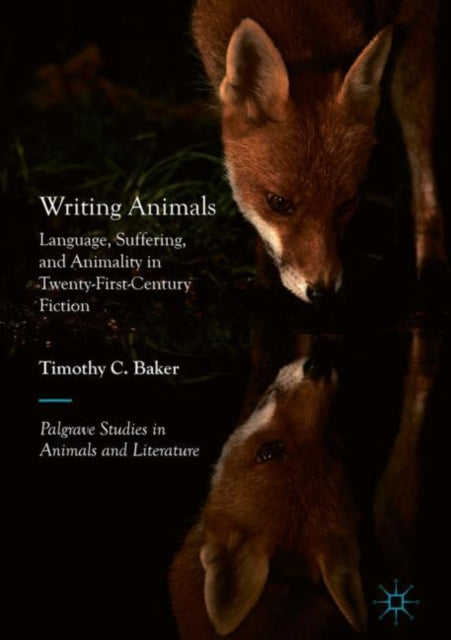
This book explores how representations of human-animal relations challenge the anthropocentric nature of fiction by examining the relation between language and suffering in twenty-first-century literature. It offers new opportunities for exploring the centrality of nonhuman animals in recent fiction, destabilizing assumptions about pain and vulnerability, literary inheritance, writing the Anthropocene, and the relation between text and image.
\n Format: Hardback
\n Length: 239 pages
\n Publication date: 16 January 2019
\n Publisher: Springer Nature Switzerland AG
\n
This book delves into a comprehensive examination of a diverse array of contemporary texts, seeking to challenge the anthropocentric nature of fiction. Through a close analysis of the relationship between language and suffering in twenty-first-century fiction, Baker presents novel avenues for exploring the significance of nonhuman animals in recent literature. By examining the interplay between language and suffering, these novels disrupt conventional notions about pain, vulnerability, the legacy of literary tradition, the complexities of writing in the Anthropocene era, and the relationship between text and image. Spanning a range of well-established and emerging authors, from J.M. Coetzee and Karen Joy Fowler to Sarah Hall, Alexis Wright, and Max Porter, as well as texts from experimental fiction to works for children, Writing Animals offers a fresh and original perspective on contemporary fiction and the field of literary animal studies.
Introduction:
In recent years, there has been a growing interest in the representation of human-animal relations in contemporary fiction. This book aims to explore this topic in depth, examining a broad range of texts to demonstrate how representations of human-animal relations challenge the anthropocentric nature of fiction. By analyzing the relationship between language and suffering in twenty-first-century fiction and drawing on a wide range of theoretical approaches, Baker seeks to offer new opportunities for exploring the centrality of nonhuman animals in recent fiction.
Writing Animal Lives:
One of the key insights of this book is that writing animal lives leads to new narrative structures and forms of expression. By focusing on the experiences and perspectives of nonhuman animals, authors are able to destabilize assumptions about the nature of pain and vulnerability, the burden of literary inheritance, the challenges of writing in the Anthropocene era, and the relationship between text and image. This approach offers a fresh and innovative way of approaching literature, challenging readers to consider the world from a different perspective.
Disrupting Assumptions:
One of the most significant aspects of this book is its ability to disrupt conventional notions about pain and vulnerability. By exploring the experiences of nonhuman animals, authors are able to challenge the notion that humans are the only beings capable of experiencing pain and suffering. This approach opens up new possibilities for empathy and understanding, as readers are forced to consider the experiences of other creatures and the impact of human actions on their lives.
Literary Legacy:
Another important theme of this book is the legacy of literary tradition. By examining the ways in which authors have responded to the presence of nonhuman animals in their work, Baker highlights the ways in which literature can shape and influence our understanding of the world. This approach offers a valuable insight into the historical and cultural contexts in which literature has been produced, and how it has contributed to our understanding of the human-animal relationship.
Writing in the Anthropocene:
The challenges of writing in the Anthropocene era are also explored in this book. By examining the ways in which nonhuman animals are affected by human actions, authors are able to shed light on the ethical and moral dilemmas that arise in our increasingly interconnected world. This approach offers a critical analysis of the impact of human activity on the natural world, and encourages readers to consider the ways in which we can live more sustainably and ethically.
Text and Image:
Finally, this book also examines the relationship between text and image in contemporary fiction. By exploring the ways in which nonhuman animals are represented in text and image, authors are able to create new and innovative ways of conveying their experiences and perspectives. This approach offers a rich and complex understanding of the human-animal relationship, and highlights the ways in which literature can be used to explore and interpret the world.
Conclusion:
In conclusion, this book offers a comprehensive examination of the representation of human-animal relations in contemporary fiction. By challenging the anthropocentric nature of fiction and exploring the experiences and perspectives of nonhuman animals, authors are able to offer new and innovative ways of understanding the world. This approach opens up new possibilities for empathy and understanding, and highlights the ways in which literature can shape and influence our understanding of the human-animal relationship.
\n Weight: 462g\n
Dimension: 156 x 220 x 22 (mm)\n
ISBN-13: 9783030038793\n
Edition number: 1st ed. 2019\n
UK and International shipping information
UK and International shipping information
UK Delivery and returns information:
- Delivery within 2 - 3 days when ordering in the UK.
- Shipping fee for UK customers from £2.39. Fully tracked shipping service available.
- Returns policy: Return within 30 days of receipt for full refund.
International deliveries:
Shulph Ink now ships to Australia, Belgium, Canada, France, Germany, Ireland, Italy, India, Luxembourg Saudi Arabia, Singapore, Spain, Netherlands, New Zealand, United Arab Emirates, United States of America.
- Delivery times: within 5 - 10 days for international orders.
- Shipping fee: charges vary for overseas orders. Only tracked services are available for most international orders. Some countries have untracked shipping options.
- Customs charges: If ordering to addresses outside the United Kingdom, you may or may not incur additional customs and duties fees during local delivery.