GeorganneNordstrom
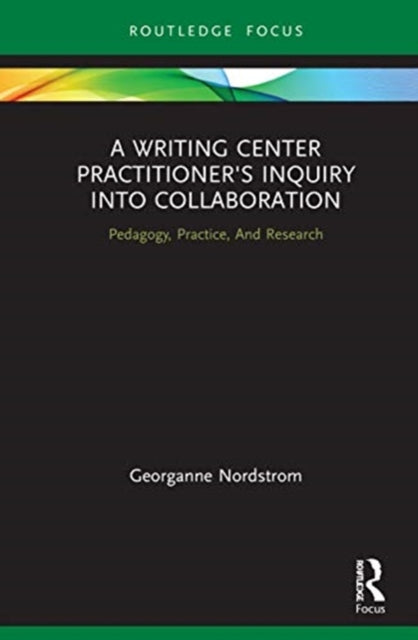
Writing Center Practitioner's Inquiry into Collaboration: Pedagogy, Practice, And Research
Writing Center Practitioner's Inquiry into Collaboration: Pedagogy, Practice, And Research
We can order this item for you. Delivery usually takes about 4 to 6 weeks.
This item is not held in our immediate stock. We will order it for you after checkout.
Estimated delivery: About 4 to 6 weeks
YOU SAVE £4.84
- Condition: Brand new
- UK Delivery times: Usually arrives within 2 - 3 working days
- UK Shipping: Fee starts at £3.89. Subject to product weight & dimension
Bulk ordering. Want 15 or more copies? Get a personalised quote and bigger discounts. Learn more about bulk orders.
Couldn't load pickup availability
- More about Writing Center Practitioner's Inquiry into Collaboration: Pedagogy, Practice, And Research
This book presents a model of Practitioner Inquiry (PI) as a systematic form of empirical research and provides a rationale for its suitability within a writing center context. It explores the potential of writing centers as pedagogical sites that support research and offers an accessible model that guides both research and practice. The author emphasizes the importance of collaboration and Indigenous concepts in informing an ethical collaborative practice. The book makes significant contributions to empirical research in writing center studies, composition, and education and will be of great relevance to writing center practitioners, researchers, and anyone interested in tutor professionalization, collaboration, translingual literacy practices, and research methodologies.
Format: Hardback
Length: 126 pages
Publication date: 02 February 2021
Publisher: Taylor & Francis Ltd
This book presents a comprehensive model of Practitioner Inquiry (PI) as a rigorous and systematic form of empirical research, providing a strong rationale for its suitability within the context of writing centers. By examining the potential of writing centers as pedagogical spaces that foster research, the author offers an accessible framework that guides both research and practice for writing center practitioners, while allowing for flexibility to accommodate their unique contexts of practice. In response to the growing demand for empirical research that is replicable, aggregable, and data-driven (RAD), the author delves into Practitioner Inquiry by explicating methodology and methods, revisiting collaboration as a guiding principle for both practice and research, and showcasing examples of its application.
Drawing upon the rich cultural and contextual backdrop of Hawaiʻi, the author grounds this research and scholarship in the local context, exploring Indigenous concepts and approaches to inform an ethical and collaborative practice. This book makes significant contributions to the fields of writing center studies, composition, and education, offering valuable insights and practical applications to writing center practitioners, researchers engaged in empirical research, and scholars interested in tutor professionalization, collaboration, translingual literacy practices, and research methodologies.
Introduction:
In recent years, there has been a growing recognition within the field of writing center studies of the importance of empirical research. The call for RAD research has been echoed by scholars and practitioners alike, as it seeks to provide evidence-based insights into the effectiveness and impact of writing center interventions. However, the challenges associated with conducting empirical research within the writing center context have been well documented. Writing centers are unique spaces that blend teaching, tutoring, and research, and they operate within a variety of institutional and cultural contexts. As a result, traditional research methodologies may not be readily applicable to the study of writing centers.
Practitioner Inquiry (PI) is a research approach that emerged in the 1980s as a response to the need for more practical and applied research in the field of education. PI is characterized by its focus on the practitioner as the researcher, and it emphasizes the importance of collaboration and reflexivity in the research process. PI has been widely adopted in the field of education, particularly in the areas of teacher education and professional development. However, there has been limited research on the application of PI in the writing center context.
This book aims to fill this gap by presenting a comprehensive model of PI as a systematic form of empirical research that is tailored to the unique context of writing centers. The book begins by exploring the potential of writing centers as pedagogical sites that support research. It then offers an accessible model of PI that guides both research and practice for writing center practitioners. The model is designed to be flexible enough to account for the distinct contexts of practice that writing center practitioners operate within.
Methodology and Methods:
In order to develop a comprehensive model of PI, the author draws upon a range of theoretical frameworks and research methodologies. The book begins by examining the theoretical foundations of PI, including the concept of practitioner-based research, the importance of collaboration, and the role of reflexivity in the research process. The author then discusses the methodology and methods used in the research, including participant observation, interviews, and document analysis.
Participant observation is a key method used in the research, as it allows the author to observe and document the practices and interactions of writing center practitioners in their natural contexts. Interviews are also used to gather qualitative data from writing center practitioners, allowing them to share their experiences and perspectives on the research process. Document analysis is used to examine the policies, procedures, and materials that shape writing center practices.
The author also emphasizes the importance of collaboration in the research process. Collaboration is seen as a means of gaining access to different perspectives and insights, as well as of building relationships and trust with participants. The author discusses the role of collaboration in the research process, including the formation of research teams, the development of research questions, and the interpretation of data.
Collaboration as a Guiding Principle for Practice and Research:
Collaboration is a central theme in this book, as it is seen as a key principle for both practice and research in writing centers. The author argues that collaboration can be a powerful tool for promoting research-informed practice, as it allows writing center practitioners to gain insights from each other's experiences and perspectives. Collaboration can also be a means of building relationships and trust with participants, which can enhance the quality and validity of the research.
The book provides examples of how collaboration can be used in both practice and research in writing centers. For example, the author discusses the use of collaborative writing groups and peer feedback sessions as tools for promoting research-informed practice. These sessions allow writing center practitioners to gain insights from each other's writing and to provide feedback on each other's work. Collaboration can also be used in the research process, as it allows researchers to gain access to different perspectives and insights. For example, researchers can collaborate with writing center practitioners to develop research questions and to interpret data.
Conclusion:
In conclusion, this book presents a comprehensive model of Practitioner Inquiry as a systematic form of empirical research that is tailored to the unique context of writing centers. The book offers a strong rationale for the suitability of PI within the writing center context, and it provides a framework that guides practice and research for writing center practitioners. The book also emphasizes the importance of collaboration as a guiding principle for both practice and research in writing centers, and it provides examples of how collaboration can be used in both practice and research to promote research-informed practice and build relationships and trust with participants. This book will be of great relevance to writing center practitioners, anyone conducting empirical research, and researchers working in tutor professionalization, collaboration, translingual literacy practices, and research methodologies.
Weight: 296g
Dimension: 142 x 223 x 16 (mm)
ISBN-13: 9780367510251
UK and International shipping information
UK and International shipping information
We deliver throughout the United Kingdom and to 128 countries and territories worldwide, including the United States, Australia, Canada, Germany, Spain and France.