Shulph Ink
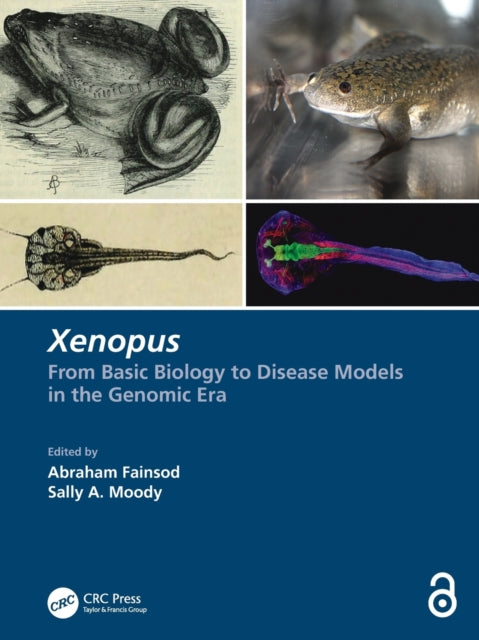
Xenopus: From Basic Biology to Disease Models in the Genomic Era
Xenopus: From Basic Biology to Disease Models in the Genomic Era
💎 Earn 467 Points (£4.67) on this item.
We can order this item for you. Delivery usually takes about 4 to 6 weeks.
This item is not held in our immediate stock. We will order it for you after checkout.
Estimated delivery: About 4 to 6 weeks
YOU SAVE £5.55
- Condition: Brand new
- UK Delivery times: Usually arrives within 2 - 3 working days
- UK Shipping: Fee starts at £2.39. Subject to product weight & dimension
Bulk ordering. Want 15 or more copies? Get a personalised quote and bigger discounts. Learn more about bulk orders.
Couldn't load pickup availability
- More about Xenopus: From Basic Biology to Disease Models in the Genomic Era
This book provides a comprehensive overview of the Xenopus model system, its historical context, and its applications in various fields of biology. It is written by an international team of leading researchers and includes chapters on cell biology, developmental biology, genomics, and evolutionary biology.
Format: Paperback / softback
Length: 348 pages
Publication date: 05 April 2022
Publisher: Taylor & Francis Ltd
The Xenopus model system has played a pivotal role in advancing our understanding of biological processes and has contributed significantly to various fields of research. In this comprehensive book, an international team of esteemed researchers has compiled chapters that explore the diverse applications of Xenopus in cell biology, developmental biology, genomics, and evolutionary biology. Each chapter presents the latest findings and insights derived from the use of this remarkable model organism.
The book is extensively illustrated with color diagrams and photographs, making it highly accessible to students, researchers, and scientists alike. The chapters are organized in a logical and coherent manner, allowing readers to easily navigate through the various topics covered.
Cell biology is a fundamental branch of biology that studies the structure, function, and behavior of cells. In Chapter 1, the authors provide an overview of cell biology in Xenopus and discuss the advantages of using this model organism for studying cell development, differentiation, and signaling. They also highlight the techniques and tools used to study cells in Xenopus, such as cell culture, immunohistochemistry, and molecular biology.
Developmental biology is the study of how organisms develop and grow from a single cell to an adult organism. In Chapter 2, the authors explore the use of Xenopus to study embryogenesis, organogenesis, and tissue development. They discuss the key stages of development and the molecular mechanisms that regulate these processes. The chapter also includes examples of how Xenopus has been used to identify genes and proteins involved in developmental disorders.
Genomics is the study of the genetic makeup of organisms and the mechanisms that regulate gene expression. In Chapter 3, the authors discuss the use of Xenopus to study gene expression and regulation. They highlight the techniques and tools used to identify genes and analyze their function, such as RNA sequencing, chromatin immunoprecipitation, and gene expression microarrays. The chapter also includes examples of how Xenopus has been used to identify genes involved in human diseases.
Evolutionary biology is the study of the origin and diversification of species. In Chapter 4, the authors discuss the use of Xenopus to study evolutionary processes, such as speciation, adaptation, and genetic drift. They highlight the techniques and tools used to study evolution, such as phylogenetic analysis, DNA sequencing, and comparative genomics. The chapter also includes examples of how Xenopus has been used to identify genes and proteins involved in evolutionary processes.
In conclusion, The Xenopus model system has been a valuable tool in advancing our understanding of biological processes and has contributed significantly to various fields of research. This comprehensive book provides a comprehensive overview of the applications of Xenopus in cell biology, developmental biology, genomics, and evolutionary biology. Well-illustrated with color diagrams and photographs, the chapters are organized in a logical and coherent manner, making it an essential resource for students, researchers, and scientists interested in these fields.
Weight: 670g
Dimension: 280 x 210 (mm)
ISBN-13: 9780367505349
This item can be found in:
UK and International shipping information
UK and International shipping information
UK Delivery and returns information:
- Delivery within 2 - 3 days when ordering in the UK.
- Shipping fee for UK customers from £2.39. Fully tracked shipping service available.
- Returns policy: Return within 30 days of receipt for full refund.
International deliveries:
Shulph Ink now ships to Australia, Belgium, Canada, France, Germany, Ireland, Italy, India, Luxembourg Saudi Arabia, Singapore, Spain, Netherlands, New Zealand, United Arab Emirates, United States of America.
- Delivery times: within 5 - 10 days for international orders.
- Shipping fee: charges vary for overseas orders. Only tracked services are available for most international orders. Some countries have untracked shipping options.
- Customs charges: If ordering to addresses outside the United Kingdom, you may or may not incur additional customs and duties fees during local delivery.