Shulph Ink
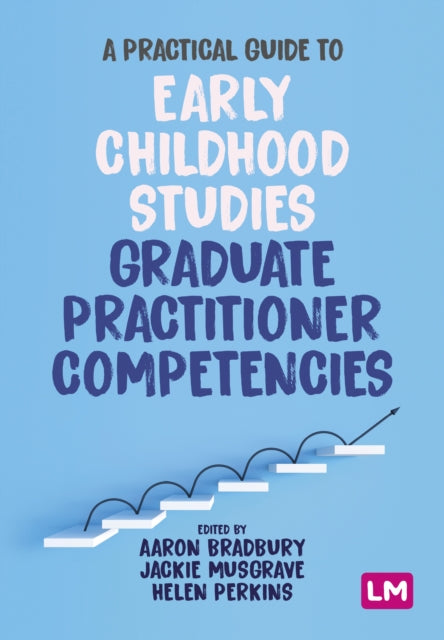
A Practical Guide to Early Childhood Studies Graduate Practitioner Competencies
A Practical Guide to Early Childhood Studies Graduate Practitioner Competencies
We can order this item for you. Delivery usually takes about 4 to 6 weeks.
This item is not held in our immediate stock. We will order it for you after checkout.
Estimated delivery: About 4 to 6 weeks
YOU SAVE £7.04
- Condition: Brand new
- UK Delivery times: Usually arrives within 2 - 3 working days
- UK Shipping: Fee starts at £3.89. Subject to product weight & dimension
Bulk ordering. Want 15 or more copies? Get a personalised quote and bigger discounts. Learn more about bulk orders.
Couldn't load pickup availability
- More about A Practical Guide to Early Childhood Studies Graduate Practitioner Competencies
This book provides case studies as examples of good practice demonstrating the Early Childhood Studies Graduate Practitioner Competencies (GPCs). Each chapter covers a specific competency and includes visualizations, case studies, and expert commentary to help link theory to practice.
Format: Hardback
Length: 168 pages
Publication date: 28 June 2023
Publisher: SAGE Publications Ltd
The Early Childhood Studies Graduate Practitioner Competencies (GPCs) are a set of essential skills and knowledge that early childhood studies graduates need to possess in order to provide high-quality care and education to children and families. In practice, these competencies are crucial for practitioners to ensure that they are providing children with the best possible start in life and that they are meeting their developmental needs.
The GPCs are divided into four categories:
Social and emotional development: This category focuses on helping children to develop social and emotional skills, such as self-awareness, self-regulation, empathy, and social competence. Practitioners need to be able to create a safe and supportive environment that promotes children's emotional well-being and helps them to develop positive relationships with others.
Physical development: This category focuses on helping children to develop physical skills, such as fine motor, gross motor, and physical coordination. Practitioners need to be able to provide children with opportunities to engage in physical activity and play that helps them to develop their physical abilities and promote healthy growth.
Language and literacy development: This category focuses on helping children to develop language and literacy skills, such as listening, speaking, reading, and writing. Practitioners need to be able to provide children with a rich language environment that supports their language development and helps them to become literate.
Cognitive development: This category focuses on helping children to develop cognitive skills, such as problem-solving, creativity, and critical thinking. Practitioners need to be able to provide children with opportunities to engage in cognitively challenging activities that help them to develop their thinking skills and promote lifelong learning.
In settings, the GPCs can be implemented in a variety of ways. For example, practitioners may use visual aids, such as pictures and charts, to help children to develop their social and emotional skills. They may also use storytelling and role-playing to promote language and literacy development. Additionally, practitioners may use physical activities and play to promote physical development and provide children with opportunities to develop their cognitive skills.
One of the key benefits of the GPCs is that they provide a framework for practitioners to ensure that they are providing high-quality care and education to children and families. By aligning their practice with the GPCs, practitioners can be confident that they are meeting the needs of their clients and that they are providing the best possible start in life.
Another benefit of the GPCs is that they can help practitioners to develop their professional skills and knowledge. By exploring the case studies in this book, practitioners can gain a deeper understanding of the GPCs and how they can be implemented in practice. They can also learn from the expert commentary on each case study, which helps them to link theory to practice and develop their own skills and knowledge.
In conclusion, the Early Childhood Studies Graduate Practitioner Competencies (GPCs) are a set of essential skills and knowledge that early childhood studies graduates need to possess in order to provide high-quality care and education to children and families. In practice, these competencies are crucial for practitioners to ensure that they are providing children with the best possible start in life and that they are meeting their developmental needs. By aligning their practice with the GPCs, practitioners can be confident that they are providing high-quality care and education and can develop their professional skills and knowledge.
Weight: 460g
Dimension: 246 x 171 (mm)
ISBN-13: 9781529618723
UK and International shipping information
UK and International shipping information
We deliver throughout the United Kingdom and to 128 countries and territories worldwide, including the United States, Australia, Canada, Germany, Spain and France.