Shulph Ink
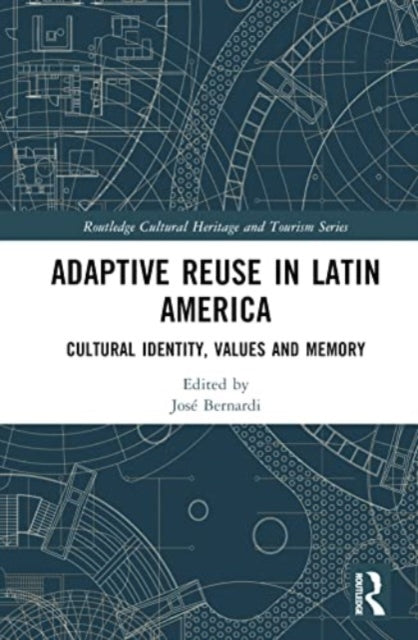
Adaptive Reuse in Latin America: Cultural Identity, Values and Memory
Adaptive Reuse in Latin America: Cultural Identity, Values and Memory
💎 Earn 811 Points (£8.11) on this item.
We can order this item for you. Delivery usually takes about 4 to 6 weeks.
This item is not held in our immediate stock. We will order it for you after checkout.
Estimated delivery: About 4 to 6 weeks
YOU SAVE £9.63
- Condition: Brand new
- UK Delivery times: Usually arrives within 2 - 3 working days
- UK Shipping: Fee starts at £3.89. Subject to product weight & dimension
Bulk ordering. Want 15 or more copies? Get a personalised quote and bigger discounts. Learn more about bulk orders.
Couldn't load pickup availability
- More about Adaptive Reuse in Latin America: Cultural Identity, Values and Memory
This book explores the theoretical and architectural connections between memory, values, cultural identity, and adaptive reuse in Latin America, focusing on Brazil, Mexico, Argentina, Ecuador, and Peru. It is a valuable resource for researchers and students in architecture, cultural, global, and design studies, heritage, geography, sociology, and history.
Format: Hardback
Length: 252 pages
Publication date: 03 November 2023
Publisher: Taylor & Francis Ltd
This captivating book delves into the intricate and profound connections between memory, values, cultural identity, and adaptive reuse in Latin America. It achieves this by critically examining ideas and works within the context from which they emerge, providing a comprehensive and nuanced understanding of the region's architectural heritage.
Latin America boasts a rich and diverse architectural patrimony, with a legacy that spans centuries. From its historic centers with their intricate colonial architecture to the grand buildings of the 19th century and the modernist movements that shaped its landscape, the region offers a treasure trove of architectural wonders. However, the full contribution and impact of Latin America's architecture on contemporary culture and architecture still require critical study and discussion.
The chapters of this timely book explore the complex relationship between colonialism, native cultures, and immigration. It sheds light on the ways in which these historical factors have shaped the architectural landscape and the ways in which they continue to influence contemporary practices. The book also delves into the connections between modern projects and national identity, examining how architecture can be used to express and celebrate cultural heritage while also accommodating the needs of diverse societies.
Furthermore, the book explores contemporary interventions that serve the needs of diverse societies while also being cultural receptacles of memory. It examines how architects and designers are leveraging adaptive reuse techniques to preserve and revitalize historic buildings, creating spaces that are both functional and meaningful. By focusing on cases in Brazil, Mexico, Argentina, Ecuador, and Peru, this book contributes to the study of adaptive reuse in a region that has yet to receive the same level of attention as Europe and North America.
This book is an invaluable resource for researchers and students in the fields of architecture, cultural studies, global studies, heritage, geography, sociology, and history. It offers a comprehensive and interdisciplinary perspective on the complex relationship between memory, values, cultural identity, and adaptive reuse, providing insights that will be of interest to scholars and practitioners alike.
Weight: 453g
Dimension: 234 x 156 (mm)
ISBN-13: 9781032344515
UK and International shipping information
UK and International shipping information
We deliver throughout the United Kingdom and to 128 countries and territories worldwide, including the United States, Australia, Canada, Germany, Spain and France.