Shulph Ink
Advanced Computational Methods in Mechanical and Materials Engineering
Advanced Computational Methods in Mechanical and Materials Engineering
We can order this item for you. Delivery usually takes about 4 to 6 weeks.
This item is not held in our immediate stock. We will order it for you after checkout.
Estimated delivery: About 4 to 6 weeks
YOU SAVE £12.84
- Condition: Brand new
- UK Delivery times: Usually arrives within 2 - 3 working days
- UK Shipping: Fee starts at £3.89. Subject to product weight & dimension
Bulk ordering. Want 15 or more copies? Get a personalised quote and bigger discounts. Learn more about bulk orders.
Couldn't load pickup availability
- More about Advanced Computational Methods in Mechanical and Materials Engineering
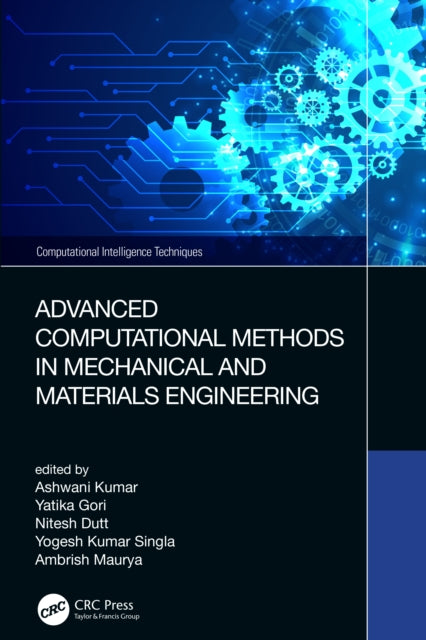
This book covers computational methods in design and fluid dynamics, advanced material applications and manufacturing, fabrication of graphene reinforced magnesium metal matrix for orthopedic applications, and simulation and optimization of gear transmission, heat sink, and heat exchangers. It provides a unique problem-solution approach with solutions, methodology, experimental setup, and results validation.
Format: Hardback
Length: 328 pages
Publication date: 24 November 2021
Publisher: Taylor & Francis Ltd
Computational Methods in Design and Fluid Dynamics:
Computational methods play a pivotal role in advancing the fields of design and fluid dynamics. In this comprehensive overview, we delve into the realm of computational fluid dynamics (CFD), a branch that employs numerical simulations to analyze and predict the behavior of fluids. CFD has revolutionized industries such as aerospace, automotive, and energy by enabling engineers to design more efficient and effective systems.
One of the key applications of CFD is in the design of aircraft and spacecraft. By simulating the flow of air around wings and bodies, CFD engineers can optimize the shape and configuration of these structures to improve performance, reduce drag, and increase fuel efficiency. This has led to the development of new generations of aircraft, such as the Boeing 787 Dreamliner and the SpaceX Falcon 9, which are known for their exceptional fuel economy and technological advancements.
CFD also plays a crucial role in the automotive industry. By simulating the flow of fluids within engines and exhaust systems, engineers can optimize the performance and efficiency of these systems, reducing emissions and improving fuel economy. This has led to the development of hybrid and electric vehicles, which are becoming increasingly popular due to their environmental benefits and reduced operating costs.
In addition to these applications, CFD is used in a wide range of other fields, such as energy production, chemical engineering, and biomedical engineering. For example, CFD can be used to optimize the design of wind turbines and solar panels, improving their efficiency and reducing their cost. It can also be used to simulate the flow of blood within the human body, enabling medical researchers to better understand diseases and develop new treatments.
Advanced Material Applications and Manufacturing:
In addition to CFD, advanced material applications and manufacturing are also playing a significant role in shaping the future of industries. Novel alloys and materials are being developed to improve the performance, durability, and sustainability of products. These materials are being used in a wide range of applications, from aerospace and automotive to healthcare and consumer electronics.
One of the most promising advanced materials is graphene, a two-dimensional material that has a wide range of applications, including electronic devices, energy storage, and medical implants. Graphene is known for its high electrical conductivity, thermal conductivity, and mechanical strength, making it an ideal material for a variety of applications.
In the field of manufacturing, 3D printing is becoming increasingly popular due to its ability to produce complex shapes and designs with high precision and efficiency. 3D printing enables manufacturers to create products on-demand, reducing waste and minimizing the need for inventory. It is also being used to create custom-fit medical implants and prosthetics, which are tailored to the individual needs of patients.
Fabrication of Graphene Reinforced Magnesium Metal Matrix for Orthopedic Applications:
Another area of research that is gaining attention is the fabrication of graphene reinforced magnesium metal matrix for orthopedic applications. Graphene is a highly conductive material that has the potential to improve the biocompatibility and mechanical properties of magnesium metal, making it an ideal material for orthopedic implants.
In this research, graphene is added to the magnesium metal matrix to enhance its strength and stiffness. The addition of graphene also improves the corrosion resistance of the implant, making it more durable and reliable in the long term. The graphene reinforced magnesium metal matrix is being tested in animal studies to evaluate its safety and effectiveness in orthopedic applications.
Simulation and Optimization of Gear Transmission, Heat Sink, and Heat Exchangers:
Simulation and optimization are also critical components of design and fluid dynamics. By simulating the behavior of systems, engineers can identify potential problems and optimize their designs to improve performance and efficiency.
In the field of gear transmission, simulation and optimization are used to improve the efficiency and reliability of gearboxes. By analyzing the flow of fluids within the gearbox, engineers can identify areas where friction and wear can occur and optimize the design to reduce these factors. This has led to the development of more efficient and durable gearboxes, which are used in a wide range of applications, from automotive to industrial machinery.
In the field of heat sink and heat exchangers, simulation and optimization are used to improve the performance and efficiency of these systems. By analyzing the flow of fluids within these systems, engineers can identify areas where heat transfer can be improved and optimize the design to reduce energy consumption and improve cooling efficiency.
Unique Problem-Solution Approach:
One of the unique features of this research is its problem-solution approach. The research includes a comprehensive methodology that includes solutions, methodology, experimental setup, and results validation. This approach ensures that the research is rigorous and reliable, and that the results can be applied to real-world applications.
Conclusion:
In conclusion, computational methods in design and fluid dynamics are playing a critical role in advancing the fields of engineering and technology. From the design of aircraft and spacecraft to the optimization of gear transmission and heat sink, CFD and advanced material applications are enabling engineers to create more efficient, sustainable, and innovative solutions. As technology continues to evolve, we can expect to see even more exciting developments in these fields, shaping the future of industries and improving the quality of life for people around the world.
Weight: 648g
Dimension: 161 x 241 x 27 (mm)
ISBN-13: 9781032052915
UK and International shipping information
UK and International shipping information
We deliver throughout the United Kingdom and to 128 countries and territories worldwide, including the United States, Australia, Canada, Germany, Spain and France.