Shulph Ink
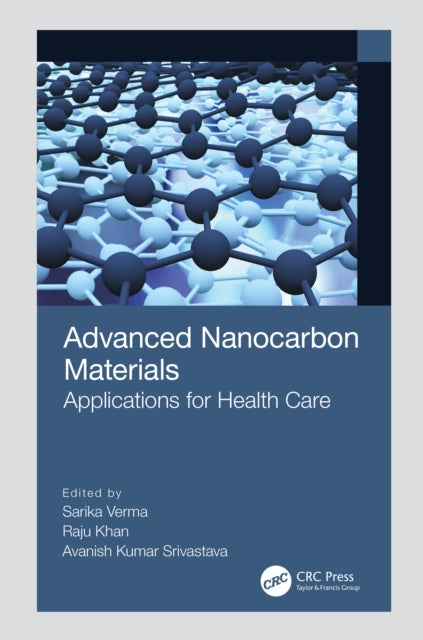
Advanced Nanocarbon Materials: Applications for Health Care
Advanced Nanocarbon Materials: Applications for Health Care
We can order this item for you. Delivery usually takes about 4 to 6 weeks.
This item is not held in our immediate stock. We will order it for you after checkout.
Estimated delivery: About 4 to 6 weeks
YOU SAVE £12.84
- Condition: Brand new
- UK Delivery times: Usually arrives within 2 - 3 working days
- UK Shipping: Fee starts at £3.89. Subject to product weight & dimension
Bulk ordering. Want 15 or more copies? Get a personalised quote and bigger discounts. Learn more about bulk orders.
Couldn't load pickup availability
- More about Advanced Nanocarbon Materials: Applications for Health Care
This book provides a comprehensive overview of nanocarbon-based materials, their structure, synthesis, properties, and applications in the health care sector. It highlights their use as therapeutic agents, biosensors, gene and drug delivery, cancer therapy, biosensing, bioimaging, GO-based antibacterial materials, and scaffolds for cell culture. The authors also discuss the potential of advanced nanocarbon-based materials in biomedical applications and the challenges faced in their development.
Format: Hardback
Length: 198 pages
Publication date: 05 May 2022
Publisher: Taylor & Francis Ltd
This comprehensive book delves into the intricate history and background of nanocarbon-based materials, including carbon nanotubes, graphene, and fullerenes. It provides a detailed exploration of their structure, synthesis, properties, and modifications, with a focus on their applications in the healthcare sector. The authors highlight the therapeutic potential of these materials in pharmacy and medicine, as well as their use in diagnosis, analysis, biosensors, gene and drug delivery, cancer therapy, biosensing, bioimaging, GO-based antibacterial materials, and as promising antioxidants and GO-based scaffolds for cell culture. The authors also showcase the innovative biomedical applications developed through advanced designing, emphasizing the technologies that will be adopted and the benefits they will bring to end users. Furthermore, they discuss the ongoing research on carbon-based materials, addressing the challenges they face and exploring potential solutions that could lead to the availability of accessible, reliable, and cost-efficient technology. This book is of immense value to medical practitioners, biologists, pharmacists, and chemists, offering in-depth knowledge of processing parameters for creating nanocarbon-based materials for high-end applications in the biomedical and pharmaceutical fields.
Introduction:
Nanocarbon-based materials, such as carbon nanotubes, graphene, and fullerenes, have gained significant attention in recent years due to their unique properties and vast potential applications. These materials, characterized by their small size, high surface area, and exceptional chemical and physical properties, have opened up new avenues for developing advanced materials and technologies. In this book, we will provide a well-focused and comprehensive overview of the history and background of nanocarbon-based materials, including their structure, synthesis, properties, and modifications. We will also explore their applications in various fields, such as healthcare, electronics, energy, and environmental science.
Structure and Synthesis:
The structure of nanocarbon-based materials is characterized by their rolled-up graphene sheets or cylindrical structures, which give them unique properties such as high strength, stiffness, and electrical conductivity. These materials can be synthesized using various methods, including chemical vapor deposition, thermal decomposition, and template-based synthesis. The choice of synthesis method depends on the specific requirements of the application and the desired properties of the final product.
Properties and Modifications:
Nanocarbon-based materials have a wide range of properties that make them suitable for various applications. They are highly conductive, with high electrical and thermal conductivity, which makes them valuable in electronic devices and energy storage applications. They also have excellent chemical resistance, making them suitable for use in harsh environments such as aerospace and automotive industries. Additionally, nanocarbon-based materials can be modified to enhance their properties, such as by adding functional groups, which can improve their solubility, biocompatibility, or other desirable characteristics.
Applications in Healthcare:
Nanocarbon-based materials have numerous applications in healthcare, particularly in the fields of pharmacy and medicine. They can be used as therapeutic agents in pharmacy and medicine, as biosensors for detecting diseases and monitoring patient health, as gene and drug delivery vehicles, and as cancer therapy agents. Nanocarbon-based materials can also be used as biosensing and bioimaging tools, which can help in the early diagnosis and treatment of diseases.
Applications in Electronics:
Nanocarbon-based materials have also found applications in electronics, particularly in the field of nanoelectronics. They can be used as transistors, resistors, and interconnectors in electronic devices, which can improve their performance and reduce their size. Nanocarbon-based materials can also be used as coatings for electronic components, which can protect them from corrosion and improve their durability.
Applications in Energy:
Nanocarbon-based materials have potential applications in energy storage and conversion. They can be used as electrodes in batteries, which can improve their energy density and power output. Nanocarbon-based materials can also be used as membranes in fuel cells, which can convert hydrogen into electricity more efficiently.
Applications in Environmental Science:
Nanocarbon-based materials have also found applications in environmental science, particularly in the field of water treatment and pollution control. They can be used as adsorbents for removing pollutants from water and soil, which can help in the purification of water and the remediation of contaminated sites. Nanocarbon-based materials can also be used as coatings for materials used in construction, which can improve their durability and reduce their environmental impact.
Conclusion:
In conclusion, nanocarbon-based materials have gained significant attention in recent years due to their unique properties and vast potential applications. They have a wide range of properties that make them suitable for various fields, including healthcare, electronics, energy, and environmental science. This book provides a comprehensive overview of the history and background of nanocarbon-based materials, including their structure, synthesis, properties, and modifications. It also explores their applications in various fields, highlighting their therapeutic potential, biosensing and bioimaging capabilities, and their use in electronic devices and energy storage. With ongoing research and development, nanocarbon-based materials are expected to play an increasingly important role in shaping the future of technology and society.
Weight: 296g
Dimension: 160 x 243 x 19 (mm)
ISBN-13: 9780367620547
UK and International shipping information
UK and International shipping information
We deliver throughout the United Kingdom and to 128 countries and territories worldwide, including the United States, Australia, Canada, Germany, Spain and France.