Shulph Ink
Advanced Photonics Methods for Biomedical Applications
Advanced Photonics Methods for Biomedical Applications
💎 Earn 811 Points (£8.11) on this item.
We can order this item for you. Delivery usually takes about 4 to 6 weeks.
This item is not held in our immediate stock. We will order it for you after checkout.
Estimated delivery: About 4 to 6 weeks
YOU SAVE £9.63
- Condition: Brand new
- UK Delivery times: Usually arrives within 2 - 3 working days
- UK Shipping: Fee starts at £3.89. Subject to product weight & dimension
Bulk ordering. Want 15 or more copies? Get a personalised quote and bigger discounts. Learn more about bulk orders.
Couldn't load pickup availability
- More about Advanced Photonics Methods for Biomedical Applications
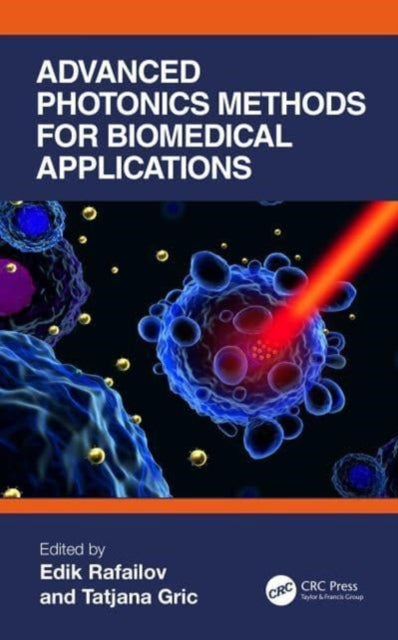
This text discusses novel cancer diagnostics and treatment methods, including non and minimally-invasive photonics techniques, and the applications of machine learning and artificial intelligence to these methods.
Format: Hardback
Length: 218 pages
Publication date: 31 July 2023
Publisher: Taylor & Francis Ltd
Here is the rephrased text:
Cancer Diagnostics and Treatment: Innovative Approaches
Cancer diagnosis and treatment have seen significant advancements in recent years, driven by novel methods and technologies. One area of focus is non and minimally-invasive photonics techniques, which offer promising solutions for early detection and personalized treatment. In this article, we will explore the applications of machine learning and artificial intelligence to these innovative techniques.
Non and minimally-invasive photonics techniques involve the use of light to diagnose and treat cancer. These techniques include optical coherence tomography (OCT), which uses light waves to create high-resolution images of internal tissues; photodynamic therapy (PDT), which uses light-activated drugs to kill cancer cells; and fluorescence imaging, which allows for the visualization of biological processes in real time.
One of the key advantages of non and minimally-invasive photonics techniques is their ability to provide high-quality images with minimal invasiveness. These techniques can be used to examine tissues and organs without the need for invasive procedures, which can be painful and cause discomfort for patients. Additionally, these techniques can be used to monitor the progression of cancer and response to treatment, allowing for timely adjustments and improved outcomes.
Machine learning and artificial intelligence have played a significant role in the development of non and minimally-invasive photonics techniques. These technologies can be used to analyze large datasets of medical images, identify patterns and abnormalities, and make predictions about cancer diagnosis and treatment. For example, machine learning algorithms can be used to analyze OCT images and identify early signs of cancer, while artificial intelligence can be used to develop personalized treatment plans based on patient data.
Another application of machine learning and artificial intelligence in non and minimally-invasive photonics techniques is in the development of new imaging modalities. These modalities can be used to provide more detailed and accurate images of internal tissues, allowing for more precise diagnosis and treatment. For example, machine learning algorithms can be used to develop new imaging techniques that can detect cancer cells at an early stage, while artificial intelligence can be used to develop new imaging techniques that can visualize the effects of treatment on cancer cells.
In conclusion, non and minimally-invasive photonics techniques offer promising solutions for cancer diagnosis and treatment. These techniques can provide high-quality images with minimal invasiveness, allowing for early detection and personalized treatment. Machine learning and artificial intelligence have played a significant role in the development of these techniques, and they have the potential to improve cancer outcomes by providing more accurate and timely diagnoses and treatments. As research in this field continues, we can expect to see further advancements in the field of non and minimally-invasive photonics techniques, which will have a significant impact on the treatment of cancer.
Dimension: 234 x 156 (mm)
ISBN-13: 9781032128429
UK and International shipping information
UK and International shipping information
We deliver throughout the United Kingdom and to 128 countries and territories worldwide, including the United States, Australia, Canada, Germany, Spain and France.